
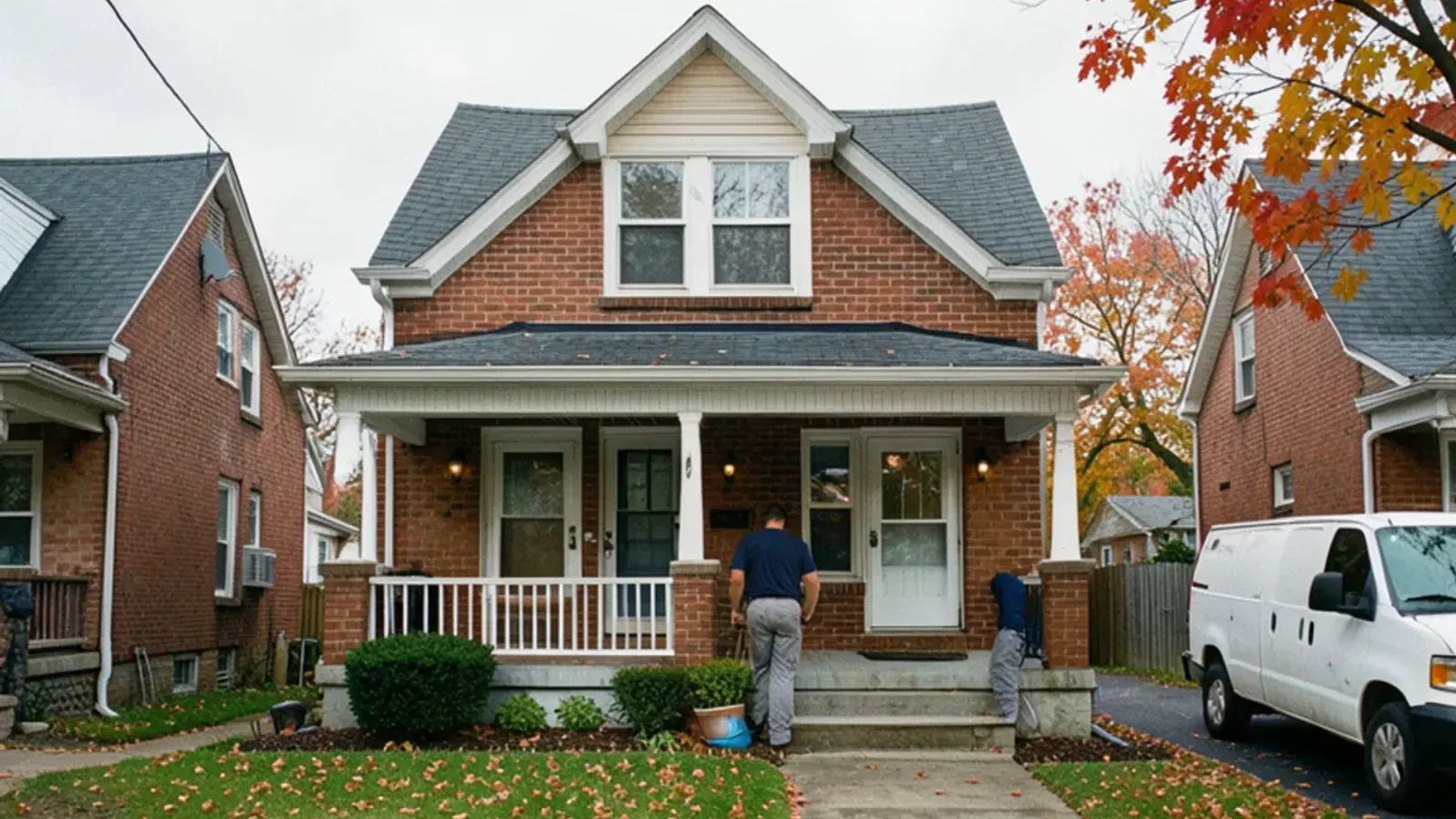
Plumbing in Eastpointe means older houses than you find in Roseville, Fraser or Sterling Heights. One home in three went up before 1950, and nearly half more in the 1950s, so the median house is from 1954. This was the village of Halfway in 1924 and the city of East Detroit from 1929 until the name changed in 1992, and plenty of its basements still hold pipe from those first decades. Old service lines, cast iron stacks, clay laterals under big street trees and floor drains that back up in hard rain are the everyday work here. Eastpointe sits between 8 Mile and 10 Mile, just east of our office on Stephens Rd in Warren.
Prewar bungalows and 1950s ranches between 8 Mile and 10 Mile
Census estimates count 13 percent of Eastpointe homes from before 1940, 19 percent from the 1940s and 46 percent from the 1950s. Almost nine in ten are single-family detached houses, each on its own lateral. Gas heats about 89 percent of them, so a gas water heater in the basement is close to universal. In the August 2014 storm, Macomb County said its south end, along 8 Mile, flooded worst.
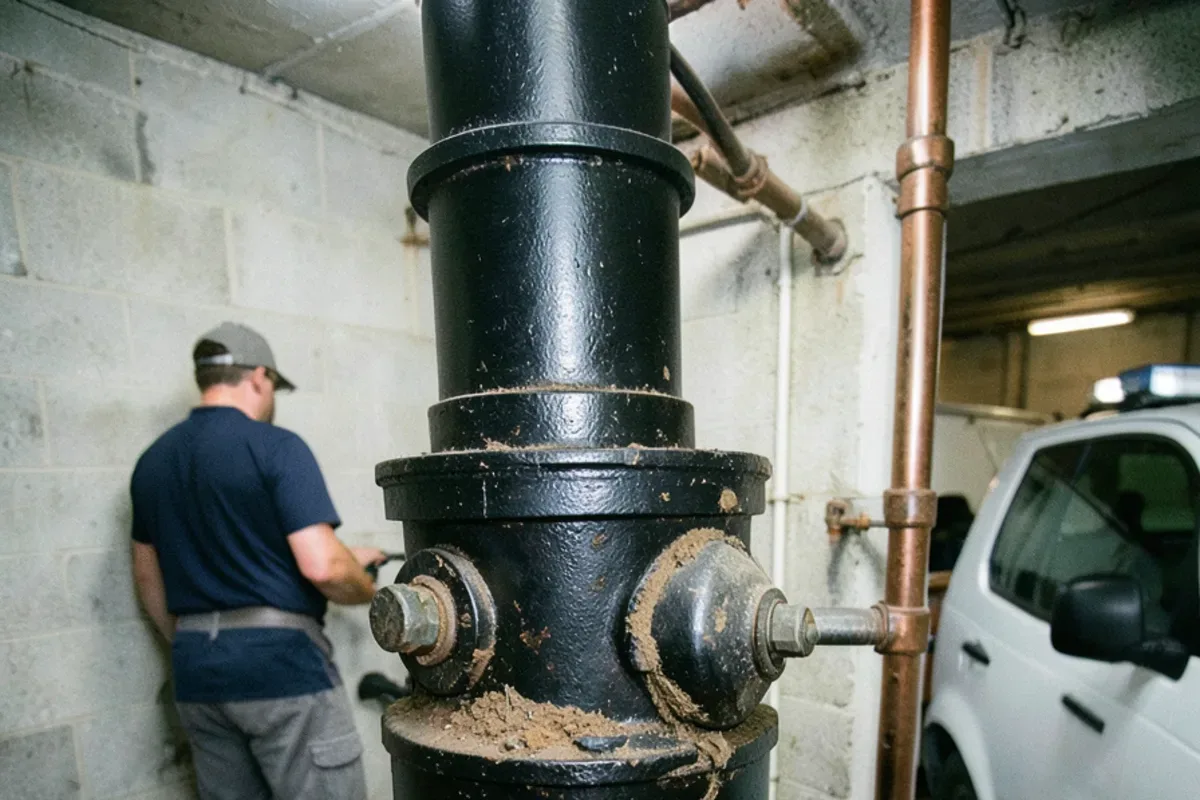
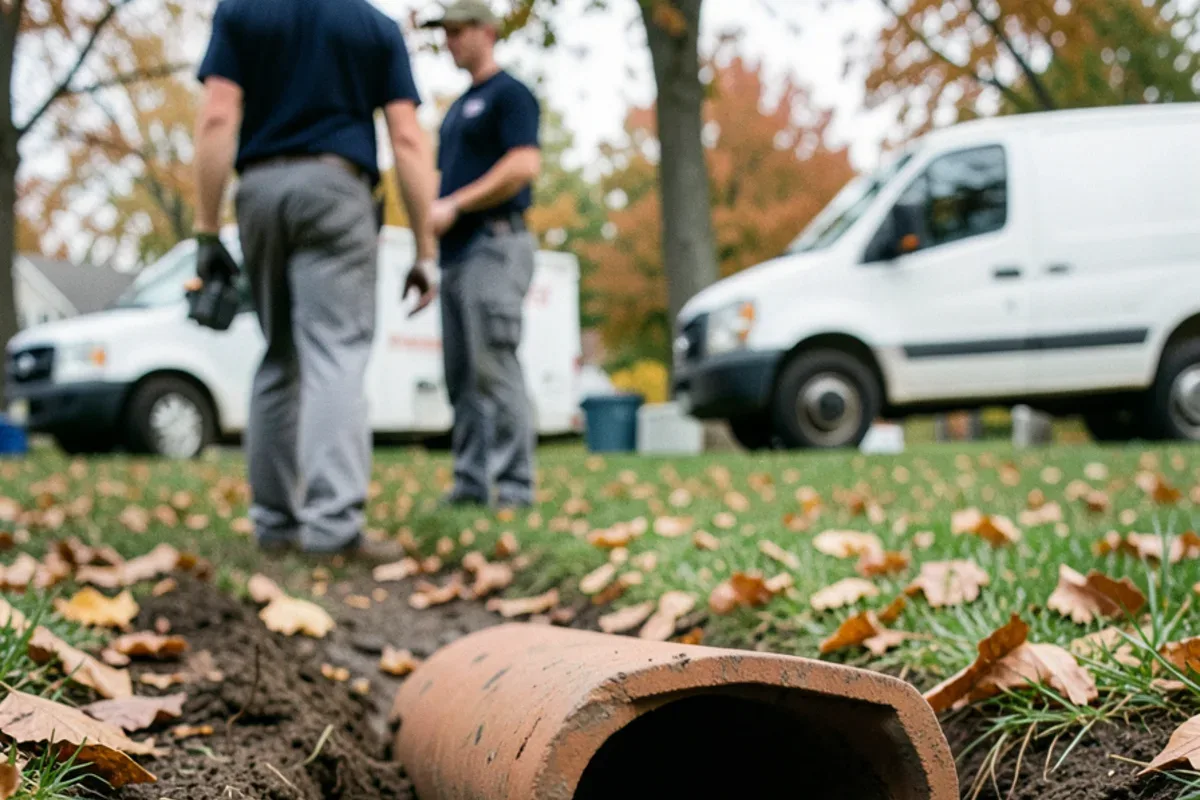
Trade knowledge fills in the rest. A 1930s bungalow here usually has a cast iron soil stack with packed lead-and-oakum joints, galvanized supply branches that have been partly swapped for copper over the years, and a clay tile lateral heading out under the front lawn. The 1950s ranches add a little more copper and a little less galvanized. Both tend to have a floor drain tied to the sanitary line and no sump. Those clay laterals, sitting under mature trees, are where we find roots, offset joints and the slow main drains that come with them. Our sewer line repair and inspection page walks through how we decide between a repair and a new line.
What 1940s and 1950s Eastpointe houses call us for
- Sewer camera inspection
Clay laterals under mature street trees cause most repeat main-line clogs here. A camera run shows the root mass and its distance from the house before anyone digs.
- Galvanized pipe replacement
One home in three predates 1950, and galvanized supply from that era narrows with rust. Copper patches added later often hide the worst runs.
- Main water line repair
The city had replaced 805 documented lead service lines since 2020 as of early 2024. Older houses may still have lead or galvanized pipe at the meter, so we identify it first.
- Basement floor drain cleaning
Prewar and 1950s basements here rarely have a sump, so the floor drain on the sanitary line is the low point. A blocked main backs up there before any sink upstairs slows.
- Backwater valve installation
Eastpointe’s sewage flows to the Nine Mile Road basin, built to protect the lake. A backwater valve on the main is what keeps a storm surcharge out of your floor drain.
- Water heater installation
Gas heats nearly nine in ten homes, and small block basements leave tight clearances around the tank and flue. A swap usually needs a permit from the Building Department.
- Garbage disposal installation and repair
Most Eastpointe homes are detached houses from the 1950s, where a disposal added later often drains into an old galvanized or cast iron trap arm that clogs or leaks first.
Lead service line results and the 9 Mile Road basin
In October 2022 Eastpointe reported a 90th percentile lead result of 18 parts per billion, above the 15 ppb action level, from sampling at homes with known lead service lines. At the time the city had identified 1,313 lead lines and replaced 244 since 2020. Another advisory followed in July 2023. Our guide to telling galvanized pipe from lead and copper shows how to check the pipe at your meter. For health questions, the city’s Department of Public Works water department and the Macomb County Health Department are the right contacts.
On the sewer side, Eastpointe belongs to the 8.5 Mile Relief Drain district with St. Clair Shores. Its retention treatment basin on Nine Mile Road was built in the late 1960s to hold 28 million gallons and now holds 31 million. That basin protects the lake. Your lateral is a separate pipe, and in a surcharge a backwater valve is what keeps the street’s water out of the floor drain.
Hoover Road to 9 Mile, then into an Eastpointe basement
From our office we turn onto Hoover Road, drop south to 9 Mile Road and head east into Eastpointe. That makes Eastpointe one of the closest cities we cover, and calls here fit easily into a day of work in southeast Warren. We give you a window when you call and keep you posted if it moves.
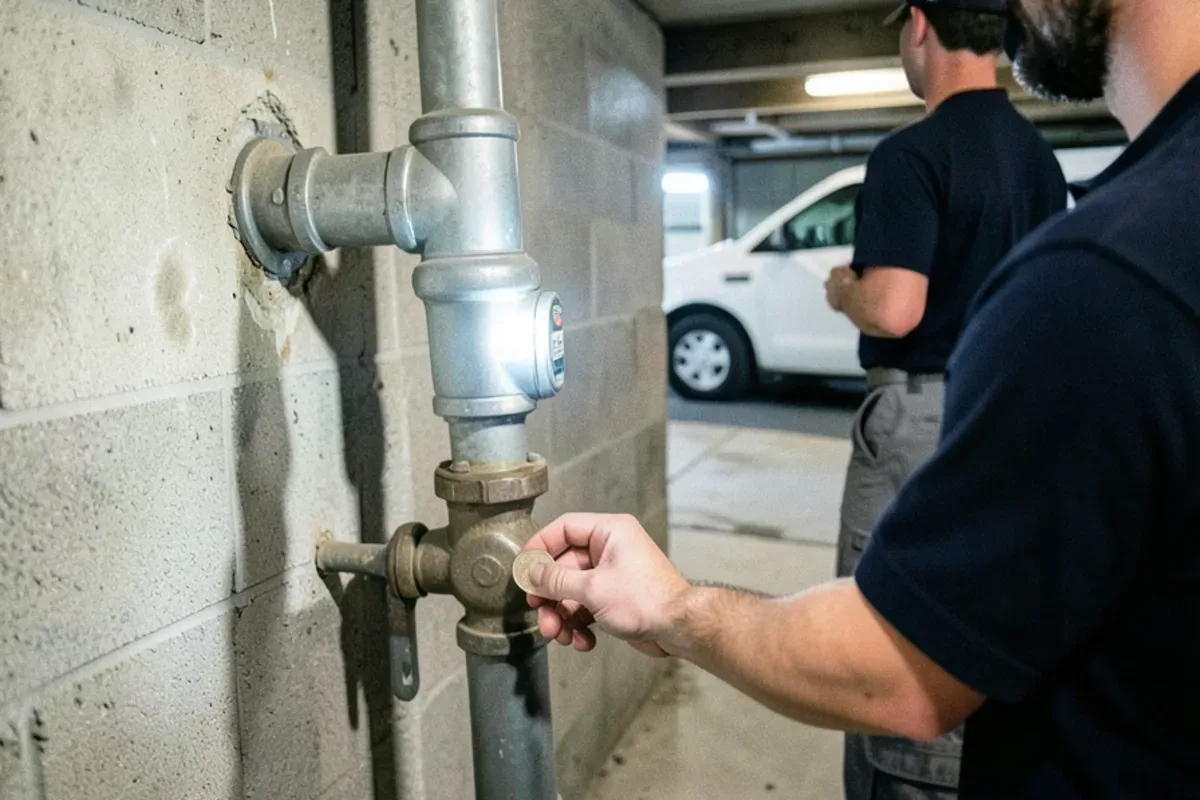
In a house this old we start with the basics before touching the drain. We find the main shutoff and make sure it actually closes, because 70-year-old gate valves often do not. We look at the service line material, the condition of the cast iron stack and the age of the water heater. For a backup, we open the cleanout and run the main before anything else, then put a camera down the lateral if it clogged again soon after the last cleaning.
Eastpointe parks and streets off Gratiot and 9 Mile
- Gratiot Avenue between 8 Mile and 10 Mile, the route of the Cruisin’ Gratiot car weekend.
- City Hall and the Building Department, 23200 Gratiot, where plumbing permits start.
- Eastpointe High School, 15501 Couzens Ave, hub of the Cruisin’ Gratiot weekend.
- John F. Kennedy Memorial Park and Spindler Park, home to the city’s summer events.
- The 8.5 Mile Relief Drain basin on Nine Mile Road in St. Clair Shores, which takes Eastpointe’s flow.
The blocks closest to Gratiot and 8 Mile hold the oldest houses, the ones from Halfway’s early years. Permits for water heaters, sewer work and repiping start at the Building Department in City Hall.
Getting to our office from Eastpointe
From Eastpointe, take 9 Mile Road west into Warren, turn north on Hoover Road and go a short way to Stephens Road; our office is just west of Hoover.
11355 Stephens Rd, Warren, MI 48089
Get directions to our Warren officeEastpointe plumbing questions
What does a lead service line look like in an Eastpointe basement?
Check the pipe where it comes through the basement wall before the meter. Lead is dull gray, soft enough to scratch with a key, and does not attract a magnet. The city’s Department of Public Works water department can also tell you what its records show for your address.
Who is responsible for the sewer lateral from my house to the street?
The lateral is usually the owner’s pipe for at least part of its run, but where the owner’s part ends and the city’s begins varies by city. With nine in ten Eastpointe homes detached, that usually means one pipe and one owner. Our post on who owns the sewer line explains how to confirm it.
Are clay sewer laterals still common in Eastpointe?
Yes. About 78 percent of Eastpointe homes predate 1960, the years when clay tile was the standard lateral material. Many have been repaired in sections, so a camera inspection is the only way to know what yours looks like now.
Do I need a permit to replace a water heater in Eastpointe?
Yes, in most cases. Water heater replacement commonly needs a permit and inspection, and the Building Department at City Hall, 23200 Gratiot, can confirm what applies to your job. When we replace a tank, we explain both before the old one comes out.
Have a plumbing problem in Eastpointe? Tell us the address and what's happening.
(207) 419-2600Near Eastpointe
See every city we serve around Warren · More Macomb County cities · How to tell if your house still has galvanized pipes · Who owns the sewer line between your house and the street
Last updated October 25, 2026