
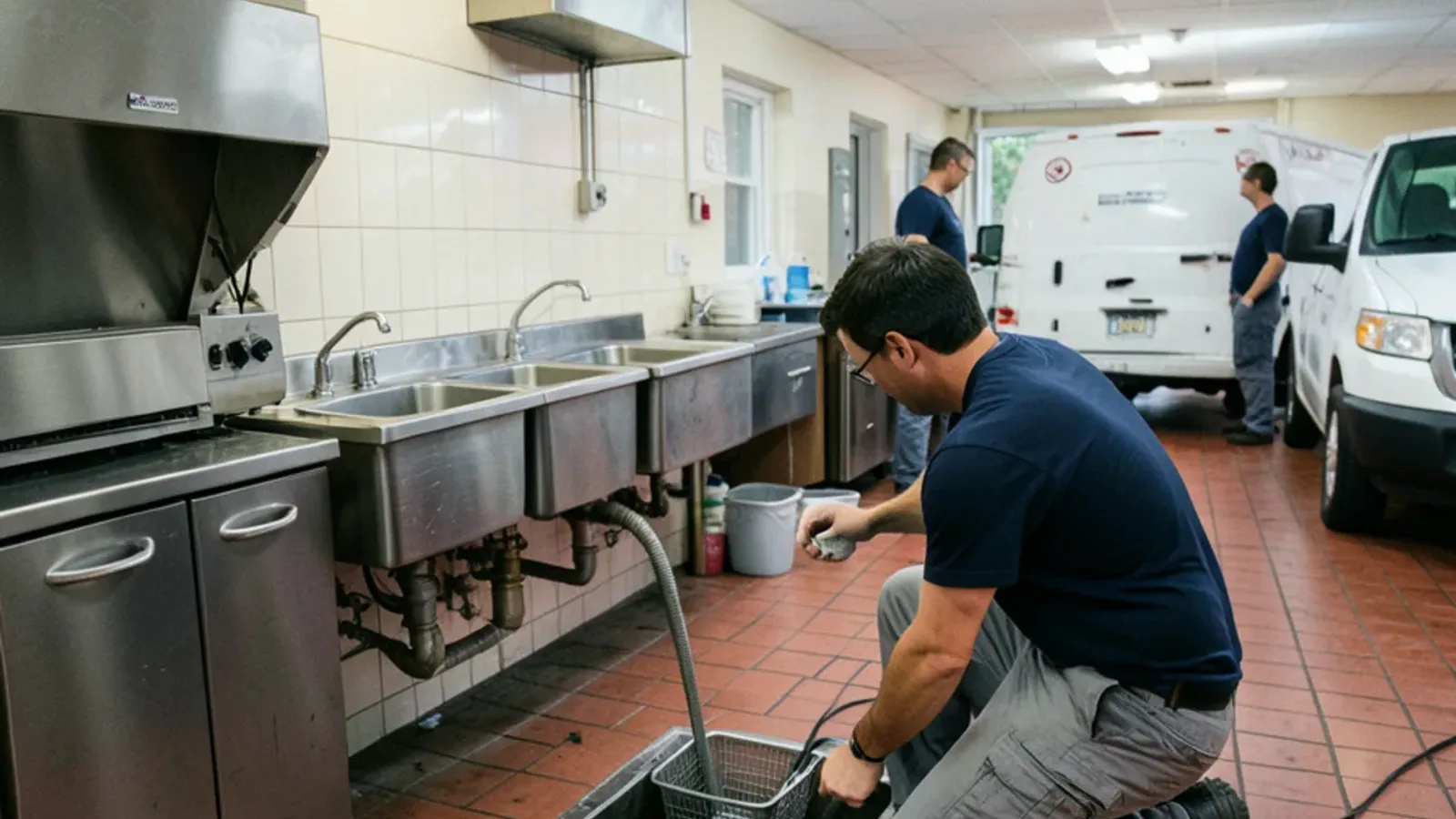
Restaurant plumbing in Warren takes more abuse than anything else in a commercial building. A kitchen pulls hot water from prep until close, sends grease down its lines all day, and counts on floor drains to swallow a dish machine dump. When one of those fails on a Friday night, the cost gets counted in tables.
What our restaurant plumbing work covers
We work on the plumbing in restaurants, bars, coffee shops, bakeries and other food businesses around Warren. That means the pipes between your fixtures and the grease interceptor, the equipment hookups inspectors look at first, and the hot water the dish station depends on. Pumping the interceptor itself is a separate job.
- Grease lines, floor sinks and floor drains, cleared by cable or jetter
- Dish machine and booster heater supply and drain connections
- Hand sinks, prep sinks and three-compartment sinks
- Ice machine and beverage drains, with air gaps set correctly
- Commercial water heaters, mixing valves and recirculation pumps
- Backflow protection on dish, beverage and hood equipment
Why do restaurant drains back up during service?
Because service is when everything drains at once. The dish machine dumps, three sinks empty, someone mops the line, and a branch half full of congealed grease at 4 p.m. can’t take it at 7. Grease goes down warm, cools as it travels and coats the pipe a little more each day. Eventually a big surge overruns the narrowed line, and water comes up through the lowest opening, usually a floor sink by the dish station.
| What you see | Likely cause | Usual fix |
|---|---|---|
| Floor sink overflows when the dish machine drains | Grease-narrowed branch line or a packed floor sink strainer | Clean the strainer, then jet the branch back to full diameter |
| Sewer smell near a drain nobody uses | Dry trap, with the water seal evaporated | Refill the trap and repair or add a trap primer |
| Three-compartment sink drains slowly | Grease and food solids in the tailpiece or branch | Cable the tailpiece, and jet the branch if its walls are coated |
| Water on the floor behind the ice machine | Clogged indirect drain or a blocked air gap at the floor sink | Clear the drain line, check the gap, re-pipe if it was never right |
| Hand sinks run lukewarm at the end of the line | Undersized heater, a failing mixing valve or a dead recirculation pump | Test recovery, then check the mixing valve and pump |
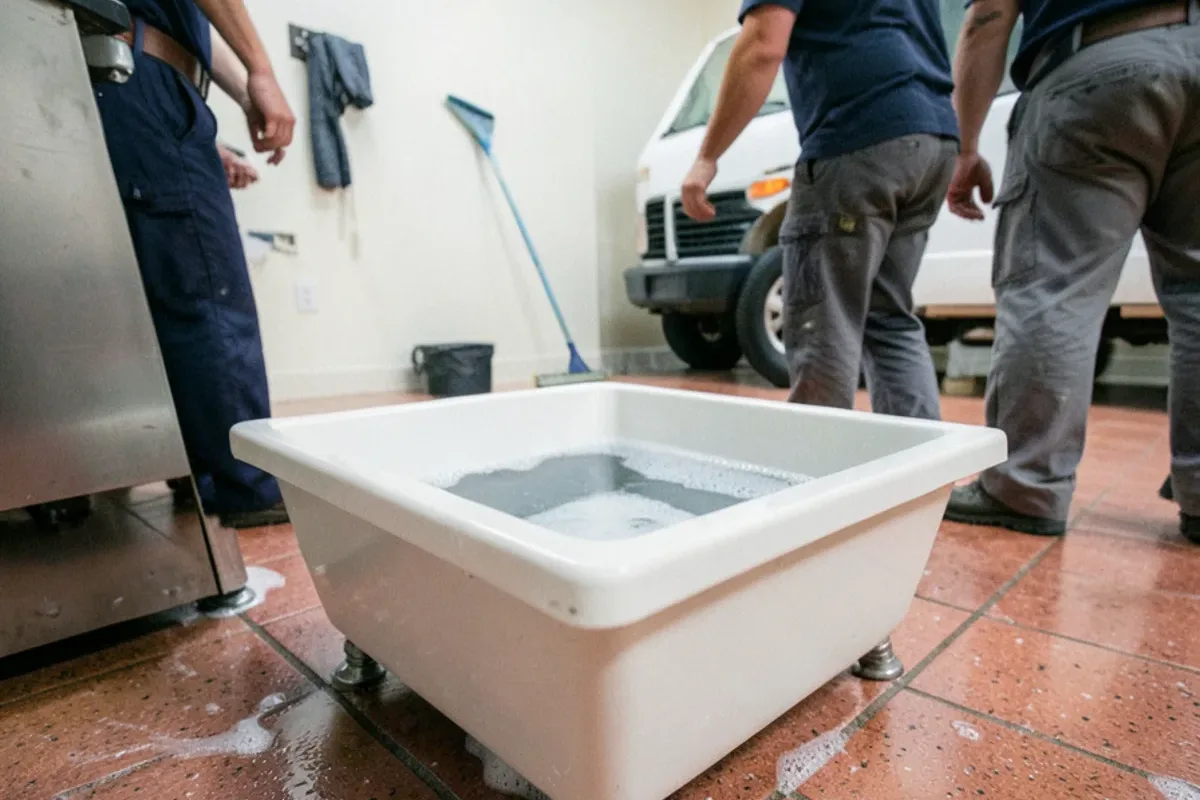
Grease line jetting versus pumping the trap
Owners often assume a backup means the grease trap is full. Just as often the trap is fine and the problem sits upstream, in the pipe between the sinks and the trap, where nobody pumps anything.
Cabling punches a hole through the middle of the buildup. Hydro jetting scours the pipe wall and flushes the loosened grease toward the trap, which is why it is the standard method for kitchen lines. A fryer-heavy kitchen needs it far more often than a coffee shop. Our post on restaurant grease and drain jetting schedules goes deeper on setting one.
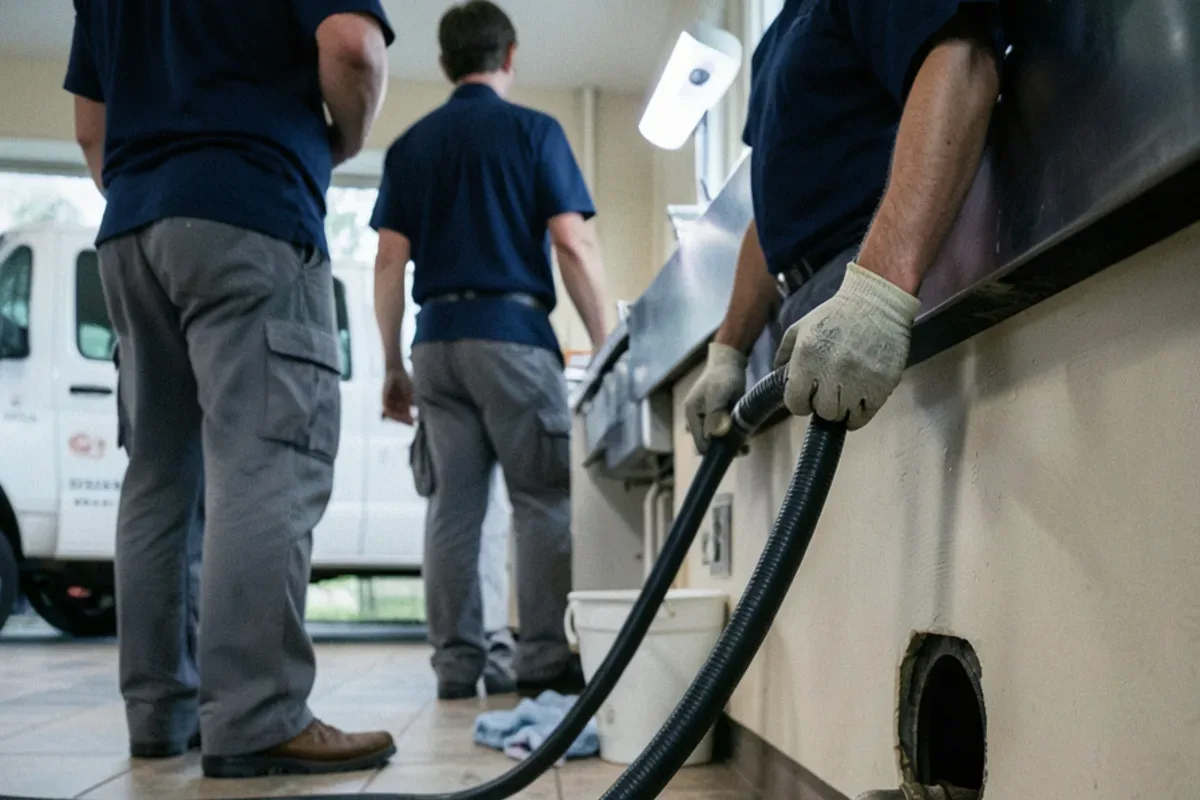
Commercial kitchen hot water for dish machines and hand sinks
A kitchen’s water heater does three jobs at once: hand sinks, the dish machine, and the prep and pot sinks. High-temperature dish machines rinse hotter than a building heater delivers, so they use a booster heater at the machine. If the main heater can’t keep up, the booster can’t either, and the final rinse temperature drops below what your health inspector expects to see on the gauge.
Warning signs include slow-warming hand sinks, dish machine temperature alarms during the rush, a heater that runs nonstop, and sediment rumbling in the tank. We check recovery against your peak hour, the tank and anode, the mixing valve for the hand sinks, and the recirculation pump.
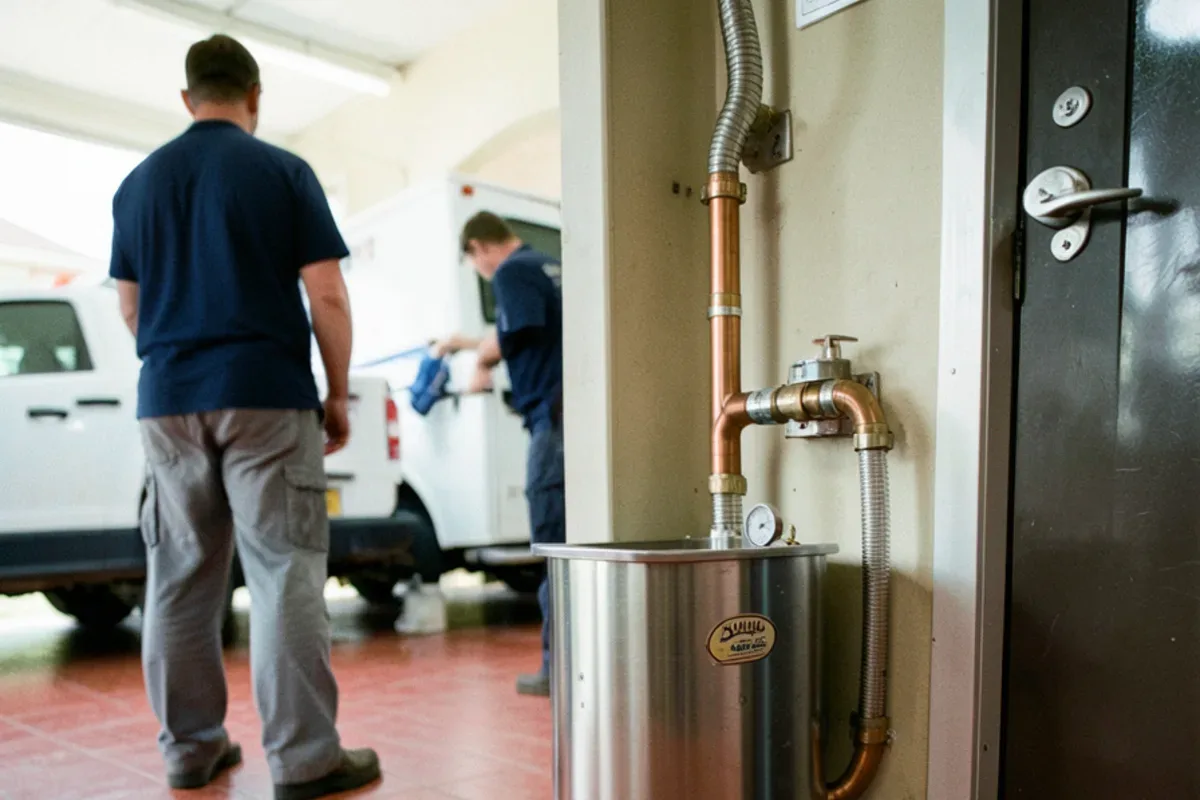
Backflow protection and air gaps on kitchen equipment
Warren’s cross connection brochure names dishwashers, hood washers, ice makers, post-mix beverage machines and service sinks among the business equipment that can contaminate drinking water. In a restaurant that is half the room. The Water Division surveys business premises, and every cross connection found is removed or protected, with testable assemblies checked under the city’s annual backflow testing rule.
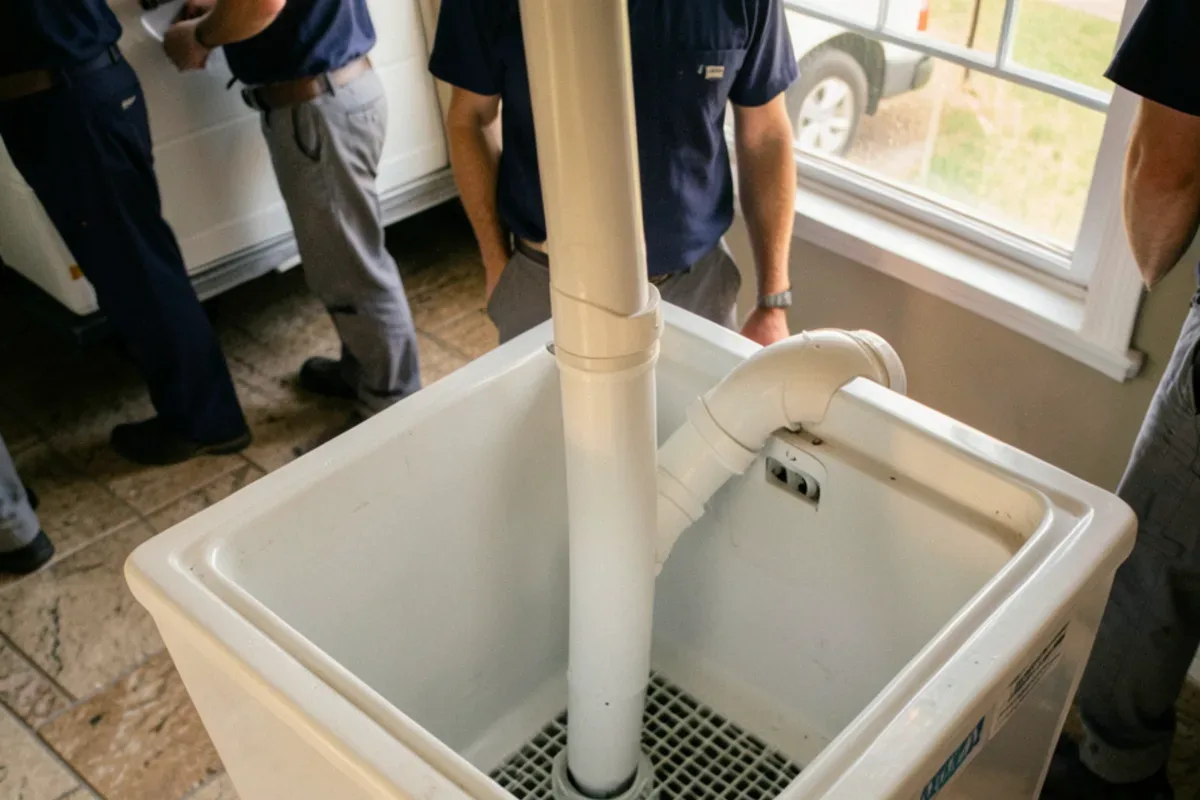
Drains get the same scrutiny. Ice machines, prep sinks and many dish and beverage machines discharge through an indirect waste, a pipe that ends above a floor sink with open air between them so sewage can’t back up into the equipment. A drain hose pushed down into the floor sink defeats that gap, and it is one of the most common things we re-pipe after a remodel.
Warren permits, county plan review and the code in a kitchen
Warren’s Division of Buildings and Safety Engineering issues the plumbing permit, and its application lists interceptors, dishwashing machines, floor drains and water heaters as separate line items. The Macomb County Health Department wants plans for a new or remodeled food service establishment before construction begins, and may ask for a site review on smaller changes, such as adding a dish machine or going from a tank heater to tankless.
The work follows the 2021 Michigan Plumbing Code, built on the International Plumbing Code, which has food equipment drain through an air gap. State law requires a licensed master or journey plumber, working under a contractor’s permit, for business plumbing; Michigan LARA lets you look up any license. Warren’s food service flyer adds the housekeeping: keep grease out of sinks and storm drains, maintain the interceptor, and wash floor mats where the water reaches the sanitary sewer.
What a restaurant plumber checks in your kitchen
Start at the dish station
Dish machine drain, floor sink and strainer, booster heater, and the supply’s backflow protection. It is the first corner to show trouble.
Run the sinks under load
Fill and drain the three-compartment and prep sinks together, the way they empty at close.
Open the cleanouts
Find every cleanout and note which ones are buried behind equipment. A reachable cleanout decides whether a backup takes an hour or most of a day.
Check the traps nobody uses
Floor drains in dry storage and under equipment lose their water. We check each seal and test any trap primer.
Camera a line that keeps failing
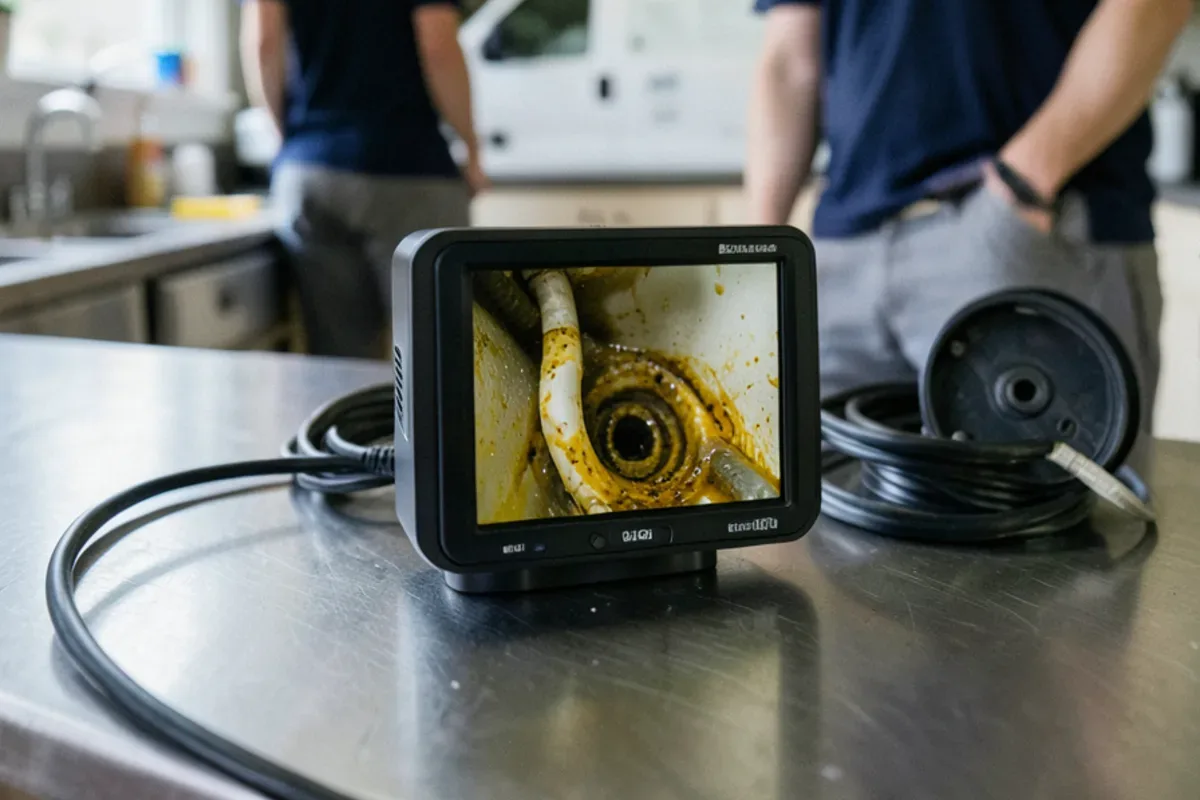
A camera shows grease thickness, sags and broken sections, so the jetting schedule rests on what is actually in the pipe.
Write it up
You get a list with urgent items first and a suggested cleaning schedule if the lines need one.
What drives the cost of restaurant plumbing work
Two backups that look the same from the floor sink can be a short branch with a soft grease plug or a long run of old cast iron breaking up inside, so a kitchen job is priced once we know which. These are the variables we walk you through first:
- How much grease is in the line and how far it runs.
- Access to cleanouts. Cleanouts behind a walk-in cooler or under a fixed cook line add time, or have to be added.
- When the work happens. Jobs planned around closed hours sometimes take more than one visit.
- Equipment connections. Dish machines, booster heaters and beverage systems each have their own supply, drain and backflow needs.
- Permits for interceptors, water heaters and backflow preventers, plus county plan review on a remodel.
- Pipe condition. Old cast iron or galvanized kitchen lines can need sections replaced instead of cleaned.
Why Warren kitchens call Plumber in Warren, MI
Our office is on Stephens Rd in 48089, the south end of Warren, and one phone line takes calls from homeowners, landlords and restaurant owners. In a kitchen we find the cause before we sell a fix, since an overflowing floor sink can be a packed strainer, a grease-choked branch or a surcharged city sewer. A line that keeps failing gets a camera before anyone talks about new pipe. You hear the cost factors and get a written scope first, and any permit gets pulled the way the city asks.
How do we schedule restaurant plumbing repairs around service?
Tell us when the kitchen is dark, and work that takes water or drains out of use gets planned for those hours where it can be. During a backup mid-service, the first goal is to open the line enough to finish the night; the full cleaning follows after close.
After heavy rain, watch the lowest drains: three 2024 storms overwhelmed Warren’s sewers, and a kitchen floor drain below street level is where a backup appears first.
Restaurant plumbing around Warren and nearby cities
- Plumber in Royal Oak
Downtown dining on Main Street and Washington Avenue drains into the Kuhn district, where many sewers were built combined.
- Plumber in Ferndale
Kitchens near 9 Mile and Woodward sit on an 80-year-old combined sewer the city says to snake and jet regularly.
- Plumber in Hamtramck
Restaurants on Joseph Campau and Conant drain to a sewer the city itself calls undersized for large storms.
- Plumber in Madison Heights
About 1,300 commercial water connections, in the same city as the Kuhn combined-sewer basin at I-75 and 12 Mile.
- Plumber in Center Line
Small restaurants on Van Dyke near Stephens need a city plumbing permit before a backflow preventer is replaced.
- Plumber in Berkley
Along 12 Mile, the 2017 storm pushed sewer water up through floor drains, the lowest opening in any kitchen.
- Plumber in St. Clair Shores
A 2016 city study blamed grease and tree roots for sewer backups, a warning for kitchens on the Nautical Mile.
- Plumber in Macomb County
New or remodeled food service establishments send plans to the Macomb County Health Department before construction starts.
Restaurant plumbing questions from Warren customers
How often should restaurant grease lines be jetted?
It depends on what you cook and how much. A high-volume kitchen with fryers and a busy dish station may need it every few months, while a café might go a year or more. The reliable way to set a schedule is to jet once, run a camera through the line some weeks later, and see how much grease has come back.
Does my dish machine need a backflow preventer?
Yes, it needs backflow protection, though not always a separate device. Warren lists dishwashers among the business equipment that counts as a cross connection risk. Many commercial machines have protection built in, such as an air gap or vacuum breaker on the fill. The Water Division’s survey decides what your building needs, and any testable assembly is tested every year.
Why does my restaurant floor drain smell like sewer?
Usually the trap has dried out. Every floor drain holds a little water to block sewer gas, and drains that rarely see water lose it to evaporation, especially near warm equipment. Pouring a bucket of water in fixes it for now. A trap primer, or repairing the one you already have, keeps the seal filled for good.
Do I need a permit to install a grease interceptor in Warren?
Yes. Warren’s plumbing permit application lists interceptors and separators as their own line item, so adding or replacing one goes through the Division of Buildings and Safety Engineering with an inspection. The same application covers dishwashing machines, floor drains and water heaters, which often change in the same kitchen remodel.
Still not sure what you're dealing with? Describe it on the phone and we'll tell you what we'd check first.
(207) 419-2600Last updated October 25, 2026