
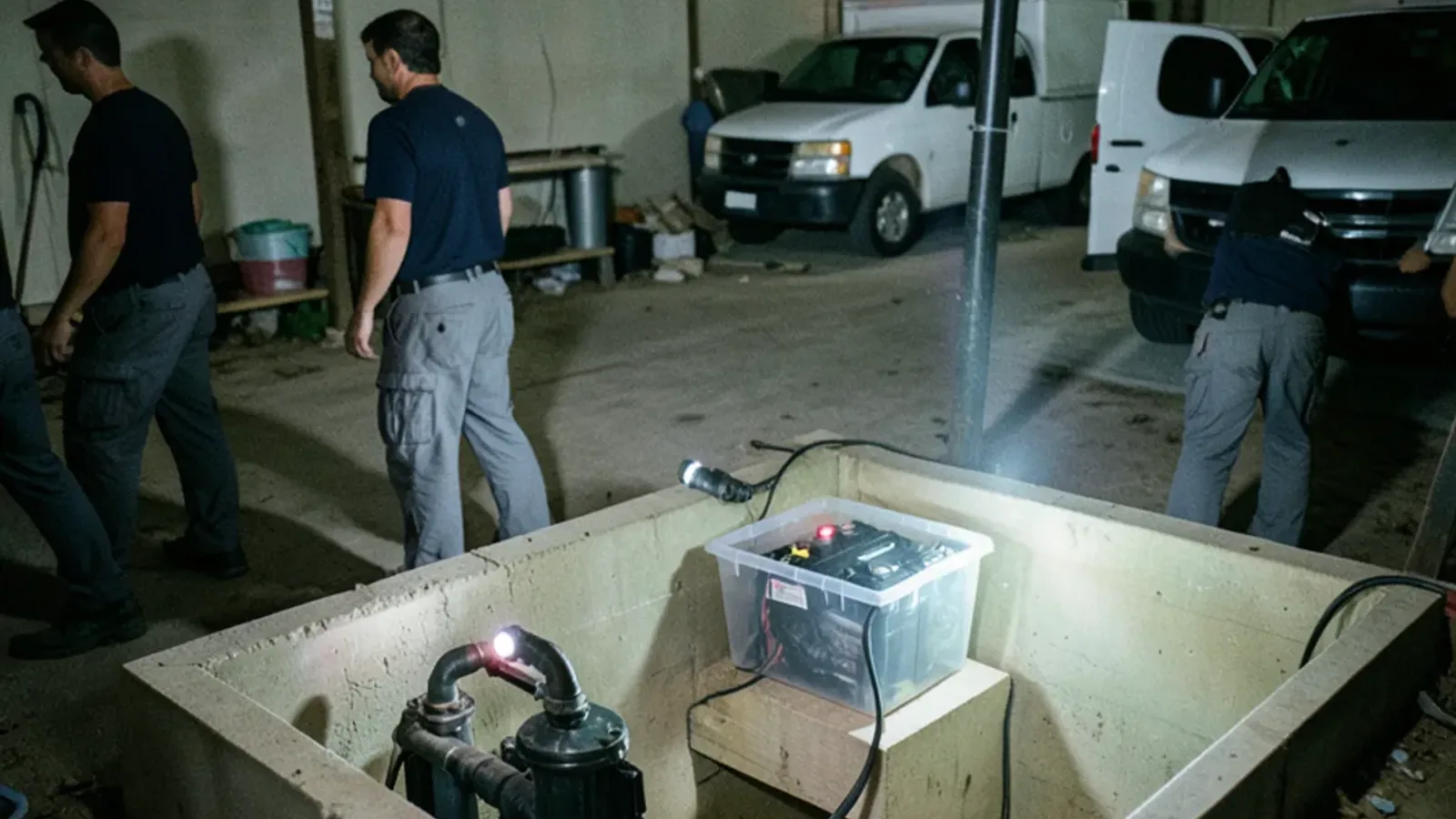
A battery backup sump pump is a second pump that runs off its own battery when the electricity goes out. In Warren, the thunderstorms that drop the power are usually the same ones that load the sump with water, so a basement that stays dry all year can take on water in the few hours the main pump sits dead.
The backup lives in the same pit, set a little higher, and starts only when the water climbs past the main pump's float. We add backups to working pits and install them alongside new primary pumps. Most of the job is sizing: matching pump and battery to what your footing drain delivers in a downpour and to the outage you want to ride out.
Why the power and the sump fail in the same storm
A sump pump works hardest in the hour or two after heavy rain, when the footing drain is carrying everything the clay around the house cannot absorb. Wind and lightning take out power lines in exactly those storms. Without electricity, a pit that cycles every few minutes can overflow onto the floor before the lights come back. Our post on what causes basement backups in storms explains why those rains hit Warren basements so hard.
A backup belongs on your list if the basement has taken water in an outage before, the pump runs every few minutes in a spring rain, the basement is finished, or you travel in storm season. Warren's flat clay lots feed the pit for days after a soaking.
A float that hangs on the basin wall, a tripped GFCI outlet or a primary motor that burns out mid-storm all leave the pit rising too, and the backup and its alarm respond the same way. Sewage pushing up through a floor drain is another matter. That water comes from the sewer, and the fix is backwater valve installation.
What a battery backup sump pump installation includes
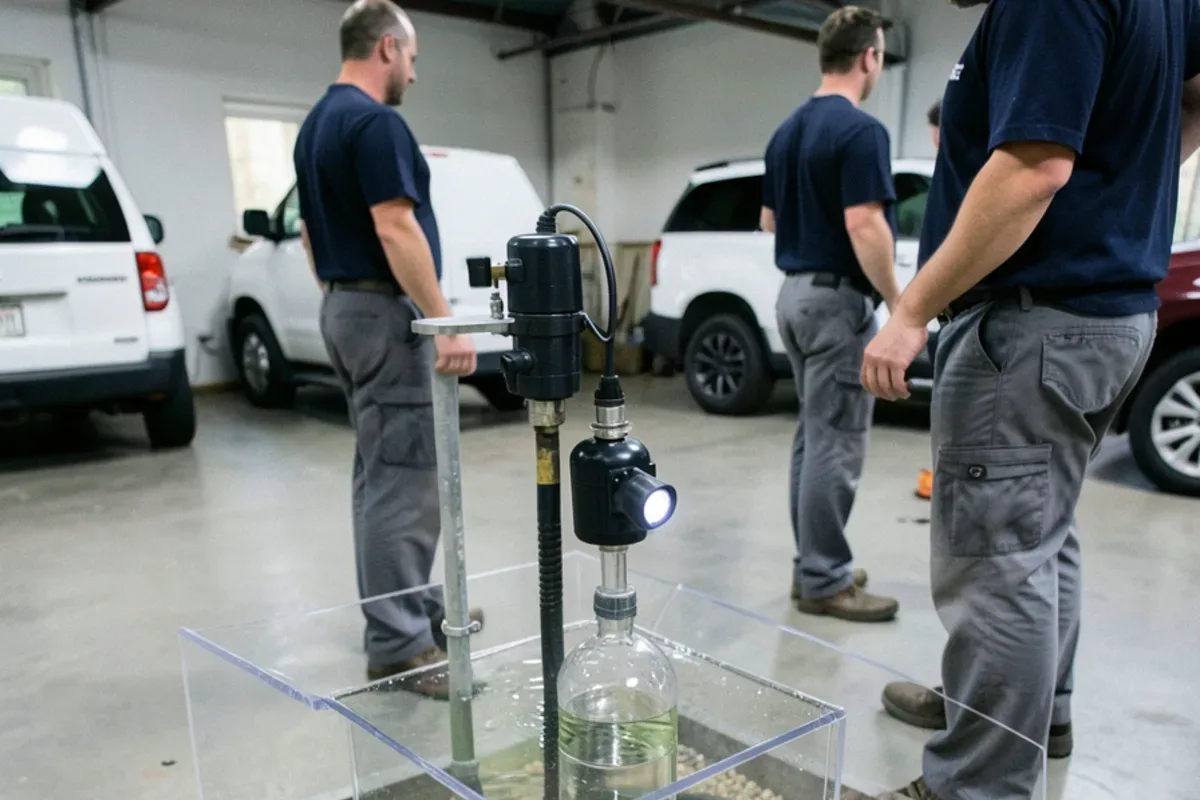
A backup only helps if the primary is sound, the basin has room for two floats, neither pump can push water back through the other, and the battery is charged and dry when the storm comes. So the visit covers the whole pit, and if something there would sink the backup, you hear it before anything is ordered. A combination system replaces the primary too; an add-on keeps the pump you have. Either way the charger needs an outlet near the pit, and the alarm has to be loud enough to hear from upstairs or set to send a phone alert while you are away. In a 1950s or 1960s basement where the sump was added years after the house was built, the crock is often the first thing we measure.
- A test of the primary pump, float switch and check valve
- Sizing from the refill rate and vertical lift
- The backup pump, float, check valve and discharge tie-in
- A matched charger and a vented battery box off the floor
- A high-water alarm, with phone alerts if you want them
- A full run on battery with the main pump unplugged
Battery backup sump pump options compared
| System | What it is | Best fit | Watch for |
|---|---|---|---|
| Add-on 12-volt backup | A second pump with its own float, charger and battery | A primary that still works well | Less capacity than the main pump; the battery wears out |
| Combination system | Primary and backup pre-plumbed on one discharge | New pits or an aging primary | Needs a basin wide enough for both pumps |
| Water-powered backup | Uses city water pressure to draw water out of the pit | Long outages | Uses a lot of drinking water and needs backflow protection |
| Generator on the primary | Keeps the regular pump running on other power | Homes with standby power | A portable unit needs someone home; transfer wiring is electrical work |
For most basements we steer toward a 12-volt battery system, either added to a sound primary or installed as a combination unit. Water-powered pumps make sense in a few houses, but because they connect to your drinking water they create a cross connection, and Warren requires a backflow assembly wherever one exists.
How big a battery backup does your basement need?
Run time depends on how often the pump cycles, how far it lifts the water and how much the battery holds. A pit that fills twice an hour keeps a backup going far longer than one that fills every three minutes, and box ratings assume a lift your pipe may exceed. So we time the refill in wet weather, measure the lift and match a pump that keeps up at that height. A long outage usually means a second battery on the same charger.
Sealed, flooded or lithium batteries
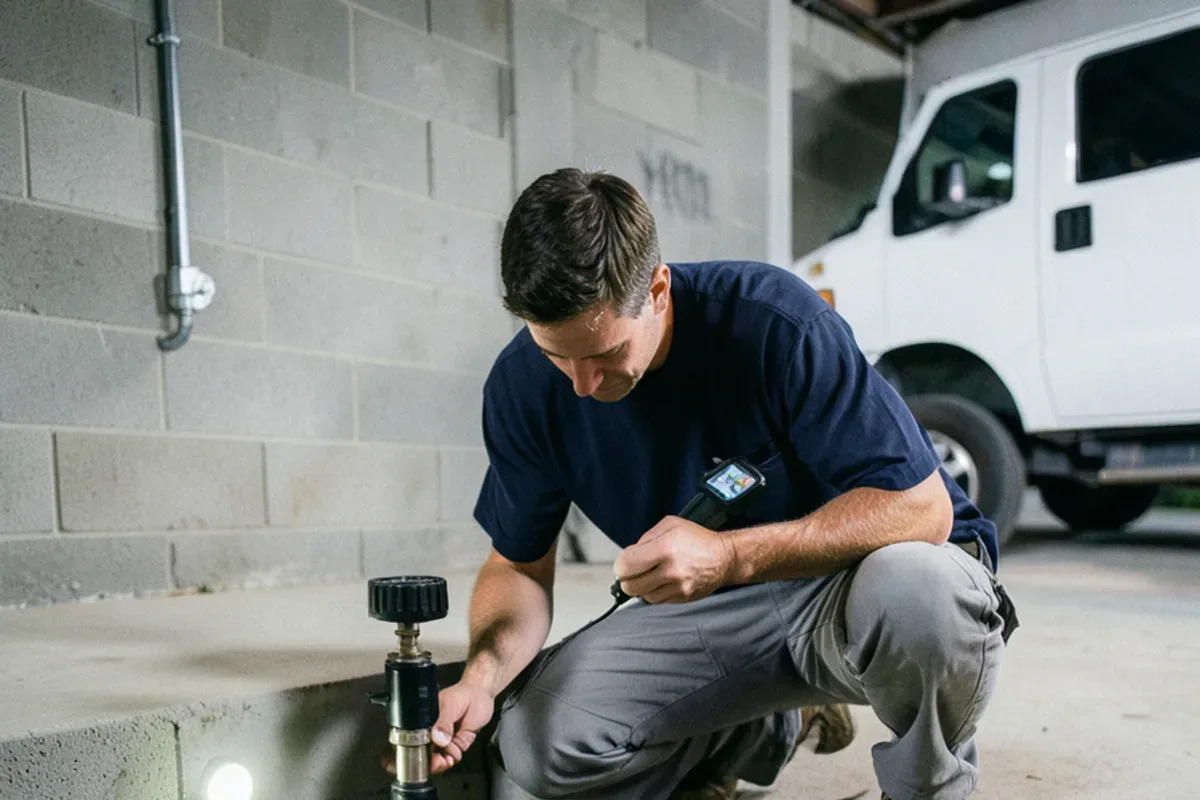
Most backups run on a 12-volt deep-cycle battery kept up by a trickle charger. Sealed AGM batteries need no water and suit a box that sits ignored for months. Flooded ones cost less but need distilled water and venting. Lithium is lighter and holds a charge longer, but only with a charger made for it.
Battery backup sump pump installation in an existing pit
Check the primary first
A backup is not a substitute for a failing main pump. We test the switch and check valve, and look at the motor, before adding anything.
Make room in the basin
The backup mounts above the primary float so the two never fight. Some older pits are too narrow for both, and a wider basin is the cleaner fix.
Give the backup its own check valve
It joins the discharge above the primary check valve or gets its own line, so water from one pump never runs back through the other.
Mount the battery and charger
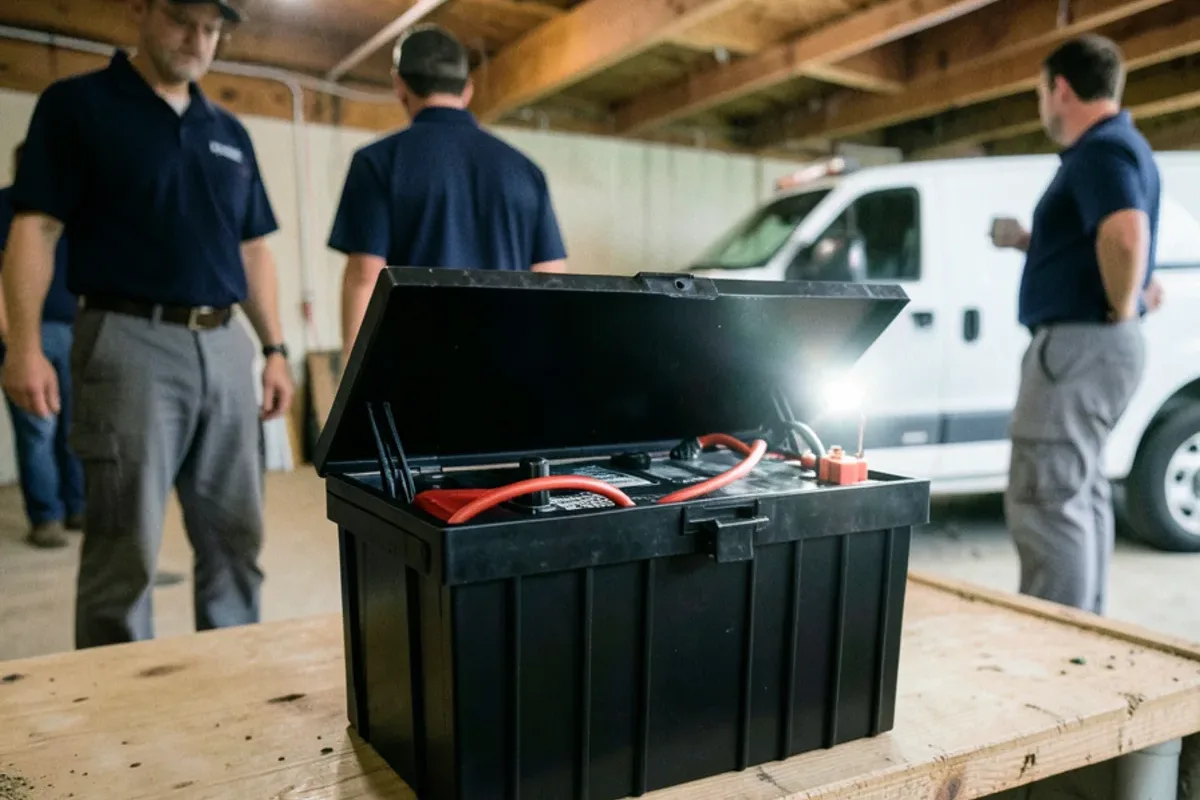
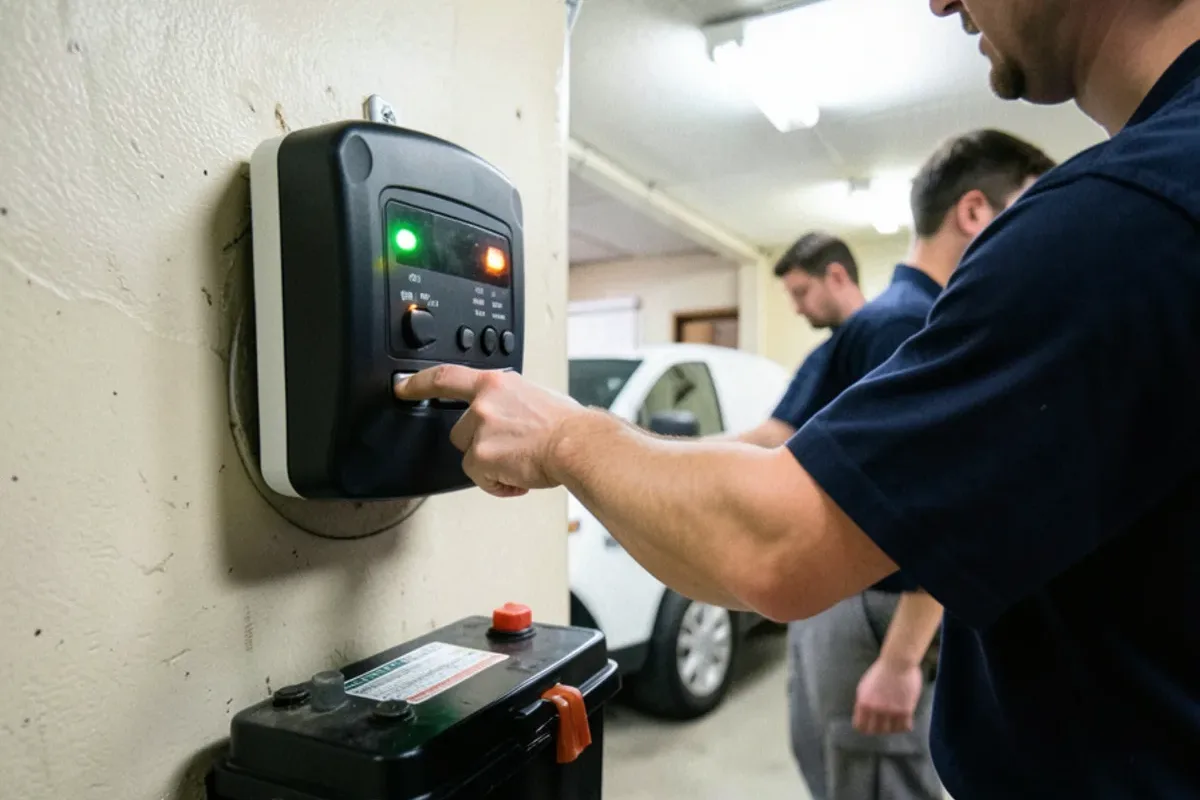
The battery goes in a vented box on a shelf above the floor, close to an outlet for the charger.
Test it on battery power
With the main pump unplugged, we fill the pit and watch the backup start, empty the basin and shut off, with the alarm sounding. Where a sump permit applies, we pull it.
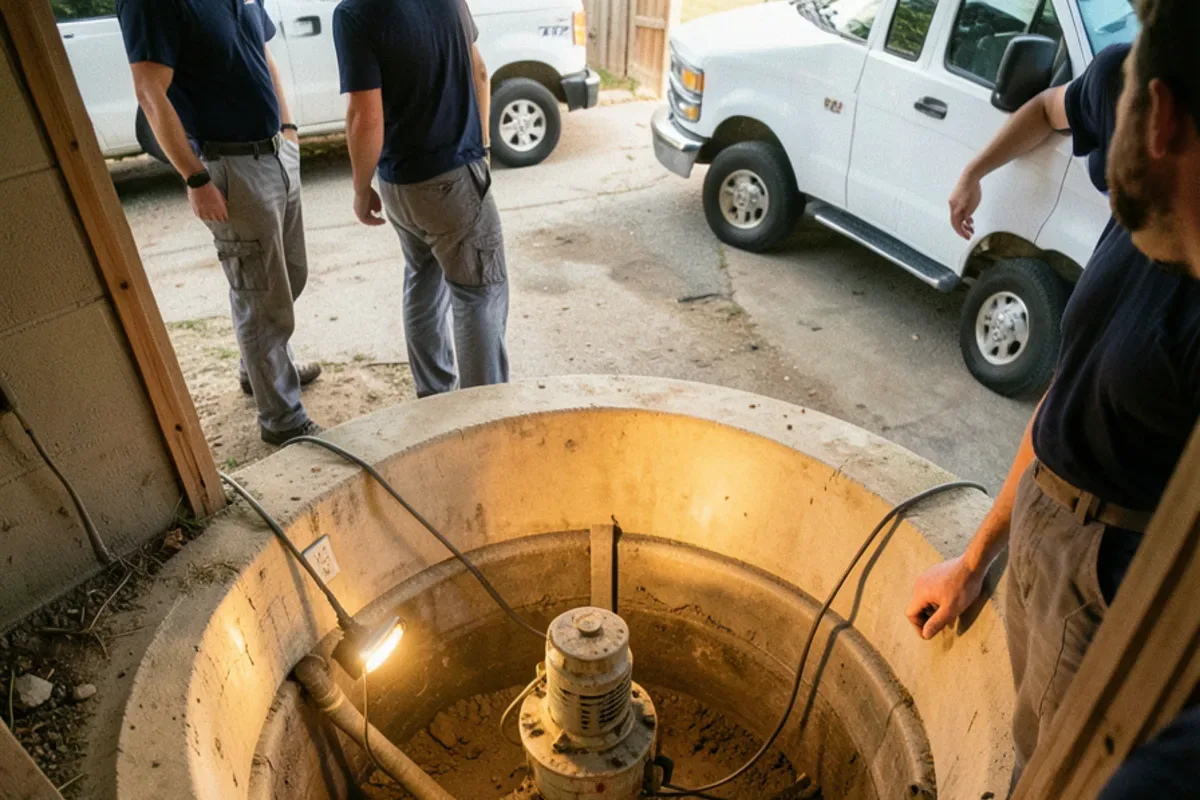 Before
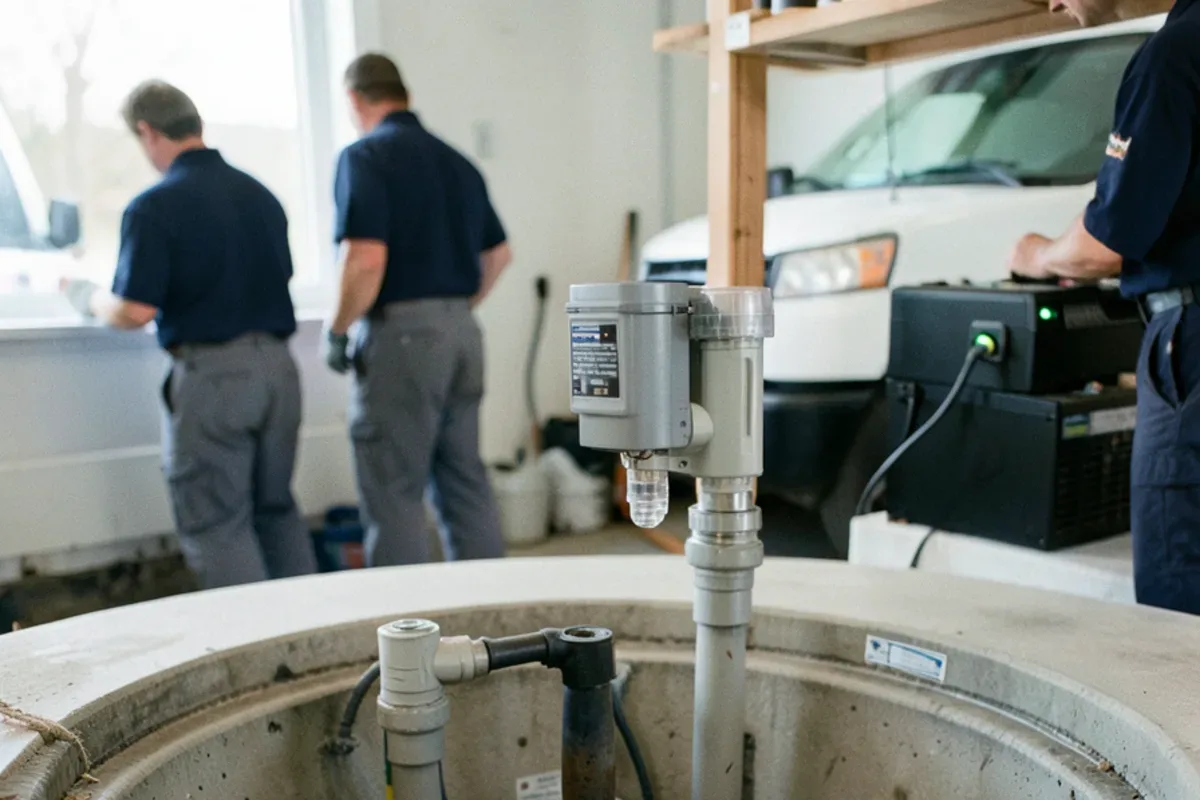 After
How long does a sump pump backup battery last?
The battery is the part that wears out, typically every few years, sooner if it has been drained hard. Write the install date on the case and press the charger's test button each season. Before spring, unplug the main pump, pour water into the pit and make sure the backup carries it out.
What affects the cost of a battery backup system
Two backup jobs that look alike can land far apart. An add-on pump in a wide pit with a sound primary is the simplest version. A narrow old crock that has to be broken out, a primary near the end of its life, or a discharge that needs a second line through the rim joist all add labor and parts. A longer outage means more stored power, and a finished basement can mean opening a wall to run the new line. We go over each factor and put the scope in writing before work starts.
- The system type, add-on pump or full combination unit.
- Battery capacity, and whether a second battery is added.
- The pit. A narrow or shallow basin may need replacing.
- How the backup ties into the discharge, shared or on its own line.
- Whether the primary pump is also due for replacement.
- Extras like a high-water alarm with phone alerts.
Sump permits and cross-connection rules in Warren
Warren's Division of Buildings and Safety Engineering lists sump pumps among the items that may need their own plumbing permit, and the work stays exposed until the Division accepts it. An owner who lives in the house may pull that permit personally; a rental needs a plumbing contractor licensed through Michigan LARA. The 2021 Michigan Plumbing Code calls for a check valve on sump discharge in one- and two-family homes. Water-powered backups tie into the drinking water, so Warren's cross-connection ordinance calls for a backflow assembly, tested after installation and every year by a state-certified tester who reports to the Warren Water Division. Generator transfer wiring is electrical work.
Backup pumps from a plumber on Stephens Rd
Our office is at 11355 Stephens Rd in 48089, the oldest corner of Warren, and sump calls reach us from houses, rentals and businesses across the city on one phone line. We start with the pump you already have. If the primary is the weak point, or the water on your floor came up the drain rather than out of the sump, you hear that before anyone sells you a backup. Cost factors and a written scope come first, and a sump permit is pulled the way the city wants it. Landlords can have the battery date and test result written down for the next tenant turnover.
When a backup pump will not keep a basement dry
Three situations beat a backup. Sewage from the city sewer arrives through the floor drain, not the sump. A frozen or crushed discharge line stops both pumps at once, since they usually share it. And a footing drain that is collapsed or silted shut never delivers the water to the pit. If your primary pump is the weak point, start with sump pump repair and replacement. If water is already on the floor, our guide on whether it is a plumbing emergency walks through the first steps.
Battery backup sump pumps around Warren and nearby cities
- Plumber in Macomb County
The August 2014 storm put 4 to 6 inches on Macomb in about four hours, rain that keeps a sump running while the power wavers.
- Plumber in Sterling Heights
Most homes date from 1960 to 1989, and the city maps flooding along the Clinton River, Red Run and Plumbrook Drain.
- Plumber in Troy
Mostly 1970s and newer houses whose footing drains feed an interior sump, often below a finished basement.
- Plumber in Clinton Township
Deduct meters leave backup sump pump water off the sewer bill, and new or rerouted sump lines are inspected before backfill.
- Plumber in Fraser
A quarter of Fraser homes are from the 1970s; we check whether the original crock is wide enough for a second pump.
- Plumber in Roseville
The July 2019 flash flood brought a state of emergency; Roseville homes with a sump need it running if a storm like that cuts power.
- Plumber in St. Clair Shores
Half the homes are 1950s; on low lots near the lake we confirm water reaches the sump, not the sewer, before adding a backup.
- Plumber in Berkley
The 2014 and 2017 backups came up floor drains from the combined sewer, so a backup pump helps only homes with a sump pit.
- Plumber in Detroit
DWSD says not every Detroit home needs a sump and a plumber's assessment decides; where one runs, a battery covers the outage.
Battery backup sump pumps questions from Warren customers
Do I need a battery backup sump pump?
No, not every house with a sump needs one. It earns its place where the pit fills often in wet weather, the basement is finished, or water has come in during an outage before. If your pump rarely runs, a high-water alarm may be enough. We watch how hard the primary works first.
Can a battery backup be added to my existing sump pump?
Yes, usually. If the primary is in good shape and the pit is wide enough for a second pump above it, we add a 12-volt backup with its own check valve, charger and battery. If the basin is too narrow or the main pump is near the end, a combination system is the better buy.
How long will a battery backup sump pump run during an outage?
It depends on how often the pit fills, how high the pump lifts the water and how large the battery is. A slow-filling pit can ride out a long outage; one that refills every few minutes drains the battery much faster. We time your pit and size the battery to match.
Is a generator better than a battery backup sump pump?
No, not in every case. A standby generator that starts itself covers long outages well. A portable one only helps if someone is home to start it and run a cord safely. A battery backup starts on its own, even when the main pump fails for reasons other than power.
Will a battery backup stop sewage from coming up the floor drain?
No. A sump pump handles groundwater from the footing drain. Sewage that rises through a floor drain during heavy rain is coming back from the sewer, and a backwater valve in the main drain is what blocks it. Many basements need both.
Still not sure what you're dealing with? Describe it on the phone and we'll tell you what we'd check first.
(207) 419-2600Last updated October 25, 2026