
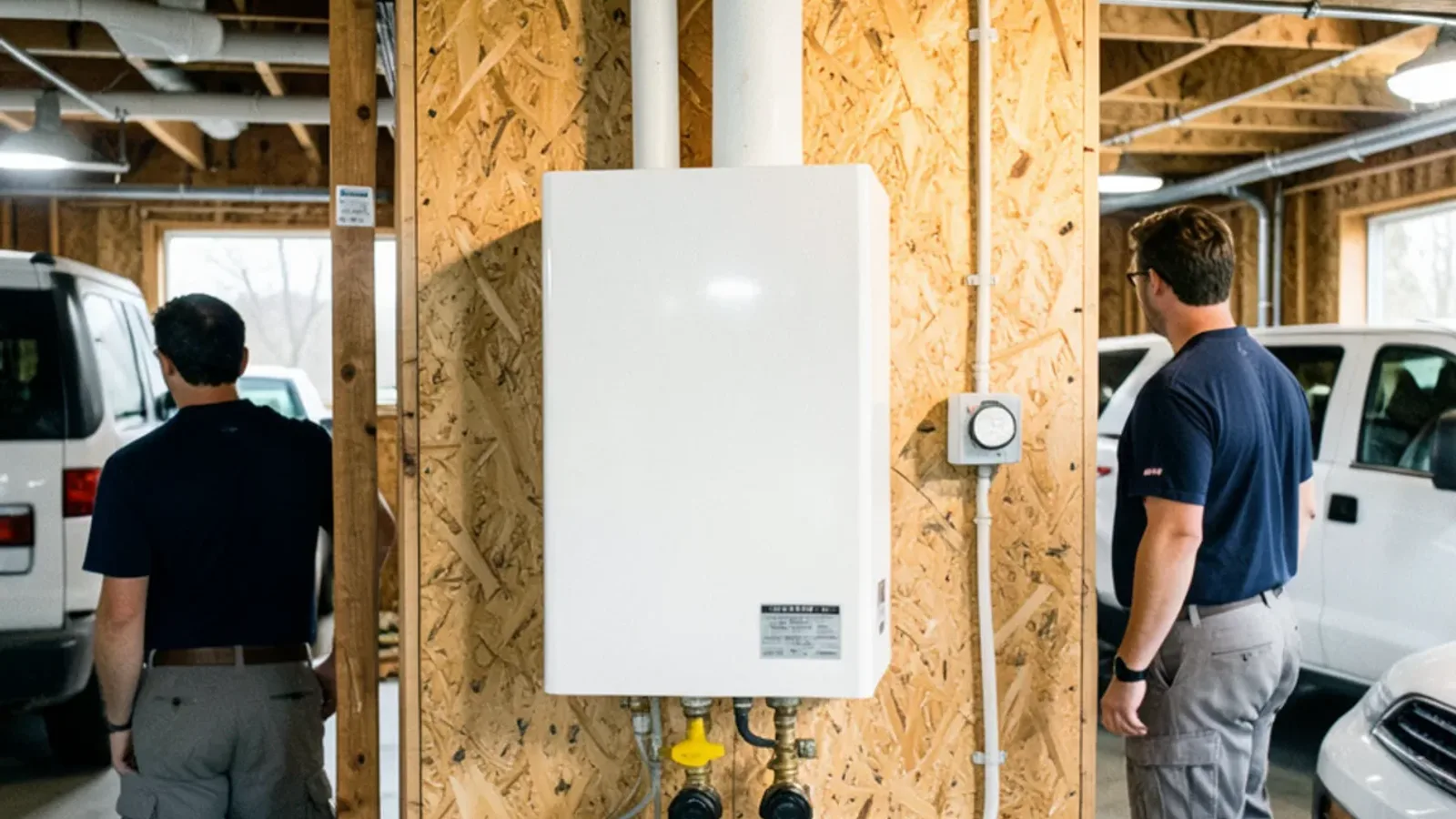
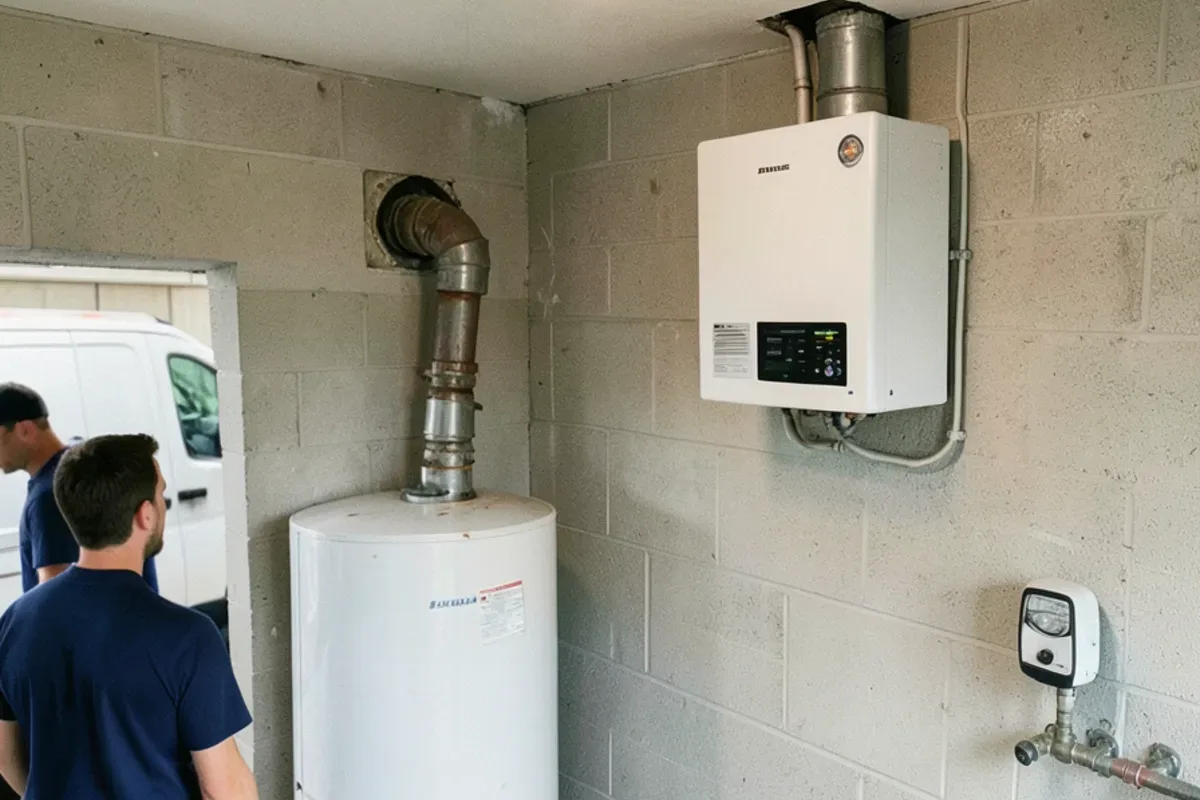
Tankless water heater installation in Warren is rarely a straight swap. A tank sits on the floor, runs on a small gas line and vents up the chimney. A gas tankless unit hangs on the wall, can burn several times as much gas at full fire, and usually needs its own vent through the side of the house.
Most of the work is planning that happens before the unit comes out of the box. Done right, you get hot water that keeps going through back-to-back showers and a basement corner freed from a 50-gallon tank. Done wrong, the unit starves for gas when the furnace and dryer are running, or showers turn lukewarm in January. The sections below cover the decisions that separate the two.
Is a tankless water heater right for your Warren house?
Most Warren calls about tankless start one of two ways: an old tank has failed, or a household keeps running out of hot water halfway through the second shower. In a house from the 1950s or 1960s, that old tank usually vented into a masonry chimney and ran on a small gas branch, so going tankless changes more than the appliance. The comparison below is where we start.
| Tankless tends to fit when | A tank may suit you better when |
|---|---|
| Long or back-to-back showers keep running a tank out | Two showers and the washer often run at once and the gas supply is limited |
| A short vent route out a side wall is available | The only vent route is long or crowded by windows and the gas meter |
| You plan to stay long enough for lower standby losses to add up | Lowest installed cost today matters most |
| You will keep up with yearly descaling | You'd rather not schedule descaling |
For reference, a gas tankless unit carrying the Energy Star label has to deliver at least 2.8 gallons a minute with a 67-degree temperature rise. That is a floor, and many whole-house units are rated well above it. If a tank still looks like the better fit, our water heater installation page compares gas, electric and heat pump models.
Sizing tankless for a Michigan winter
Tankless units are rated by flow at a given temperature rise, which is the difference between the water coming in and the water you want at the tap. In a Michigan winter the incoming water is far colder than in August, so the same unit delivers less flow. The rule of thumb is that heat output in BTUs per hour equals about 500 times the flow in gallons per minute times the degrees of rise. A unit putting 180,000 BTUs an hour into the water can lift roughly 4.8 gallons a minute by 75 degrees.
| Fixture running | Typical flow |
|---|---|
| Shower with a standard head | Up to 2.5 GPM, the federal maximum |
| Shower with a WaterSense head | 2.0 GPM or less |
| Kitchen faucet | Up to 2.2 GPM |
| Bathroom faucet with a WaterSense aerator | 1.5 GPM or less |
| Washer or dishwasher on hot | Varies by machine; check the manual |
Add the fixtures your household really runs together, then size to the coldest month. Our post on what size water heater you need explains the tank side of the same decision.
Gas line and meter questions to settle first
A typical gas tank burns a fraction of what a whole-house tankless unit does at full fire, and gas pipe is sized for the total load and the distance from the meter. The half-inch branch that fed your old tank usually can't carry a large tankless unit, so a bigger line from the meter or the main gas trunk is common. The meter and regulator belong to the gas utility, Consumers Energy in Warren, and if the house's total load outgrows them, the utility has to be involved.
That gas work falls under Michigan's mechanical licensing rather than the plumbing license, and Warren puts residential gas piping on its mechanical permit. Plan for it as a separate line item. Our gas line installation and repair page explains how sizing and pressure testing work. Electric tankless is a different problem: whole-house models draw so much current that a home on an older 100-amp service usually can't support one.
Venting and condensate drains for tankless units
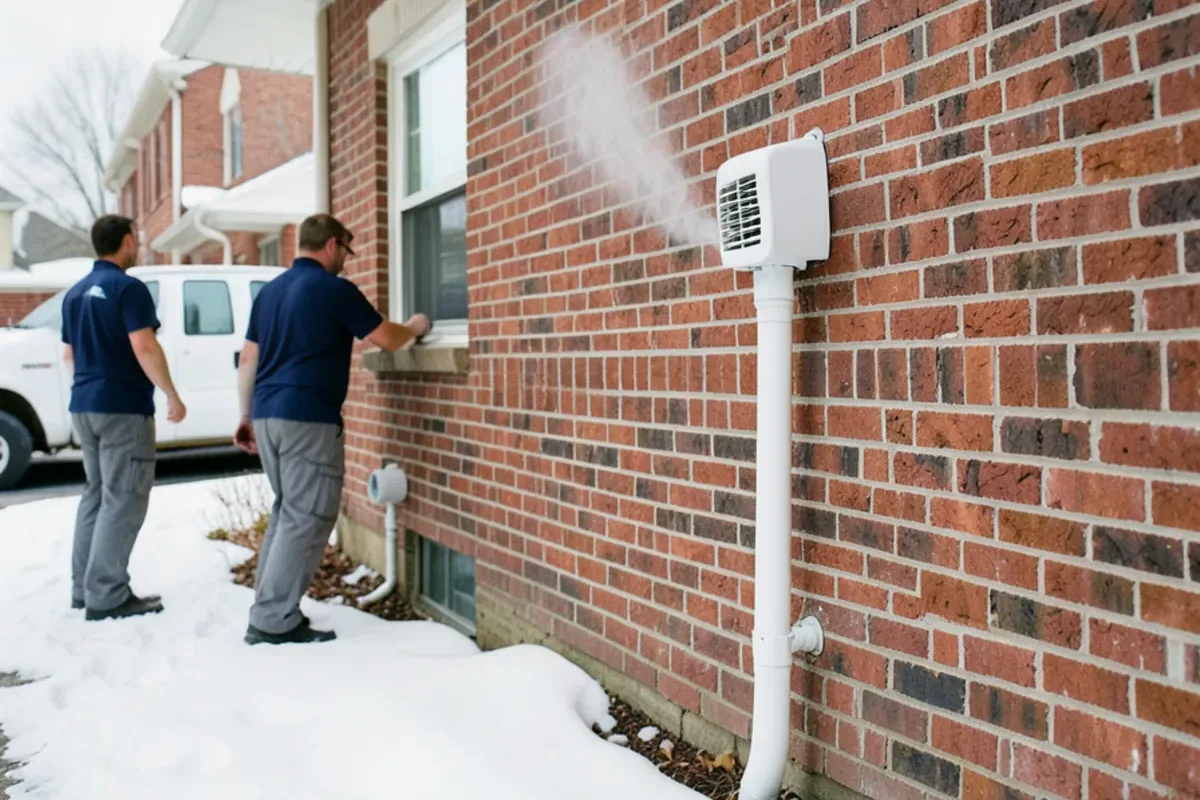
Condensing tankless units, the high-efficiency kind most people install, vent in plastic pipe through a side wall or the roof, often with a separate intake. The termination has to keep the manufacturer's clearances from windows, doors and the gas meter, and it has to sit above where snow drifts against the house. The intake also needs distance from the exhaust, or frost from the exhaust plume can build up on it. Non-condensing units need stainless steel venting instead. If an older furnace still uses the chimney, its venting should be checked once the water heater no longer shares it.
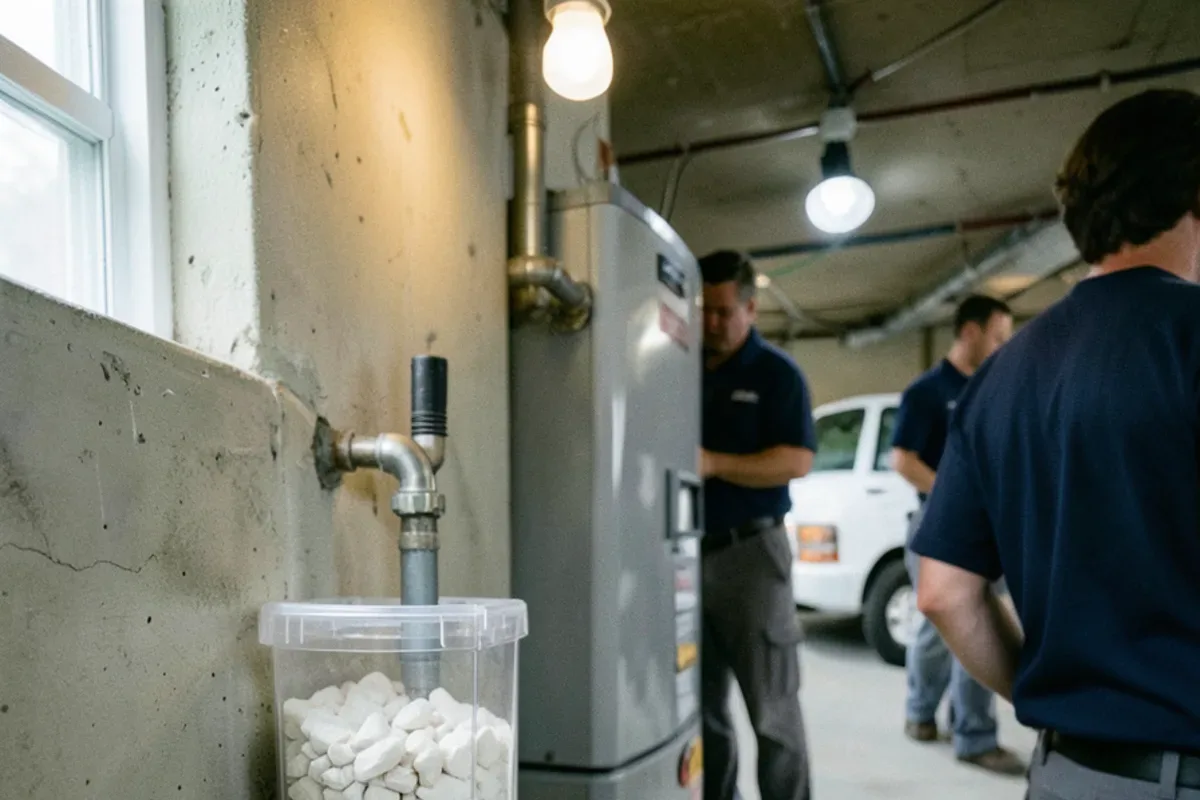
A condensing unit also produces acidic condensate. It runs through a neutralizer and then to a floor drain or a condensate pump, kept indoors so it cannot freeze.
Who installs tankless water heaters in Warren?
Under Michigan's Skilled Trades Regulation Act, the water side is plumbing work done by a journey or master plumber holding a state license, with a permit pulled by the plumbing contractor. The gas piping is mechanical work. Warren lists the water heater on both its plumbing and mechanical permit forms, and the Building Division confirms which permits a given job needs. You can look up any contractor's credentials through the State of Michigan's online license search before you hire. In Warren those permits come from the Division of Buildings and Safety Engineering at One City Square. An owner-occupant may pull a homeowner permit, but a rental needs a contractor, and the water side is inspected against the 2021 Michigan Plumbing Code.
How a tankless installation day runs
A complete tankless installation covers the unit and every system around it:
- A gas load count and a new, larger gas line where the old branch falls short.
- Intake and exhaust venting to a side-wall or roof termination.
- A condensate neutralizer and a drain or pump route.
- Isolation valves with purge ports, plus a relief valve.
- Removing the old tank and sealing its chimney opening.
Confirm the plan
Gas load, pipe lengths, vent route, condensate drain and a nearby outlet for the controls are settled before the install date.
Remove the old tank
The tank is drained and taken out, and its old chimney opening is sealed if nothing else uses it.
Mount the unit and service valves
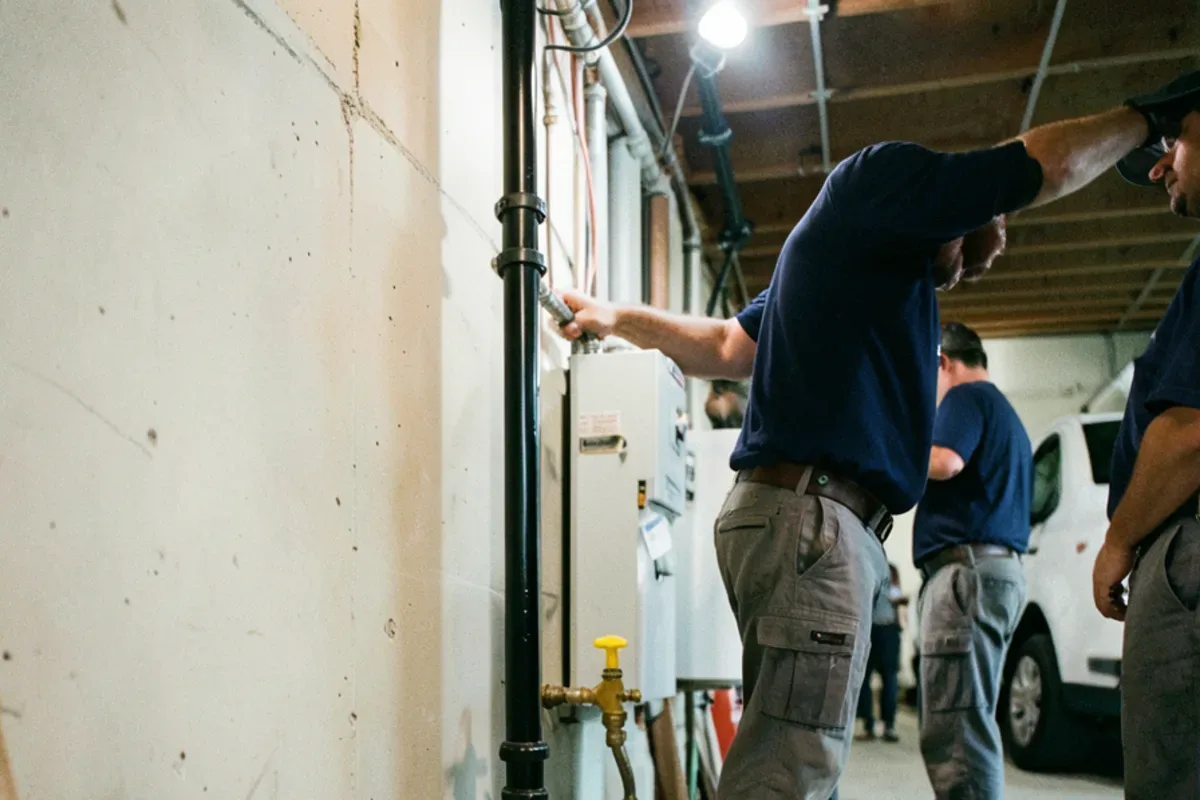
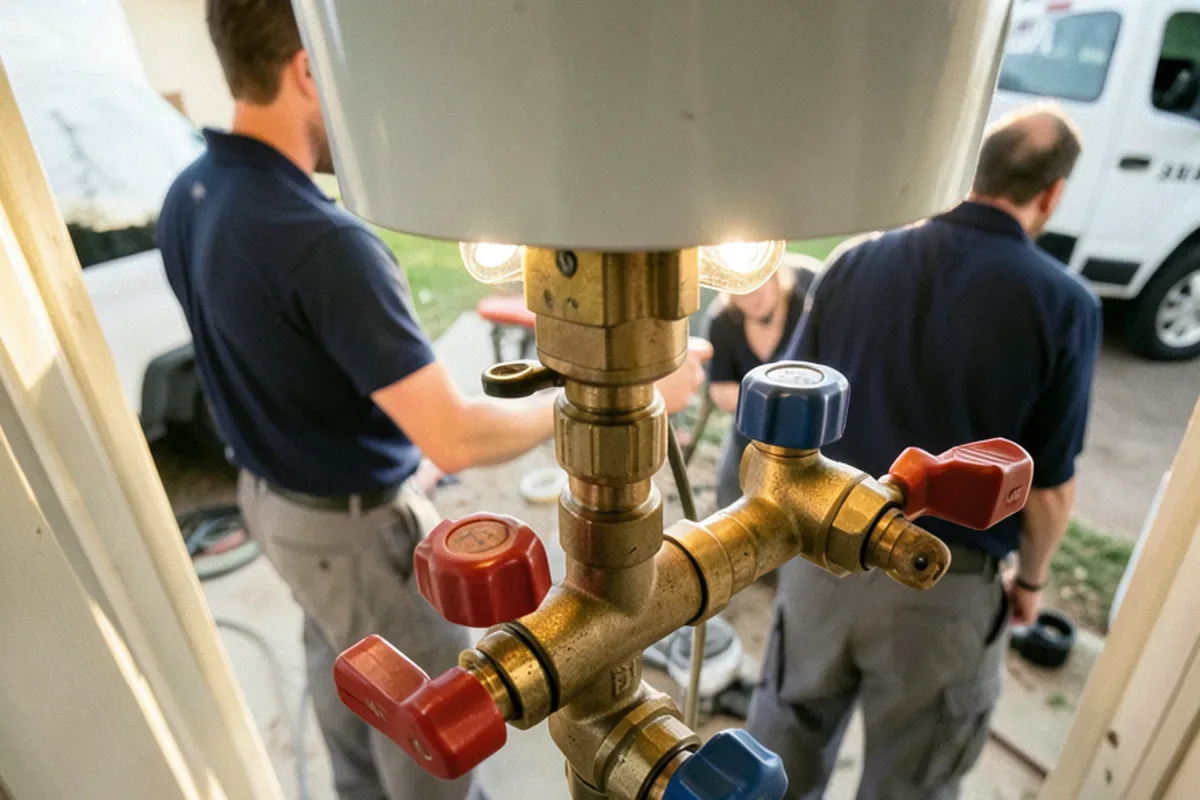
The heater goes on the wall with a pair of isolation valves that have purge ports for descaling, plus a relief valve.
Run gas, vent and condensate
The new gas line is connected and leak tested, the vent is run to its termination and the condensate line goes to the neutralizer.
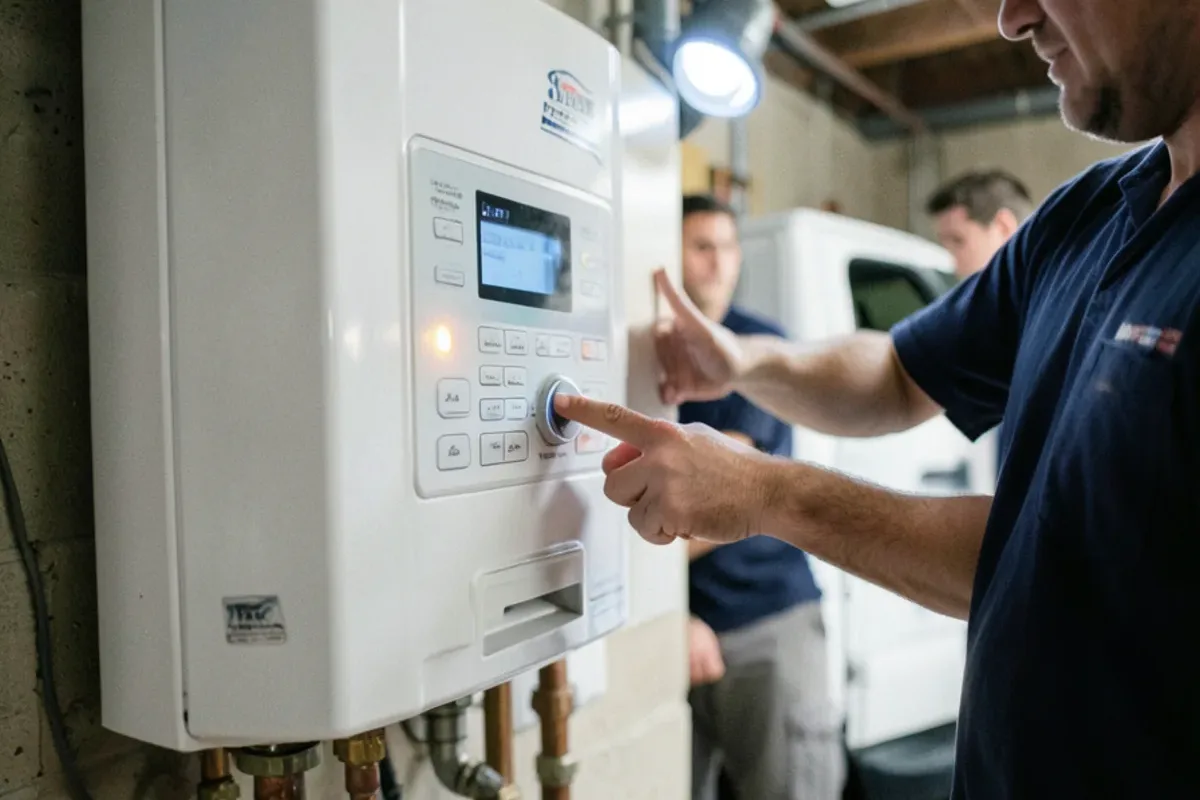
Commission it
Air is purged from the lines, gas pressure is read at the unit at full fire with other appliances running, and the temperature is set.
What shapes the cost of tankless installation
Tankless costs more to put in than a tank swap mostly because of what surrounds the unit. The heater is one line on the estimate. Gas, venting and condensate are the others, and each depends on your house:
- Condensing or non-condensing, and the unit size your winter flow calls for.
- Gas line upsizing and the distance back to the meter.
- Any meter or regulator change that involves the utility.
- Vent length and the wall it passes through, brick or siding.
- The condensate route, and whether a pump is needed.
- Removing the old tank, sealing the chimney opening and the plumbing and mechanical permits.
Descaling and the upkeep a tankless unit needs
Warren's 2025 water quality report puts average hardness at about 105 milligrams per liter, moderately hard by the USGS scale. In a tankless heat exchanger, scale forms where the water heats fastest, and manufacturers call for periodic descaling. The job uses the purge ports: a small pump circulates descaling solution through the unit for about an hour, then it is flushed. Once a year is common, sooner in a busy household. Clean the inlet screen at the same time, and keep the outdoor terminations clear of snow and leaves through the winter. Tank owners follow a different routine, laid out on our water heater repair and maintenance page.
Planning tankless with a plumber on Stephens Rd
From our office in 48089 we work in basements where a tank has vented into a 1960s chimney on a half-inch gas branch for decades. Before you pick a unit we add up every gas appliance, measure the run from the meter and walk the vent route outside, then tell you plainly if a new tank fits your house better. The cost factors and a written scope come before any wall is drilled, along with which plumbing and mechanical permits apply. Owners weighing tankless for a home, a rental or a small shop all call the same line.
Tankless water heater installation around Warren and nearby cities
- Plumber in Troy
1970s colonials and tri-levels with finished basements, where freeing the old tank footprint is often the reason to switch.
- Plumber in Sterling Heights
Consumers Energy supplies gas here as in Warren, so a meter upgrade for a large unit goes through the same utility.
- Plumber in Clinton Township
A quarter of units sit in buildings of five or more, where each tankless vent needs its own clear path outdoors.
- Plumber in Royal Oak
61% of homes predate 1960; once the tank leaves a shared masonry chimney, the furnace venting needs a recheck.
- Plumber in Fraser
Condos and townhouses are 12% of homes, and a side-wall vent there has to clear neighboring windows and doors.
- Plumber in Clawson
Most homes are 1950s and 1960s builds with gas branches sized for a tank, so a whole-house unit usually needs a new line.
- Plumber in St. Clair Shores
On the Lake St. Clair shore, winter wind and drifting snow make termination height on the side wall worth planning.
- Plumber in Harper Woods
Its water comes from GLWA's Northeast plant, as Warren's does, so heat exchangers scale at the same moderate rate.
Tankless water heater installation questions from Warren customers
Who installs tankless water heaters?
A plumber handles the water connections and the unit, and the gas piping is mechanical work done under a fuel gas license with Warren's mechanical permit. Because tankless installs often need a larger gas line and new venting, it pays to have both sides planned together before you buy a unit.
Will a tankless water heater keep up with two showers in winter?
Yes, a properly sized whole-house gas unit usually can. The catch is incoming water temperature. Two showers at 2.5 gallons a minute need about five gallons a minute combined, and in January the unit has to raise that water much further than in summer. We size to the coldest month so the second shower doesn't go lukewarm.
Can a tankless water heater use my existing gas line?
Yes for some small units, but rarely for a whole-house model. The line that fed a tank was sized for a much smaller load. We measure the run from the meter, add up every gas appliance in the house and tell you whether a new, larger line is needed before you choose a unit.
Does a tankless water heater work during a power outage?
No. Gas tankless units need electricity for the controls, igniter and fan, so they stop when the power goes out. A standard tank with a standing pilot keeps heating without power. If outages are common on your street, that is worth weighing, and some owners add a small battery backup for the unit.
Still not sure what you're dealing with? Describe it on the phone and we'll tell you what we'd check first.
(207) 419-2600Last updated October 25, 2026