
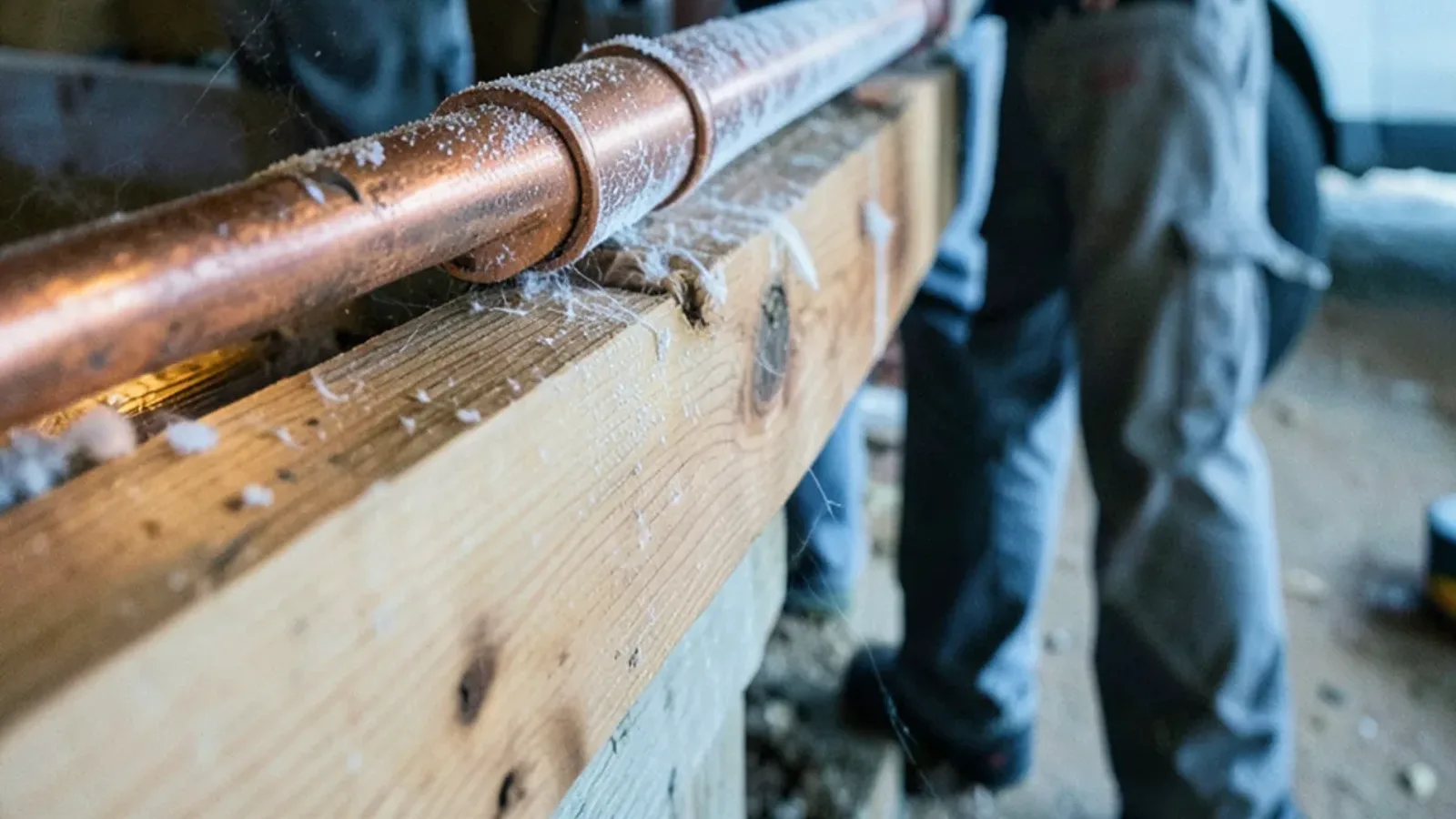
Frozen pipes in Warren tend to announce themselves the same way every winter. It's a bitter morning, the kitchen faucet coughs out a little air and then nothing, and the bathroom sink works fine. Somewhere between the meter and that faucet, a stretch of pipe has an ice plug in it.
It probably hasn't split yet. What you want now is a slow, controlled thaw and a careful look at the pipe before full pressure comes back.
The National Weather Service's Detroit normals put the average January low at about 19°F, and Warren's own building rules call for 42-inch footings. A pipe in a drafty rim joist or a kitchen wall facing the yard doesn't need record cold to freeze. A few nights well below that normal low and a gap in the sill plate will do it.
Which pipe is frozen, and has it already cracked?
| What you notice | Where to look | What it tells you |
|---|---|---|
| One faucet is dry, the rest of the house works | That fixture's supply, often in a cabinet on an outside wall | A short frozen branch, usually reachable |
| Hot water runs at a sink but cold does not | The cold line, which sits closer to the outside wall | The hot line stayed warm enough from use |
| A toilet tank won't refill | The supply line in a bathroom over a garage, porch or crawl space | Cold air under the floor |
| No water at any fixture | Where the service line enters the house, near the meter | The line is frozen at the wall or below ground |
| Water starts dripping as things warm up | Wherever the drip is | It has split. Close the main now |
That last row changes everything. A frozen line that has opened up is no longer a thawing job. Close the main valve, and see our burst pipe repair page for what happens next.
What to do while the pipe is still frozen
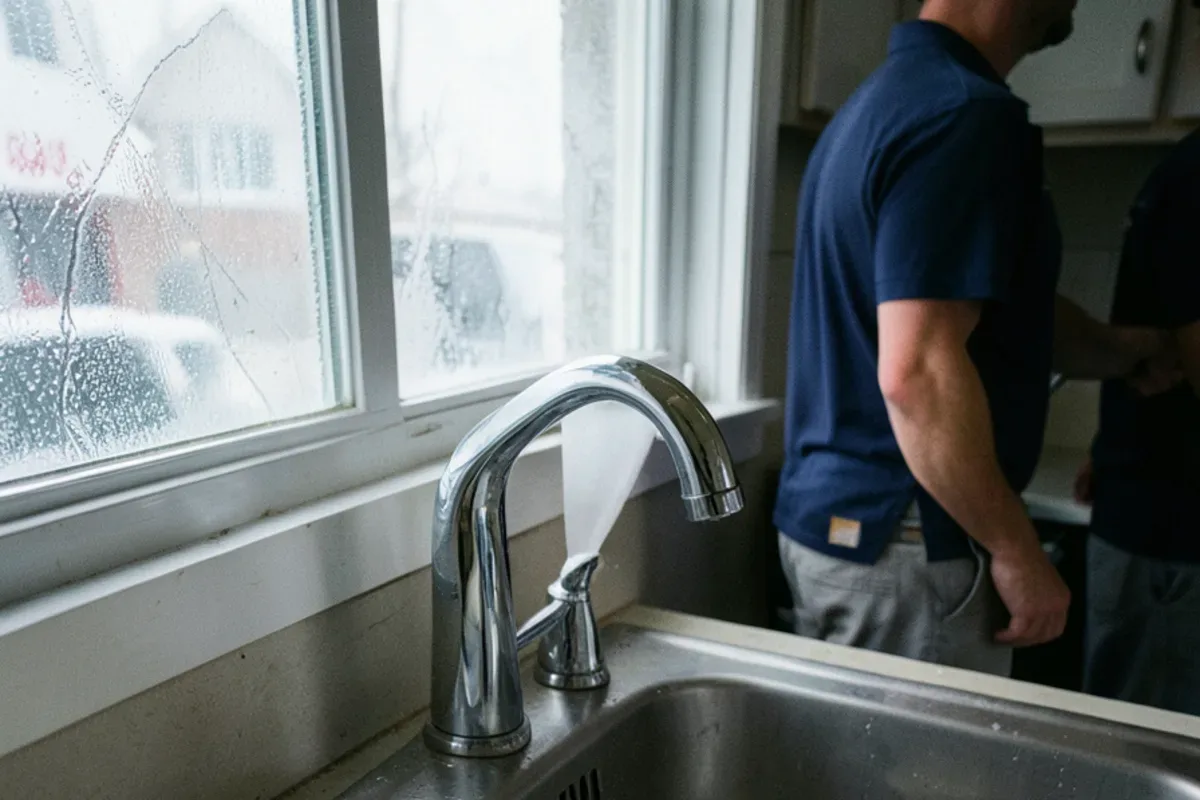
Open the faucet that line feeds
Leave it open. Melting ice and trapped water need an exit, and a trickle starting is your sign the thaw is working.
Warm the room around the pipe
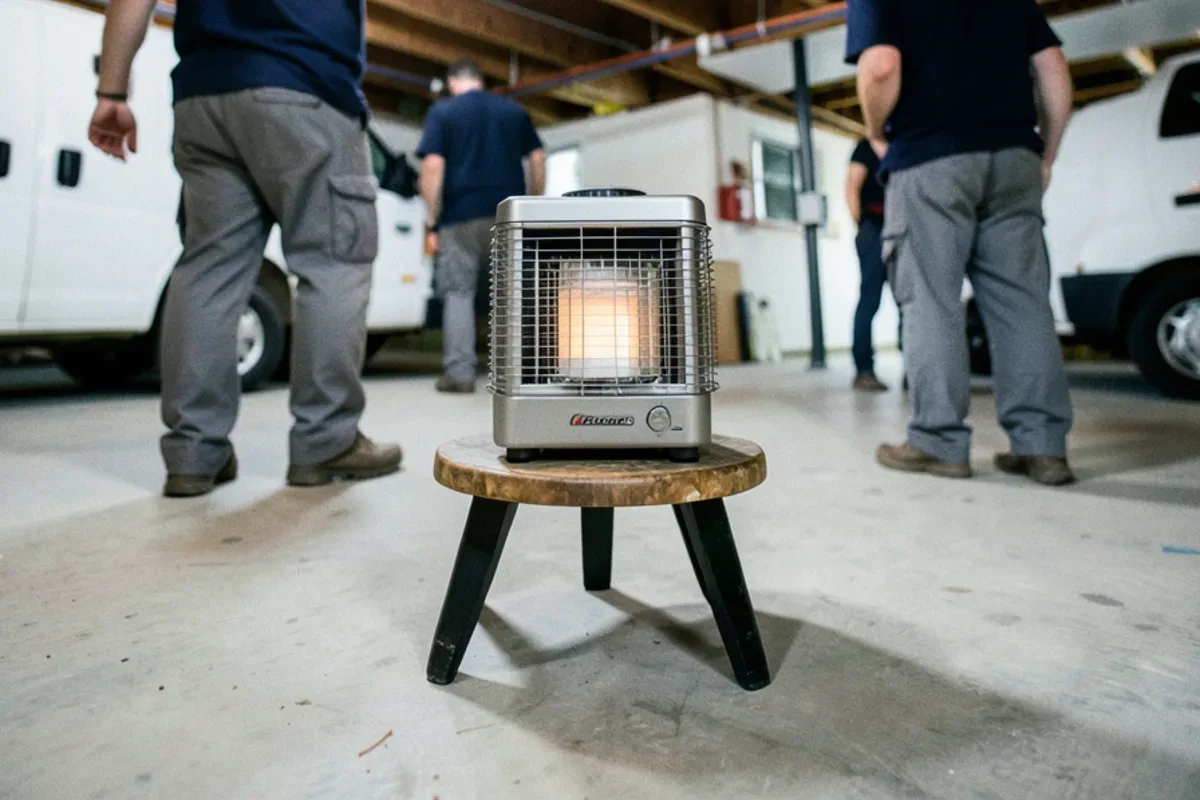
Open the sink cabinet, turn up the heat, and put a space heater in the room at a safe distance from anything that can burn.
Add gentle heat, starting near the faucet
A hair dryer or a heating pad on the pipe, working from the faucet end back toward the cold spot, lets water drain out as the ice melts.
Keep a hand on the main
Know exactly where your main valve is before you start. If a drip appears as the line warms, close it.
What a frozen pipe call covers, from the dry tap to the draft
Most of a frozen pipe call is tracking and patience. In a Warren basement the ice usually sits along the rim joist, behind a wall shared with an attached garage or where the service line comes through the foundation. Once it's found, the thaw method is matched to the pipe, pressure comes back slowly, and you hear where the cold air got in. The work usually includes:
- Tracing the frozen section from the dry fixture to the cold spot
- Thawing exposed lines, lines inside finished walls and service lines frozen at the foundation
- Slow repressurizing with a check of nearby joints and the meter
- Remaking a fitting the ice loosened, or a hand-off to burst pipe repair if a pipe split
- Air sealing, insulation, heat cable or a reroute for a line that freezes every winter
Why pipes freeze in houses that feel warm inside
A heated house still has cold pockets. The rim joist, where the floor framing sits on the foundation, is the most common one in Warren basements. Supply lines often run right along it, inches from a sill plate that lets outside air through. Kitchen sinks on exterior walls, bathrooms over attached garages, additions built over crawl spaces and hose bibs with a hose still connected all freeze for the same reason: moving cold air reaches the pipe faster than house heat does.
Warren's housing makes the pattern predictable. About 32 percent of the city's homes predate 1960, and 46.5 percent in 48089, the southeast ZIP around our office. Houses that age often have galvanized branches strapped to the band joist with nothing between them and the sill.
A deep thermostat setback overnight or a rental sitting empty with the heat low makes it worse. Our post on why pipes freeze on exterior walls goes spot by spot through the places to check.
How we thaw frozen pipes without damaging them
| Method | Best for | Watch out for |
|---|---|---|
| Warm air and space heaters | Exposed pipe in a basement or cabinet | Slow; heaters need clearance from walls and boxes |
| Heat cable or a heating pad | A short exposed section | Cable must be made for that pipe material and never overlapped |
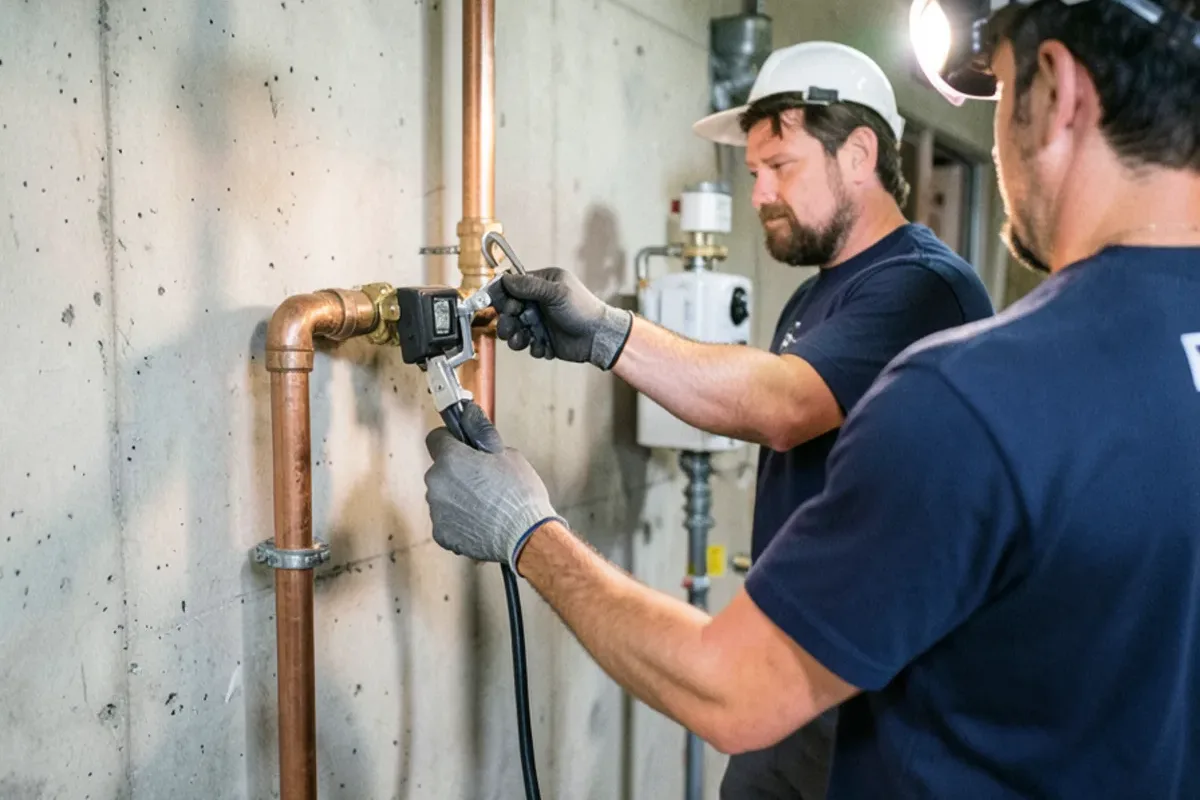
| Electric pipe thawing machine | Metal pipe, including a copper service line frozen where it enters the house | Not for PEX or CPVC; the current path has to be controlled |
| Warm water pumped through a thin tube | A service line frozen underground or plastic pipe | Needs an open end to work from, often at the meter |
| Opening the wall | A frozen pipe sealed inside a finished wall | Cutting drywall, but you see the pipe before pressure returns |
The method depends on pipe material and where the ice is. A service line frozen where it comes through the foundation is a different situation, since the ice can extend outside, below grade. That's where a thawing machine on copper, or warm water fed in from the meter end, saves digging.
A frozen pipe visit, step by step
Hear what stopped
Which fixtures went dry, and on which side, tells us which run to follow.
Find the cold spot
An infrared thermometer along outside walls, the garage side and the rim joist.
Give meltwater a way out
The fixture stays open. Drywall gets opened only where we agree.
Thaw to suit the pipe
Warm air, heat on the pipe, a thawing machine on metal or warm water into a buried line.
Repressurize in stages
The main opens a little at a time while the thawed run and meter are watched.
After the thaw, a check of every joint the ice stressed
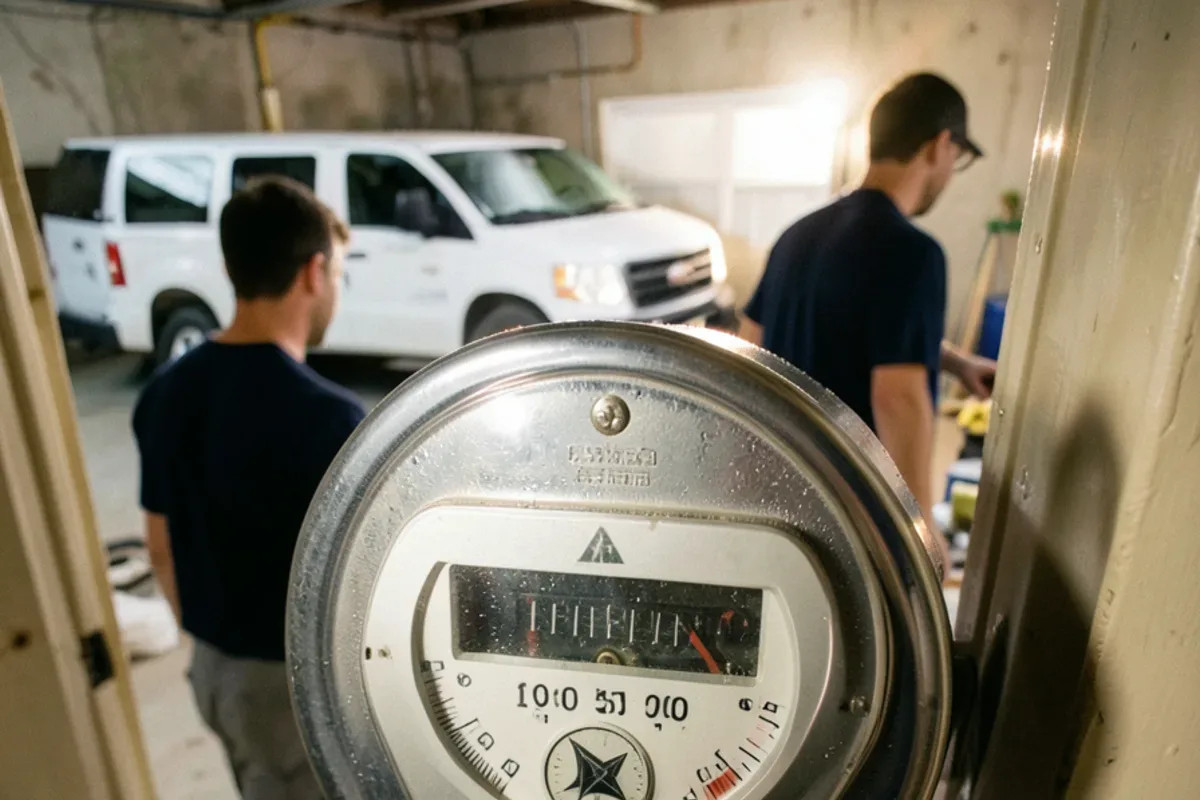
Flow coming back isn't the end of the visit. Ice expands, and even when the pipe holds, a solder joint or a fitting near the frozen section can be weakened. With the line thawed, the main is opened gradually and we watch the pipe, then the meter. Many residential meters have a small leak indicator on the dial that turns when any water is moving. If it turns with every fixture closed, something opened up, and we find it before calling the job done.
A line that froze once will freeze again in the same weather, so we'll also show you where the cold air is getting in.
Frozen pipe repair cost factors
- Where the ice is. An exposed basement pipe takes less time than one inside a finished wall or below grade outside the foundation.
- Pipe material, which decides which thawing method can be used.
- Whether anything split or a fitting was damaged as the line froze.
- How many sections froze. A cold rim joist can freeze two or three lines at once.
- The fix that keeps it from happening again: sealing, insulation, heat cable or moving a line.
We don't post prices, because a kitchen branch that thaws with the cabinet open and a service line frozen at the foundation are very different jobs. You hear which factors apply before work starts.
Permits, licensing and the curb stop
Thawing a line or remaking one joint is repair work, and Warren's permits-required sheet doesn't name it. Replacing a run of supply pipe or moving a line into heated space is a plumbing alteration, which the city's Division of Buildings and Safety Engineering says may need its own permit; the 2021 Michigan Plumbing Code, in force since March 2024, sets how it's done. Michigan LARA licenses plumbing contractors and has an online lookup. Owners may pull a permit for the house they live in; rentals need a contractor.
Frozen lines across 48089 and the rest of Warren, from Stephens Rd
Our office is at 11355 Stephens Rd in 48089, where nearly half the houses predate 1960 and supply lines on cold basement walls come with the territory. Homeowners, landlords with an empty unit and businesses with a restroom on an outside wall all use one phone number. The order of work doesn't change: find the ice and the reason it formed before suggesting a fix, explain what moves the cost, put the scope in writing before work begins, and say plainly when a repair needs a permit.
How do you keep pipes from freezing next winter?
Start where the cold gets in. Sealing gaps at the sill and rim joist with foam or caulk does more than any pipe sleeve, because it stops the moving air. Then insulate exposed lines along outside walls. Before the first hard freeze, take the hoses off outdoor faucets and, if yours has an inside shutoff, close it and drain the outside spigot.
During a deep cold snap, open sink cabinets on outside walls and let a faucet drip, as the state's MI Ready guidance suggests. Keep the heat at a normal setting if you'll be away. For a line that freezes every year, heat cable or a short reroute into heated space is the lasting answer. If your service line itself froze, ask about its depth and condition; our page on main water line repair explains the work from the curb stop to the house.
Frozen pipe repair around Warren and nearby cities
- Plumber in Hazel Park
One in five Hazel Park homes predates 1940, often with supply lines on drafty rim joists.
- Plumber in Ferndale
In Ferndale, 42 percent of houses predate 1940, with galvanized branches inside old frame walls.
- Plumber in Highland Park
Mostly prewar, and nearly a quarter of units stood vacant in 2020. Unheated houses freeze first.
- Plumber in Hamtramck
In pre-1940 two-unit flats, one frozen riser in an outside wall can leave the upstairs dry.
- Plumber in Eastpointe
About a third of Eastpointe homes predate 1950, with cold-wall branches in block basements.
- Plumber in Center Line
Nearly half of households rent, and a unit left empty with the heat down is a frozen line waiting.
- Plumber in Berkley
Forty percent of homes are 1940s builds, where a finished basement ceiling hides a frozen line.
- Plumber in Fraser
In Fraser condos, a freeze in a shared wall can leave the neighbor dry, with the shutoff in another unit.
Frozen pipe repair questions from Warren customers
Will a frozen pipe thaw on its own?
Yes, eventually, when the weather warms, but that's a gamble. The pressure that builds while the line is frozen can split it, and you won't know until it thaws and water starts running into a wall or ceiling. A controlled thaw with the faucet open, while someone is home and can close the main, is the safer path.
Why is only my kitchen faucet frozen?
Kitchen sinks often sit on an outside wall, and the supply lines run through a cold cavity behind the cabinet. Open the cabinet doors to let room heat in, open the faucet, and warm the pipe gently. If the cold line freezes every winter, the wall cavity likely needs air sealing or the line needs moving.
Is it safe to use a hair dryer on a frozen pipe?
Yes, on exposed metal or plastic pipe, as long as you keep it moving, stay away from standing water and start near the open faucet. Don't leave it running unattended. Never use a torch or any open flame, and don't run a fuel-burning heater in a closed basement.
My water service line froze. Who handles that in Warren?
Warren owns the line from the main to the curb stop near your property line, and you own it from the curb stop to the meter. A freeze where the line enters your basement is on your side. If the freeze or a break appears to be at or past the curb stop, call the city's Water Division.
How long does it take to thaw a frozen pipe?
It depends on where the ice sits and what the pipe is made of. An exposed copper branch in a basement or sink cabinet often frees up within an hour of gentle heat. A line inside a finished wall, or a service line frozen at the foundation, takes longer and may need a thawing machine. Keep the faucet open throughout.
Still not sure what you're dealing with? Describe it on the phone and we'll tell you what we'd check first.
(207) 419-2600Last updated October 25, 2026