
 By Plumber in Warren, MI, plumbers on Stephens Rd in WarrenPublished October 25, 2026Last updated October 25, 2026
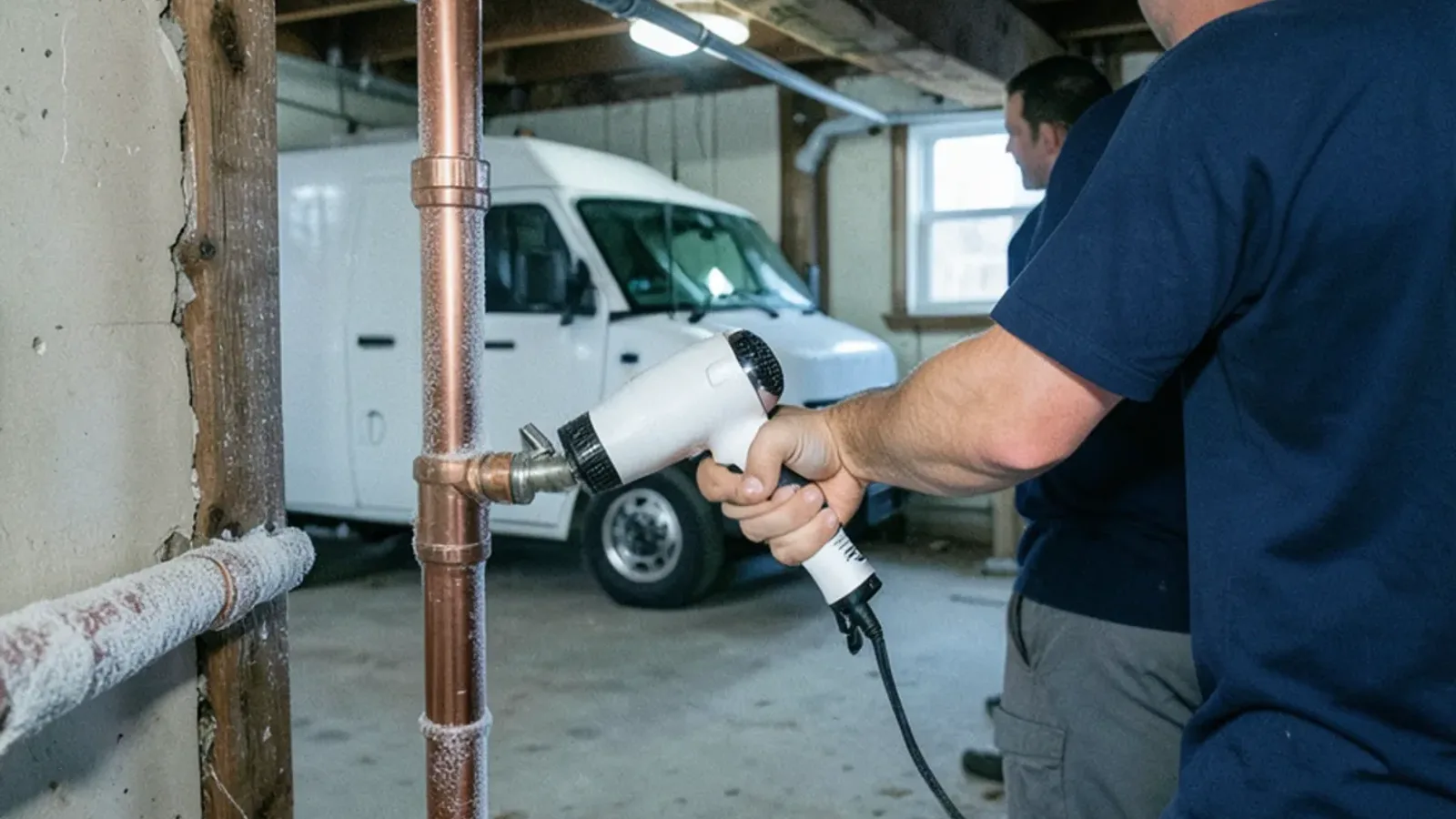
To thaw frozen pipes without splitting them, open the faucet the frozen pipe feeds, then warm the pipe with gentle heat, starting at the faucet end and working back toward the ice. A hair dryer, heating pad or hot, wrung-out towels all work; an open flame never does. Keep going until full pressure returns, then check for a split.
The order matters as much as the heat. Water trapped between the ice and a closed faucet has nowhere to go as the pipe freezes, which is why pipes burst. An open faucet gives that pressure an exit and gives melting ice somewhere to drain.
Finding the frozen section of pipe
A frozen pipe announces itself at the faucet. You turn it on after a bitter night and get a trickle or nothing at all, while other faucets in the house work. Run every faucet, hot and cold, to narrow it down. If only the kitchen cold is out, the ice is in the cold line to the kitchen. If the whole house is dry, the freeze may be where the service line comes in, and that's a different call.
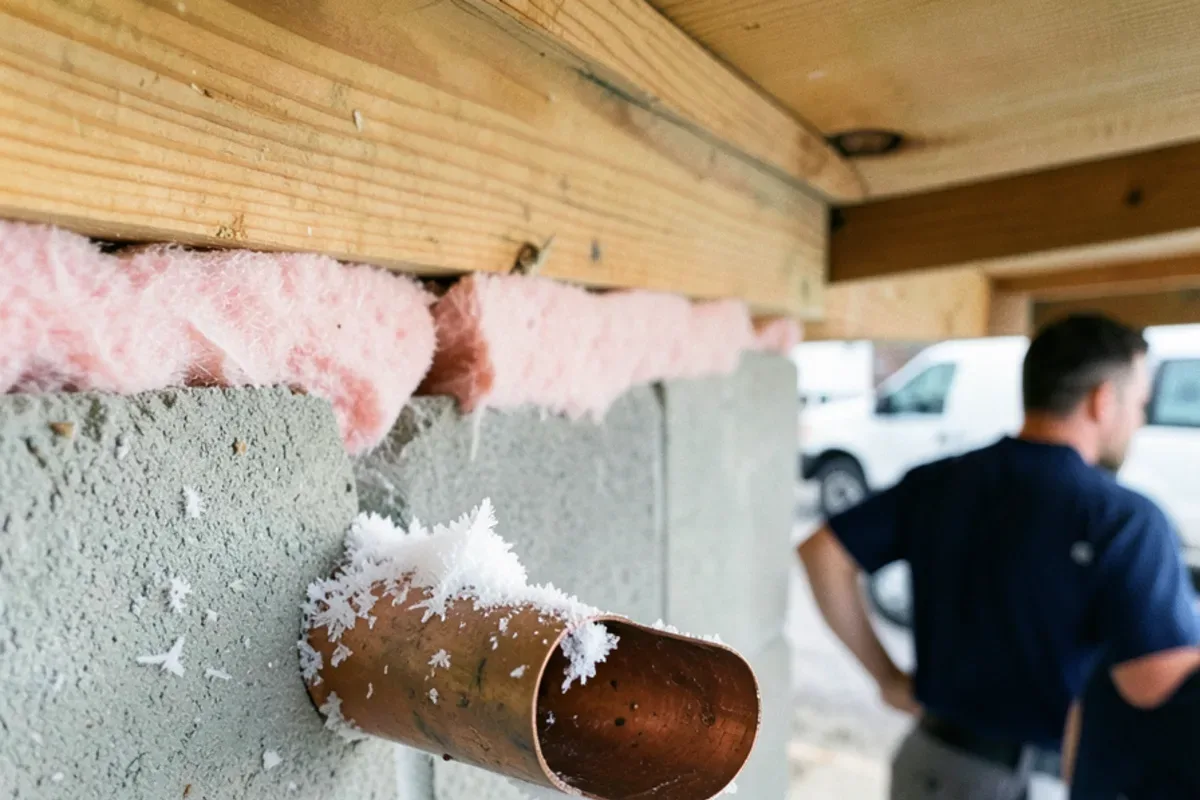
Then follow the pipe. In a basement house, start at the spot where the line runs closest to an outside wall, usually along the rim joist at the top of the foundation. Look for frost on the pipe, feel for the coldest section, and check where the pipe passes near a dryer vent, a window or a gap in the insulation. If you're in a Troy house with a bathroom over the attached garage, the garage ceiling is the first place to check. Our post on why pipes freeze on exterior walls explains why those spots go first.
Before you put any heat on the pipe
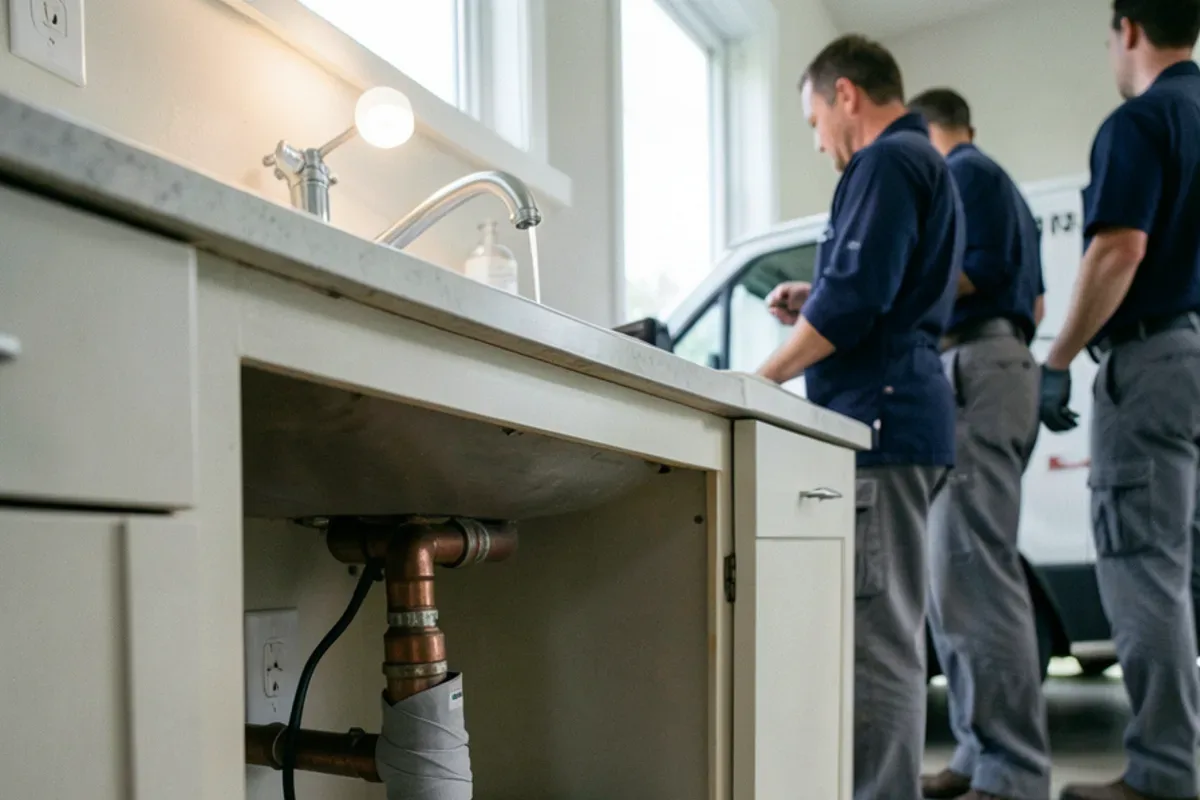
Open the faucet the pipe feeds, both handles if it's a mixing faucet. Know where your main shutoff is and make sure you can close it, because the split, if there is one, won't leak until the ice melts. Our guide to shutting off your main water valve covers it. Put a towel or a pan under the section you're about to warm.
Then look closely at the frozen section. A bulge, a hairline crack or a fitting that has pulled apart means the pipe has already failed. Thawing it will start the leak. In that case, close the main first and treat it as a burst pipe repair instead of a thaw.
How to thaw frozen pipes one section at a time
Start at the faucet end
Warm the pipe closest to the open faucet first and work back toward the ice. Melted water drains out through the faucet instead of building pressure behind a plug.
Use gentle, steady heat
Hold a hair dryer a few inches away and keep it moving. An electric heating pad wrapped around the pipe or towels soaked in hot water and wrung out also work. A space heater can warm a room or cabinet if it sits well clear of anything that can burn.
Watch the faucet
A trickle that speeds up means the ice is going. Keep the faucet open and keep warming until the flow is back to full pressure.
Check the rest of the house
One frozen line usually means others are close. Run every faucet again and look at any pipes on the same outside wall.
Inspect the pipe once water flows
Run your hand and a flashlight along the thawed section and its fittings. A drip now is far better found than a drip discovered in a week.
What never to use on a frozen line
| Method | Why not |
|---|---|
| Propane or butane torch | Starts fires inside walls and joist bays, and can overheat a joint until the solder lets go |
| Kerosene or propane heater, charcoal grill | Open flame and carbon monoxide in an enclosed basement or crawl space |
| Heat gun held close | Gets hot enough to scorch wood and soften plastic pipe |
| Boiling water poured on the pipe | Sudden temperature change can crack fittings, and the water ends up on the floor |
| Thawing with the faucet closed | Melted water has nowhere to go, so pressure builds against the remaining ice |
PEX and CPVC need extra care. They tolerate freezing better than copper but soften with too much heat, so keep the hair dryer moving and skip anything hotter.
What if the frozen pipe is inside a wall or ceiling?
You can't put a hair dryer on a pipe you can't see, but you can warm the space around it. Turn the heat up, open cabinet doors under the sink, and aim a space heater at the wall from a safe distance. Some people also warm the wall surface with a hair dryer. It's slow, and it only works when the freeze is short and close to the surface.
If a few hours of that doesn't bring the water back, or you can't tell where the ice is, it's time to call. A frozen pipe repair visit usually starts by finding the coldest section with a thermal camera or a temperature probe, then thawing it from the closest access point. Sometimes that means a small, neat opening in drywall instead of guessing. If the pipe split inside the wall, the opening is needed anyway.
After the thaw, check for damage
Copper often splits along its length a short distance from the ice plug, not right at it, so look along the whole section that was frozen. Check soldered joints and push-fit fittings for drips. On the floor above a basement freeze, look for new stains on ceilings over the next day. A slow leak from a hairline split can take a while to show.
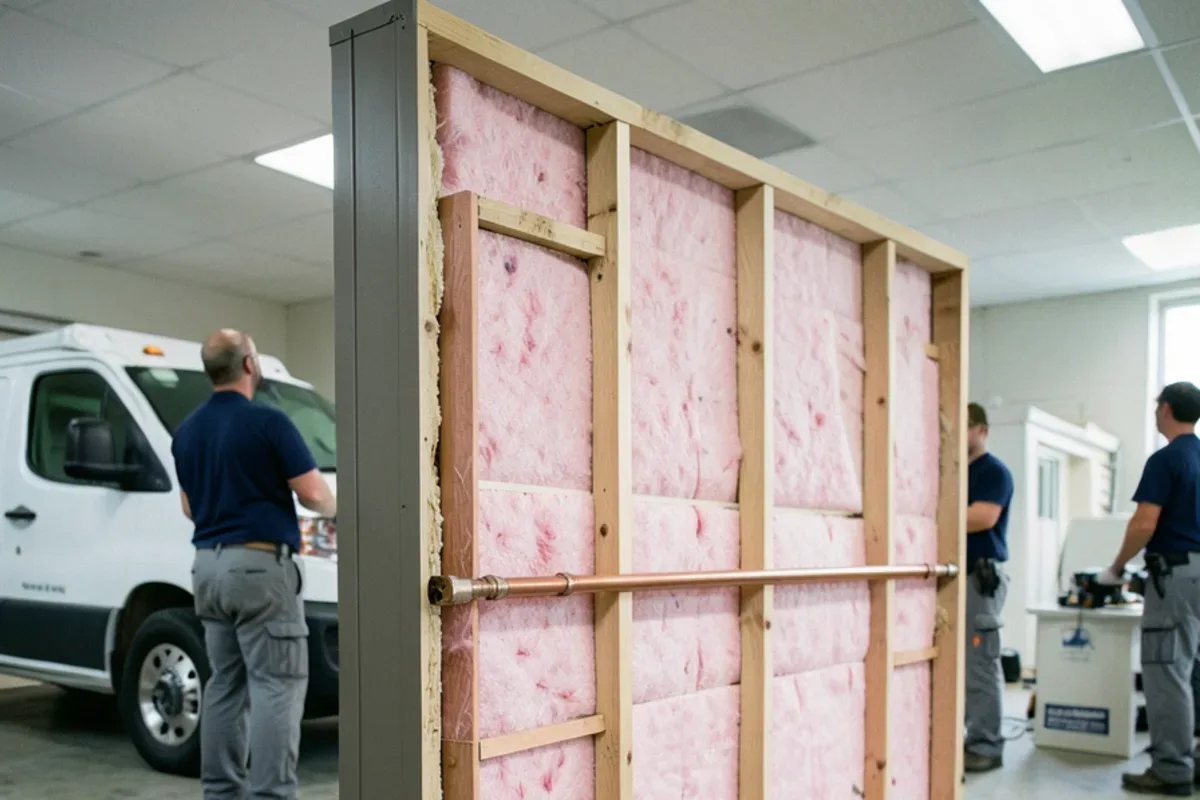
Then fix the reason it froze. A pipe that froze once in a Michigan January will freeze again in February unless something changes: a gap sealed, insulation moved to the cold side, or the line rerouted into heated space. Until then, on nights forecast to drop near zero, let that faucet run a thin stream and keep the cabinet open.
Trade-offs a plumber weighs on a frozen line
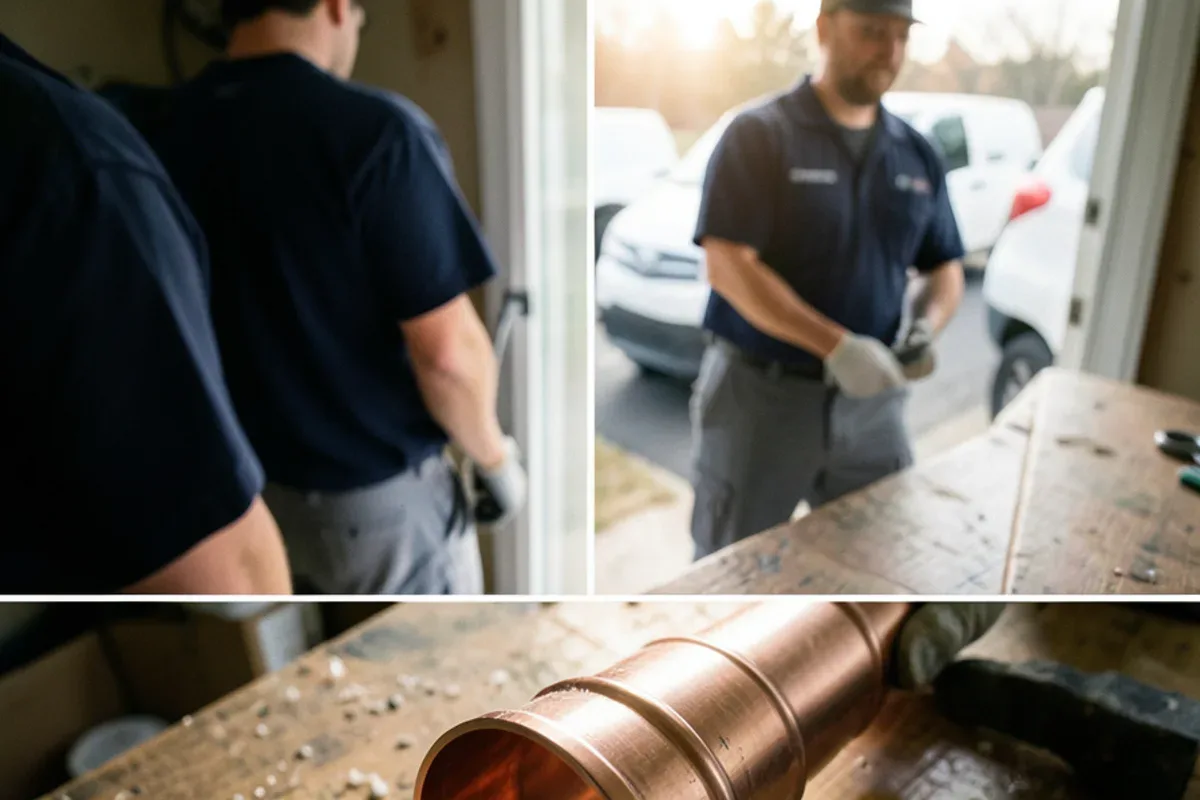
Thawing advice splits on whether to close the main before you add heat, and both sides have a point. With the main open, water pushes through as soon as the plug softens, which speeds the thaw and tells you the moment it's done. With it closed, a split you missed can't flood the room. Our rule is simple: if you'll stand and watch the pipe the whole time, leave it open; if you'll walk away even for a few minutes, close it.
For lines nobody can reach with a hair dryer, plumbers have other tools. One kind of machine runs electric current through metal pipe to warm it from inside. It works on copper and steel, never on PEX or CPVC, and needs care because the house's electrical ground is often clamped to the water pipe. Another feeds a small hot-water line up the frozen pipe from an open end. Either beats opening a wall when it fits, and neither helps once the pipe has split.
Heat cable is for preventing the next freeze, not thawing this one. Use a cable listed for your pipe material, plug it into a GFCI outlet and never wrap it over itself. And when a whole Warren house goes dry, look first where the service line comes up through the foundation wall or crosses a crawl space; the city sets footings 42 inches down for frost.
When to keep the hair dryer going and when to call
Keep at it yourself when the frozen section is exposed, the pipe looks whole and the trickle is getting stronger. Call when you can't find the ice, it's inside a finished wall or ceiling, an hour of gentle heat hasn't moved it, the whole house is dry, or you see a bulge or split. If the freeze is past your reach, close the main if anything has split and give us a call.
Questions people ask about this
Will frozen pipes thaw on their own?
Yes, eventually, once the weather warms, but you lose control of when and where. If the pipe split while frozen, it'll leak the moment it thaws, possibly while you're at work. Thawing it yourself with the faucet open and the main within reach is safer.
Should I turn off the main water if a pipe is frozen?
Yes, if you can see a crack or bulge; close it before you add heat. If the pipe looks intact, leave the water on so flow can help melt the ice, but know where the main is and be ready to close it.
How long does it take to thaw a frozen pipe?
An exposed pipe with a short ice plug often thaws in under an hour with a hair dryer. A pipe inside an exterior wall can take much longer, and some will not thaw without opening the wall or warming the space for hours.
Is it safe to use a space heater to thaw pipes?
Yes, if you treat it as a room heater, not a pipe torch. Keep it at least three feet from anything that can burn, including insulation and cardboard, plug it straight into a wall outlet, and never leave it running in an empty basement or under a sink cabinet. Never use one while standing on a wet floor.
Want a plumber to look at your situation? We're on Stephens Rd in Warren.
(207) 419-2600