
 By Plumber in Warren, MI, plumbers on Stephens Rd in WarrenPublished October 25, 2026Last updated October 25, 2026
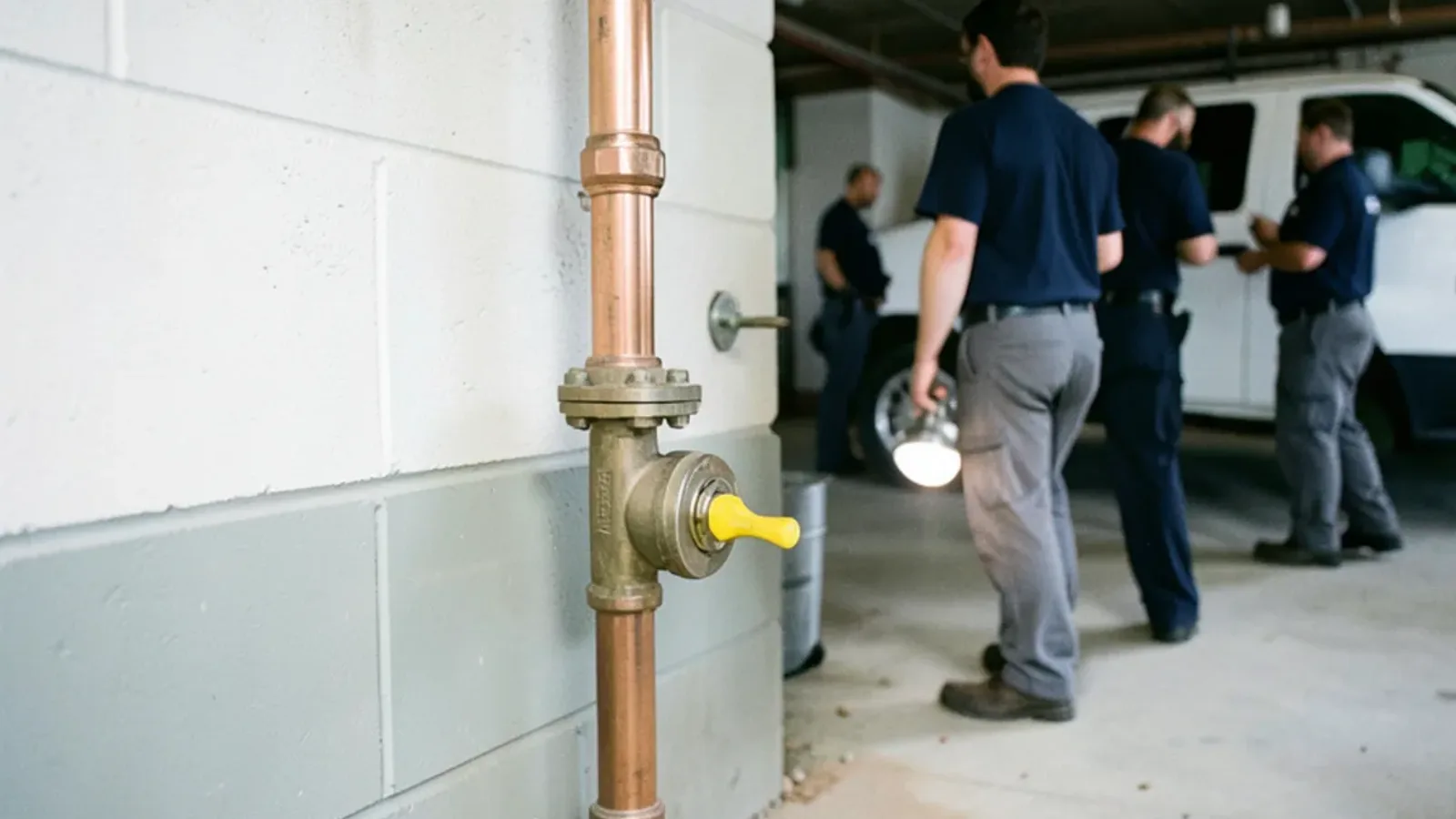
To shut off main water in a house with a basement, find where the water line comes through the foundation, usually on the wall facing the street. The main valve sits on that pipe beside the meter, sometimes with one on each side. A lever handle closes with a quarter turn; a round wheel handle turns clockwise until it stops.
That's the short version. The rest of this guide covers how to tell which valve you have, what to do when it won't turn or won't fully stop the water, and why it's worth testing the valve on a calm afternoon instead of during a flood.
Where the main shutoff is in most basements
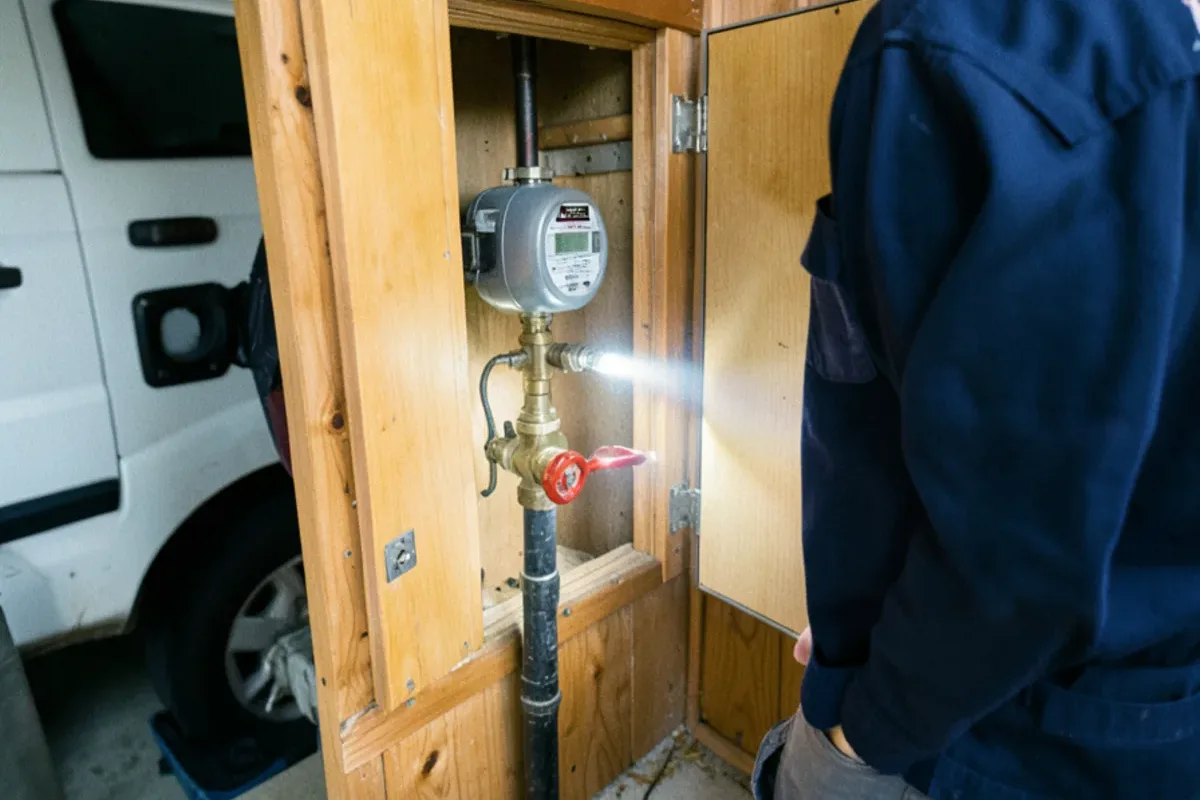
Water service lines in Michigan run underground from the street to the house, deep enough to stay below the frost, and come up through the basement floor or foundation wall. The meter goes right where the line enters, and the main shutoff is next to it. Look along the front wall first, then behind the furnace, the water heater or the laundry tub, since those are where finished-basement walls tend to stop short.
If you live in one of the postwar ranches in Madison Heights or anywhere nearby, a paneled or drywalled basement can hide the meter behind an access door or a removable panel. A small closet under the stairs is a common hiding spot. In a house on a slab with no basement, check the utility room, the garage wall nearest the street, or near the water heater.
Once you find it, hang a tag on it and show everyone in the house where it is. A valve nobody can find in the dark doesn't help much.
Which kind of main valve do you have?
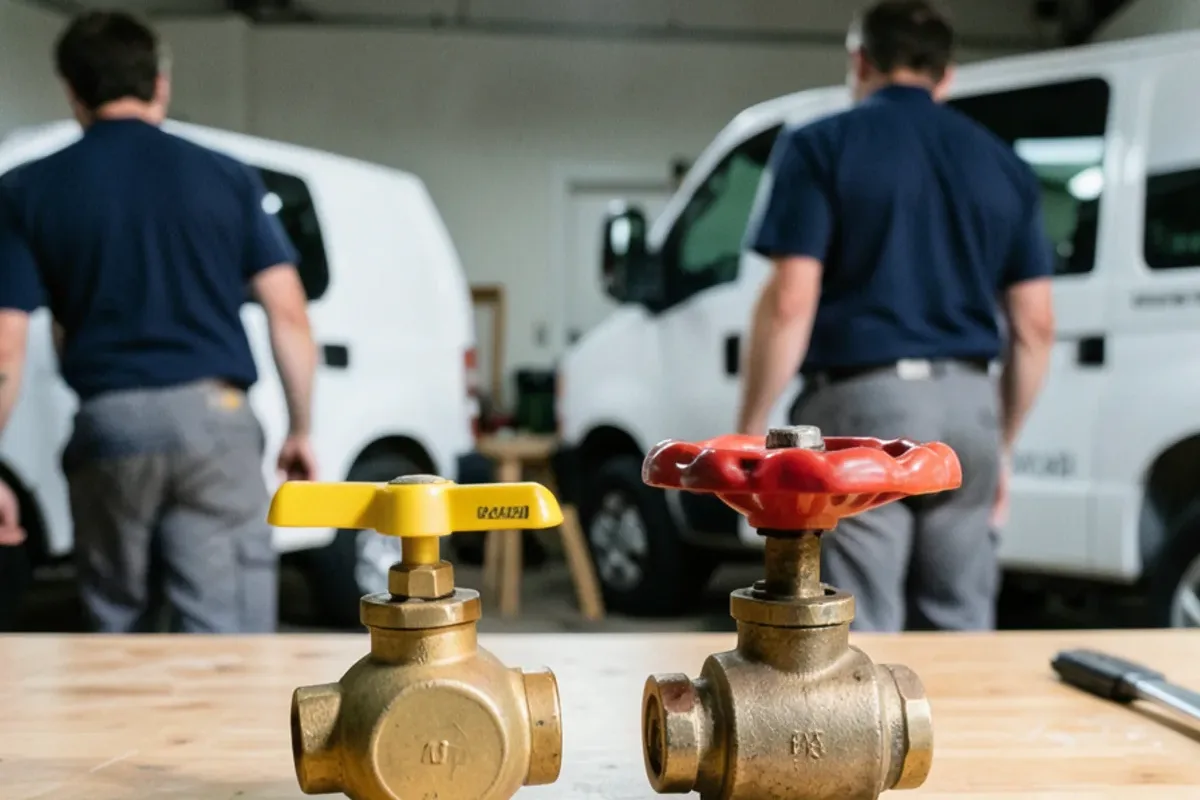
Most homes have one of two valve types on the main. Newer installs and replacements are usually ball valves. Older homes often still have the original gate valve, and some have one of each, one on either side of the meter.
| Valve | What it looks like | How to close it | What to watch for |
|---|---|---|---|
| Ball valve | A flat lever handle, often red or yellow, lying along the pipe when open | Turn the lever a quarter turn so it sits across the pipe | Rarely sticks; if the lever spins without stopping, the stem is broken |
| Gate valve | A round wheel or oval handle on a brass body with a nut under the handle | Turn clockwise several full turns until it stops | Old ones seize, leak at the stem or never seal fully |
If a gate valve takes a dozen turns and the water still trickles, the gate inside has worn or corroded and isn't seating. It'll slow a leak but won't stop it. That's a sign the valve should be replaced with a full-port ball valve.
How to shut off main water, step by step
Clear a path and grab a light
Move boxes, bring a flashlight and, if the floor is wet, wear boots. Stay out of standing water near outlets or the electrical panel.
Close the valve on the house side of the meter
Quarter turn for a lever. Clockwise until snug for a wheel. Use steady hand pressure; if a wheel handle will not move, stop and read the next section before reaching for a wrench.
Open a low faucet
A laundry tub or basement sink drains the water still in the pipes, which takes pressure off a leak and tells you the valve has actually closed.
Turn off the water heater
On a long shutoff, set a gas heater to pilot or vacation, or switch off the breaker for an electric one, so it does not heat a tank that may lose water.
Check that the leak has stopped
Watch the leak and the small dial on the meter. If either keeps moving, the valve is not sealing.
For what to do next, depending on what broke, our guide on whether it's a plumbing emergency or can wait until morning sorts the common problems.
When the valve won't turn or won't hold
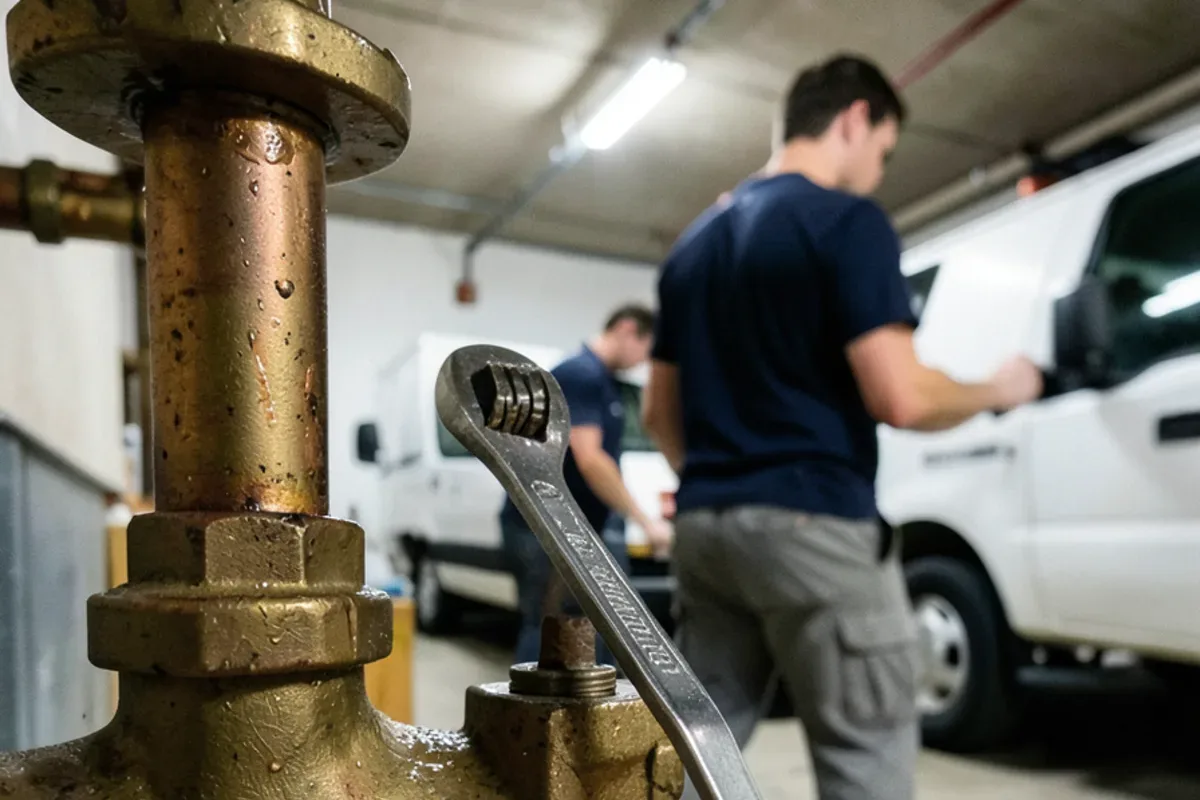
A gate valve that hasn't moved in twenty years can be frozen with mineral scale. Forcing it is how stems snap, and a snapped stem can leave the valve stuck open or stuck halfway. Try working it gently back and forth a little at a time. If it starts moving but water weeps from under the handle, the packing nut is loose. Snug it about an eighth of a turn with a wrench and the weeping usually stops.
If it still won't close, or it closes and the water keeps coming, the next valve is outside at the property line. That buried valve, often called a curb stop, belongs to the water system and needs a special key. Call your city's water department rather than trying to dig it up or turn it yourself. Warren's Water and Sewer System page lists its after-hours line for emergencies and broken mains, and neighboring cities publish theirs the same way.
Replacing a bad main valve is a short, planned job once the water is off at the curb. It's also routine during a burst pipe repair, because a valve that failed once during a flood will fail again.
Testing the valve before you need it
Once or twice a year, close the main, open a faucet and make sure the water stops completely. Then open the valve fully. A lever goes back along the pipe. A wheel goes all the way counterclockwise, then back about a quarter turn so it isn't jammed against the stop. That small amount of movement keeps scale from locking a gate valve in place.
Do it in fall, before the first hard freeze. Michigan winters are when burst pipes happen, and a seized valve is the last thing you want to discover with water coming through a ceiling. If yours fails the test, a planned replacement is far less stressful than an emergency plumbing repair at night.
Turning the water back on without a mess
Close the faucet you opened, then open one tub faucet partway. Open the main slowly, a little at a time, and let the tub run until it spits air and then flows steadily. Opening the main all at once slams the pipes and can knock loose scale that ends up in faucet aerators. Once the flow is smooth, open the main fully, turn the water heater back on, and check under sinks and around the repair for drips.
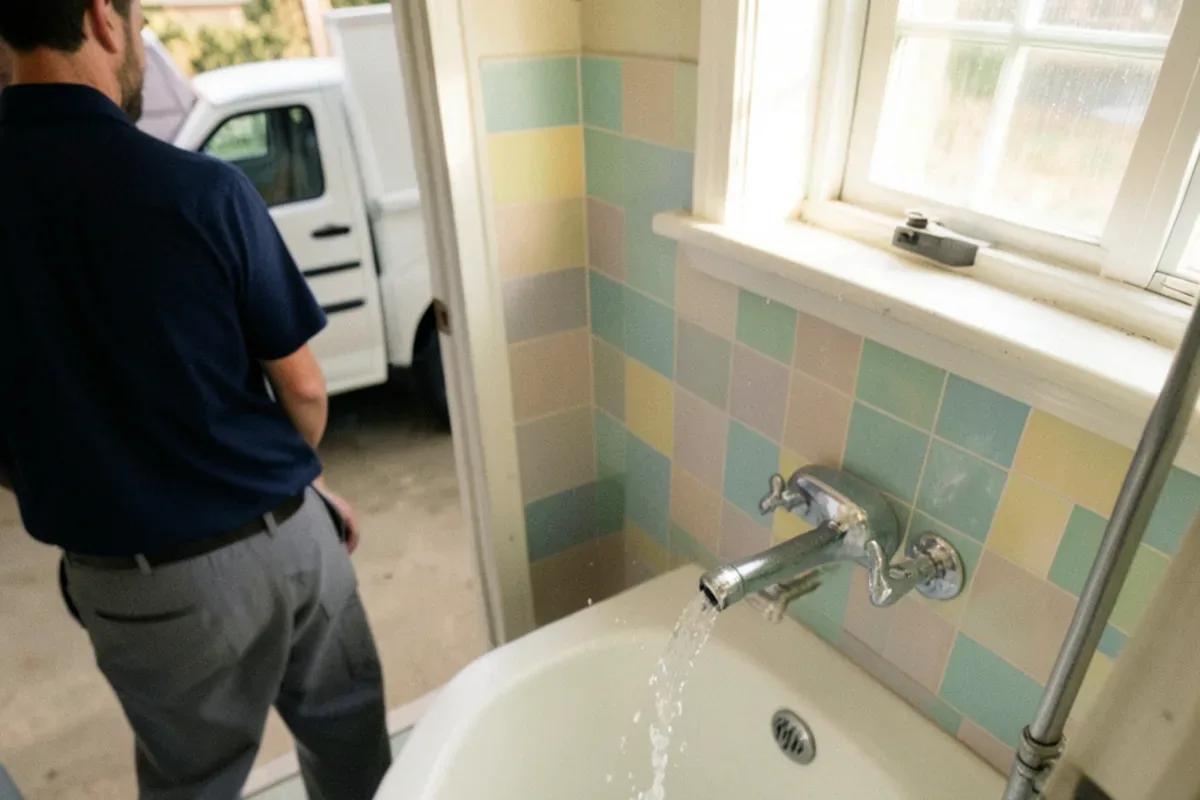
What a plumber checks before swapping a main valve
Replacing the main is a short job, but the pipe on the street side decides how it goes. The curb stop has to be closed first, and in Warren the city owns the service only up to that curb stop; from there to the meter is the owner's. Copper coming through the wall takes a new ball valve easily. Galvanized threads that have rusted thin can crack when a fitting is turned onto them, so the job may grow into a few feet of new pipe or a main water line repair.
Then there's lead. Warren says homes built before 1960 may have a lead service line, and Michigan's rules bar partial lead line replacement outside emergency repairs, so valve work on a dull gray, soft pipe should start with the city's Water Division, which keeps an online service line map and offers an in-home inspection. For the new valve itself, a full-port ball valve is the usual pick: a quarter turn closes it and it doesn't narrow the flow.
Handle the valve yourself or call a plumber?
Finding, tagging, closing and exercising the main are yours, and so is an eighth of a turn on a weeping packing nut. Call a plumber when a wheel won't move under steady hand pressure, the stem spins freely, the valve body leaks, the water won't stop after closing, or there's no house valve at all. Anything at the curb goes to the water department. If your fall test ends with a valve that won't hold, give us a call and plan the replacement while the house is still dry.
Questions people ask about this
Which way do I turn the main water valve to shut it off?
A lever handle turns a quarter turn so it sits across the pipe. A round wheel handle turns clockwise, the same direction as tightening a jar lid. Lever along the pipe means open; across means closed. If a wheel has turned a dozen times and water still flows, the gate inside is worn and the valve needs replacing.
Can I shut off the water at the curb myself?
No. The curb stop is part of the water system, it needs a special key, and an old one can break below ground where nobody can reach it without digging. In Warren the city owns the service up to the curb stop, so call your city's water department for anything at the curb.
Why is water still coming out after I closed the main?
Some water drains out of the pipes for a minute or two after the valve closes. If it keeps flowing after that, or the small leak dial on the meter keeps turning, the valve isn't sealing. Old gate valves often don't, and the fix is to replace the valve.
Who is responsible for the water line between the street and my meter?
In Warren, the city owns and maintains the service from the main to the curb stop, usually near the property line. From the curb stop to the meter inside the house is the owner's responsibility, and so are the valves and pipes past the meter. Lead service lines follow their own state rules, so ask the Water Division about those.
Want a plumber to look at your situation? We're on Stephens Rd in Warren.
(207) 419-2600