
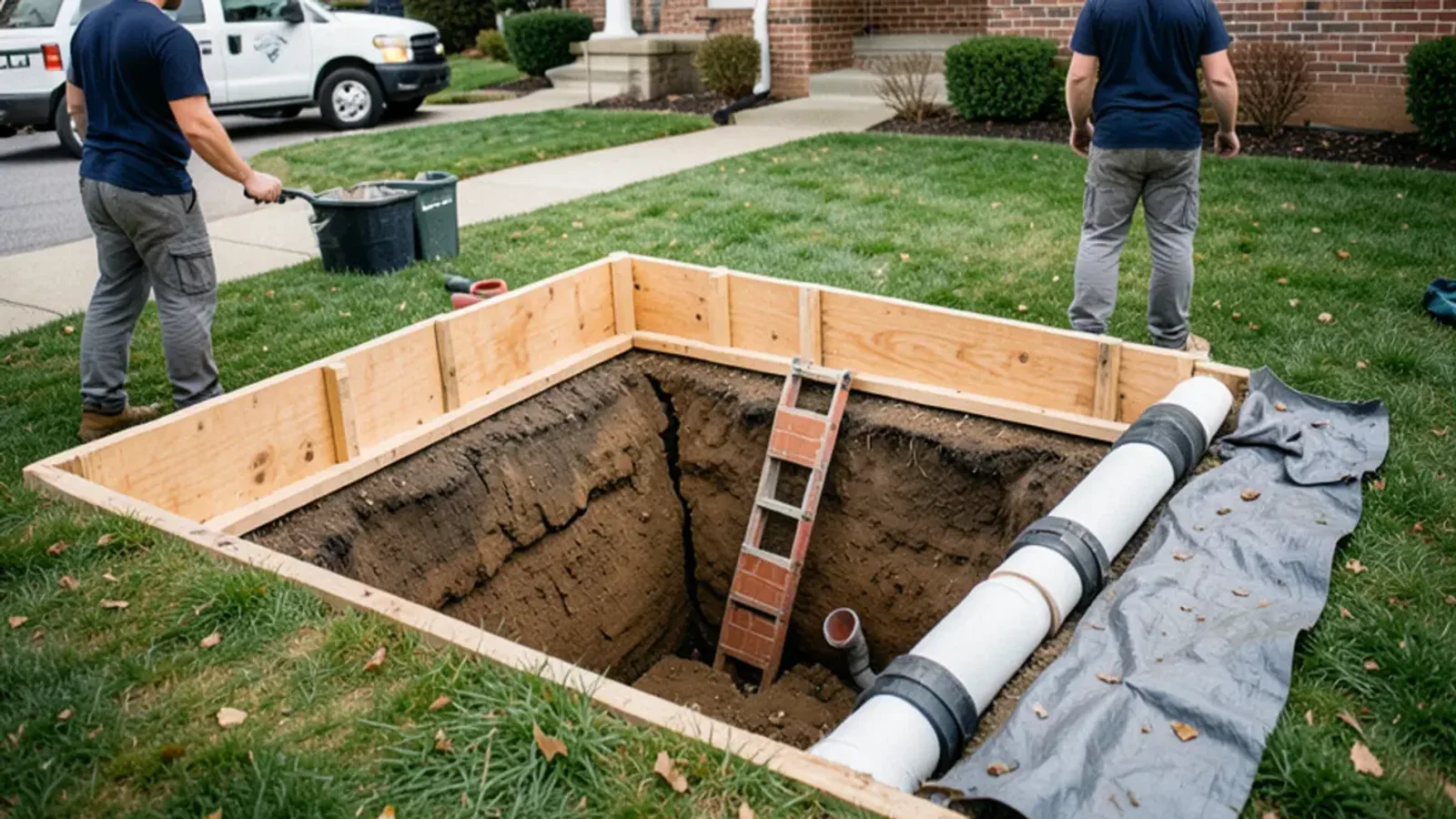
Sewer line repair in Warren starts with a problem you can already see or smell: a main line that backs up every few months, a gurgling toilet, a soggy patch of lawn over the lateral, or a cleaning crew that keeps pulling roots off the cable. We find exactly where the pipe has failed, show you the footage, and repair that spot.
Finding it comes first. A camera tells us what the damage is, how far out it sits and how deep, and that decides whether the fix is a short dig, a liner, or something bigger.
Signs your sewer line needs repair
- The main line backs up again within weeks or months of being cleaned.
- Roots come back on the cable head every time the line is rodded.
- Several drains gurgle or slow down together, especially the lowest ones.
- A sewer smell in the yard, or a strip of lawn that stays green or wet over the line.
- A camera report that shows a crack, a separated joint, a sag or a collapse.
One of these on its own may still be a cleaning job. Two or three together usually mean the pipe itself is damaged. Our sewer camera inspection page covers inspections done on their own, for a home purchase or before a remodel. On this page the camera is the first step of a repair.
What breaks a sewer lateral in a Warren yard
Most homes here were built between 1950 and 1979, and laterals from that era are often clay tile or cast iron. Clay comes in short lengths with a joint every few feet, and roots find those joints. The city's own guidance says roots enter through cracks and keep growing until the line is blocked. Cast iron lasts a long time but rusts from the inside, and the bottom of the pipe often goes first.
Ground movement adds to it. The city engineer describes Warren as extremely flat and mostly heavy clay, which holds water and swells and shrinks with the seasons. Over decades that can shift a joint out of line or let a section settle into a sag, a low spot where waste and paper collect. Tree growth, a driveway poured over the line, and old utility digs can do the same.
How do you find where a sewer pipe is broken?
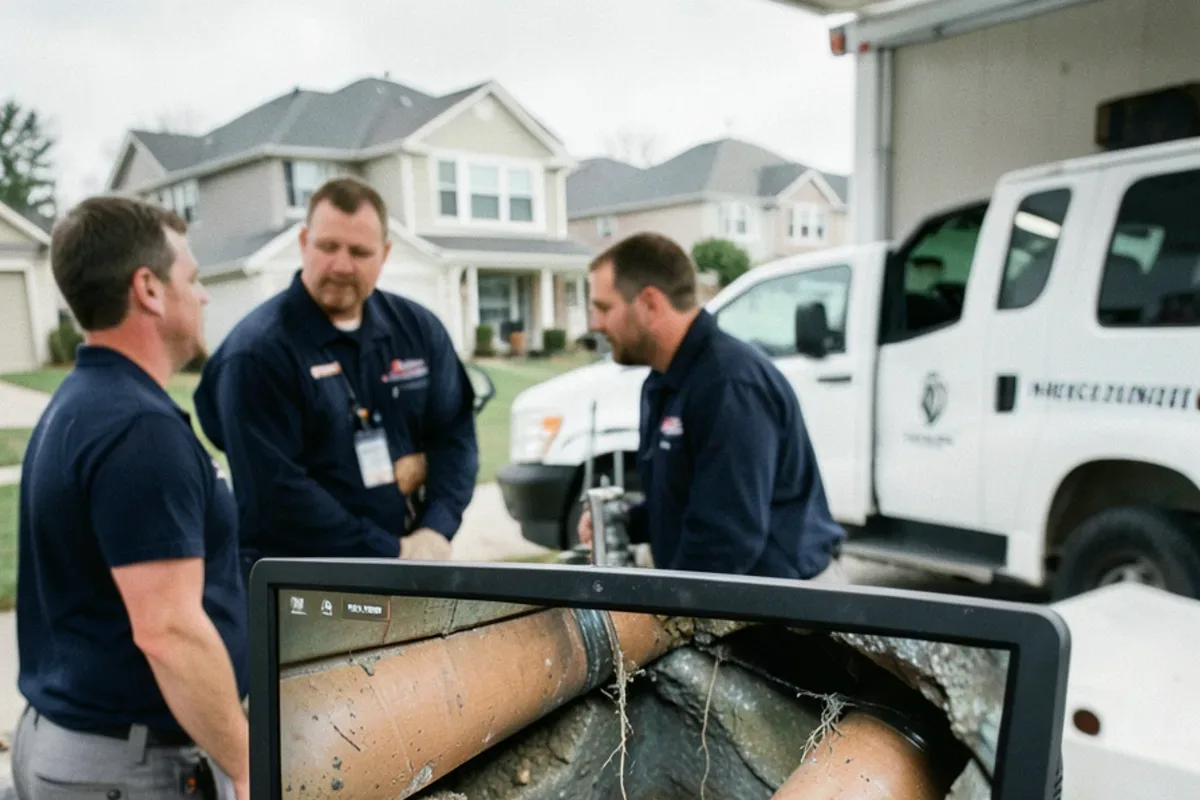
We clean the line enough to see it, then push a camera from the cleanout out toward the city main. The counter on the screen marks the distance to every defect. A small transmitter in the camera head lets us stand in the yard with a locator, find the head under the ground, and read its depth. We mark the spot with paint or a flag so you can see where any digging would happen.
Before anyone digs, MISS DIG has to be notified at least three working days ahead so buried gas, electric and other utility lines get marked. That waiting period is part of every excavated repair.
Which sewer repair fits the damage?
Repair work here covers the lateral from the cleanout out to the city main, plus the house drain under the basement slab. Every job opens with the camera, because the footage picks the method. A repair can include:
- Cleaning and recording the line, with the defect located and its depth marked in the yard
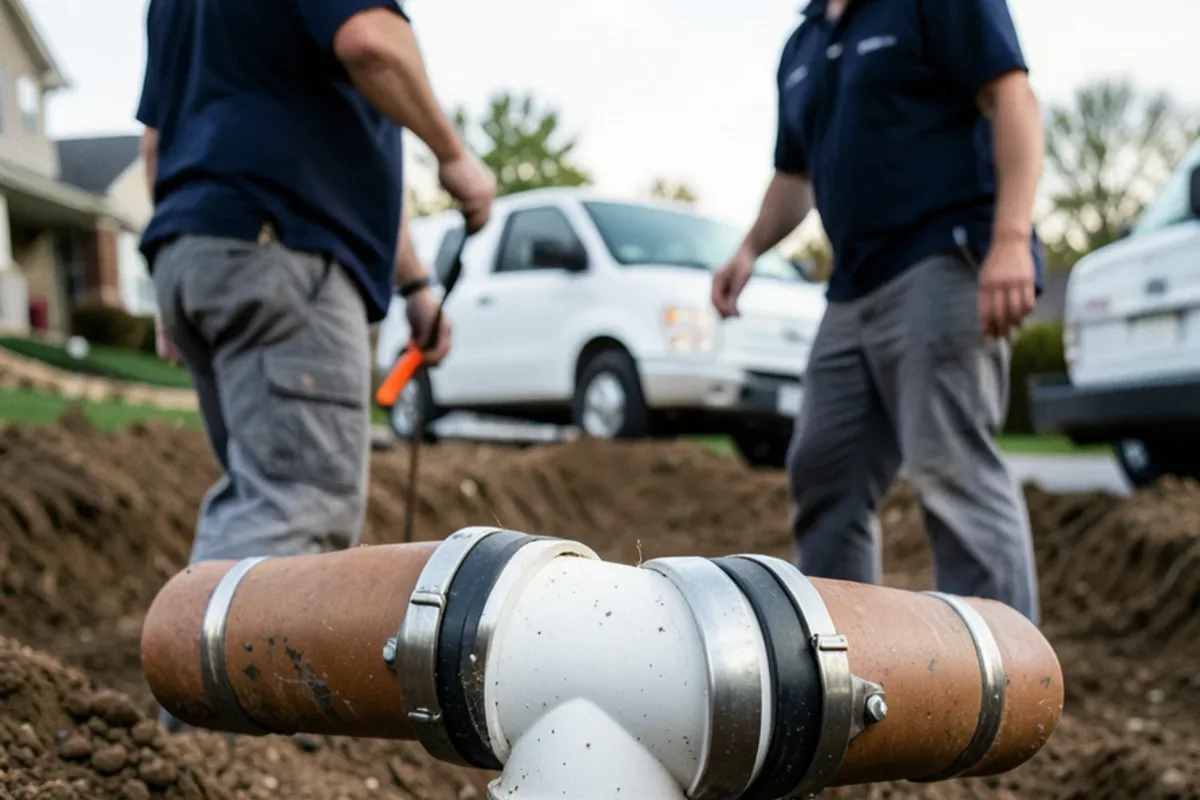
- A spot repair: one excavation, the bad section cut out and new PVC joined with shielded couplings
- A sectional liner set from the cleanout over one cracked or root-entry joint
- Breaking out the slab to replace a cracked cast iron house drain
- The Warren permit, the city inspection and a camera run through the finished section
- Backfill and surface restoration over the dig
| Repair | What it fixes | Trade-offs |
|---|---|---|
| Spot repair (dig and replace a section) | One crack, break, offset or sag in an otherwise sound line | Opens one hole; the rest of the old pipe stays in service |
| Sectional liner (point repair) | A single cracked or root-entry joint, without digging | Needs a clean, round pipe; will not fix a sag or a collapse |
| Full-length lining | Many cracks and joints along a line that still holds its shape | Slightly smaller inside diameter; needs good access at both ends |
| Replacement | A collapsed, flattened or badly sagging line, or damage along its whole length | Largest job; covered on our replacement page |
If the camera shows trouble along most of the run, patching one joint at a time usually costs more over the years than replacing the pipe once. Our sewer line replacement page covers that work. Spot repairs make sense when the rest of the line is in good shape.
Who is responsible for a sewer line repair in Warren?
The property owner. The City of Warren maintains its sewer mains, which usually run under the street and in some neighborhoods along rear-yard easements. Everything from your house to that main, including the part under the sidewalk and the right-of-way, is the owner's to maintain. Our post on who owns the sewer line goes through the boundary in more detail.
Sewer repair is permit work in Warren. The city's plumbing permit form lists sewer repair as its own item, and the work has to stay exposed until a city inspector has seen it. Michigan law requires plumbing to be done by a journey or master plumber under a permit pulled by the plumbing contractor, with an exception for owners working on their own single-family home who pull the permit themselves. Most homeowner policies also exclude sewer backups, so check whether yours has a backup rider. The permit comes from the Division of Buildings and Safety Engineering at One City Square, the work is built to the 2021 Michigan Plumbing Code, and LARA's online lookup confirms any contractor's license.
A sewer repair visit, step by step
Clean and record
We open the line, clear it, and record a camera run so you can see the defect yourself.
Locate and mark
The defect is located from above, marked, and its depth noted. Utilities get marked through MISS DIG.
Plan the repair
You get the options that fit the damage, with what each involves. Permits are pulled once you choose.
Dig or line
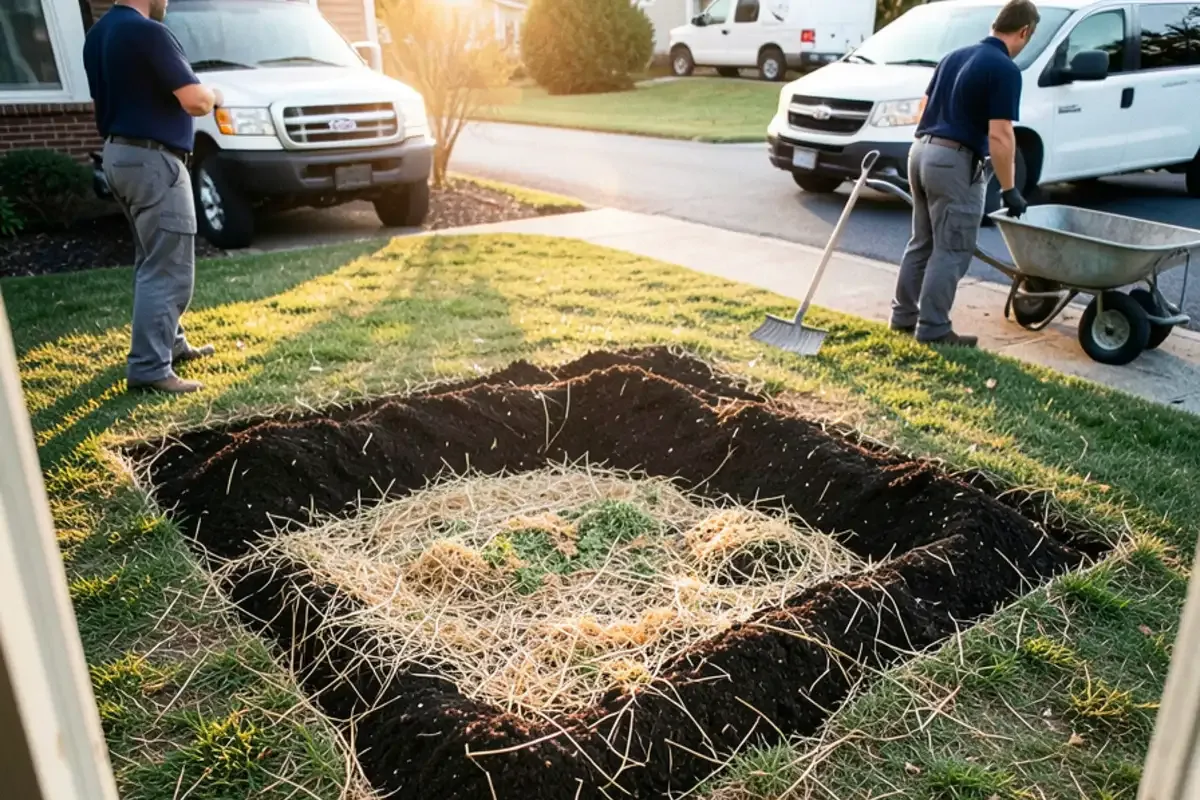
For a spot repair we open a hole at the mark, cut out the bad section and join new pipe with shielded couplings. For a liner, the pipe is cleaned and the liner is set from the cleanout.
Inspect and close up
The city inspects the open repair, we run the camera through the new section, then backfill and restore the surface.
What drives the cost of sewer line repair
Depth and location matter most. A shallow break in the side yard is a smaller dig than one under the driveway, a mature tree, the sidewalk or the street. The repair type changes it next: a sectional liner avoids the dig but needs a cleaner, rounder pipe. Pipe material, the number of defects, permit and inspection requirements, and surface restoration (sod, concrete, pavers) all add to it. We go through each of those with you before any work starts.
Where the main sits changes the dig as well. In most of Warren it runs under the street, so a break near the far end of the lateral means working in the right-of-way, with its own permit and inspection. Where the main runs along a rear-yard easement, the excavation moves to the back yard, and fences, sheds and detached garages come into the plan. A camera run that finds one defect points to a spot repair; several along the run means pricing the line as a whole.
Sewer repairs planned from our Stephens Rd office
We are at 11355 Stephens Rd in 48089, the corner of Warren with the oldest housing, where nearly half the homes predate 1960 and roots in clay joints are a routine find. We find the cause before we sell a fix: the footage, the distance and the depth come before any talk of digging, and a spot repair is the default when the rest of the line is sound. Permits are pulled the city's way, with the work left open for the inspector. Homeowners, landlords and business owners reach the same phone line, and you get the cost factors and a written scope before anyone picks up a shovel.
Sewer line repair and inspection around Warren and nearby cities
- Plumber in Oakland County
Much of south Oakland drains through the George W. Kuhn district’s combined sewers, so a lateral repair there often comes paired with a question about backwater protection.
- Plumber in St. Clair Shores
An owner's lateral can run to a main across the street, and no excavation happens without a city permit and inspection.
- Plumber in Detroit
DWSD requires a Sewer Service Repair Permit for every lateral repair, plus a right-of-way permit when work reaches the public side.
- Plumber in Hazel Park
Where the sanitary sewer runs behind the house, a lateral repair dig lands in the back yard instead of the front.
- Plumber in Eastpointe
With 78 percent of homes built before 1960, clay laterals under mature trees are frequent candidates for a spot repair.
- Plumber in Clinton Township
The township's lateral pilot targeted vitrified clay laterals in homes built in 1974 or earlier.
- Plumber in Oak Park
Laterals under its 1950s lots are around 70 years old, often cast iron or clay running to a Kuhn-district sewer.
- Plumber in Highland Park
Houses from the 1910s to the 1930s typically have clay laterals feeding a combined sewer.
- Plumber in Harper Woods
The city is cleaning and televising its sewer lines in phases, and its 1950s homes typically have clay or cast iron laterals.
- Plumber in Royal Oak
Owners are responsible for their line up to and including the connection at the city main, so a broken tap is theirs to fix.
Sewer line repair and inspection questions from Warren customers
Do I need a sewer inspection before a sewer line repair?
Yes. Without a camera, a repair is a guess about where to dig. The inspection shows the type of damage, the distance from the cleanout and the depth, and whether one spot or the whole line is the problem. On a repair job it is the first step, not a separate service.
Does every sewer repair mean digging up the yard?
No. A single crack or root-entry joint in a pipe that still holds its shape can often take a sectional liner from the cleanout. A sag, a collapse or a badly offset joint usually needs a small excavation at that spot. The camera footage tells us which one you are looking at.
Can you repair a sewer pipe under the basement floor?
Yes. The concrete is cut and broken out over the damaged section, the pipe is replaced and inspected, and the floor is patched. If the house drain under the slab is cracked in several places, lining it from a cleanout may avoid opening the floor.
Is the city responsible for sewer line repair under the sidewalk?
No, not in Warren. The owner maintains the lateral all the way to the city main, including the section under the sidewalk and the right-of-way. The city maintains the main itself. Replacing the lateral in the right-of-way still takes a city permit and inspection.
Will roots come back after a sewer line repair?
No, not through the repaired section. New PVC with shielded couplings, or a liner over a cracked joint, leaves roots no gap to enter there. They can still find old clay joints on either side, which is why the camera run after the repair matters: it shows whether the rest of the lateral is sound. Where roots keep returning elsewhere, the City of Warren suggests rodding once a year.
Still not sure what you're dealing with? Describe it on the phone and we'll tell you what we'd check first.
(207) 419-2600Last updated October 25, 2026