
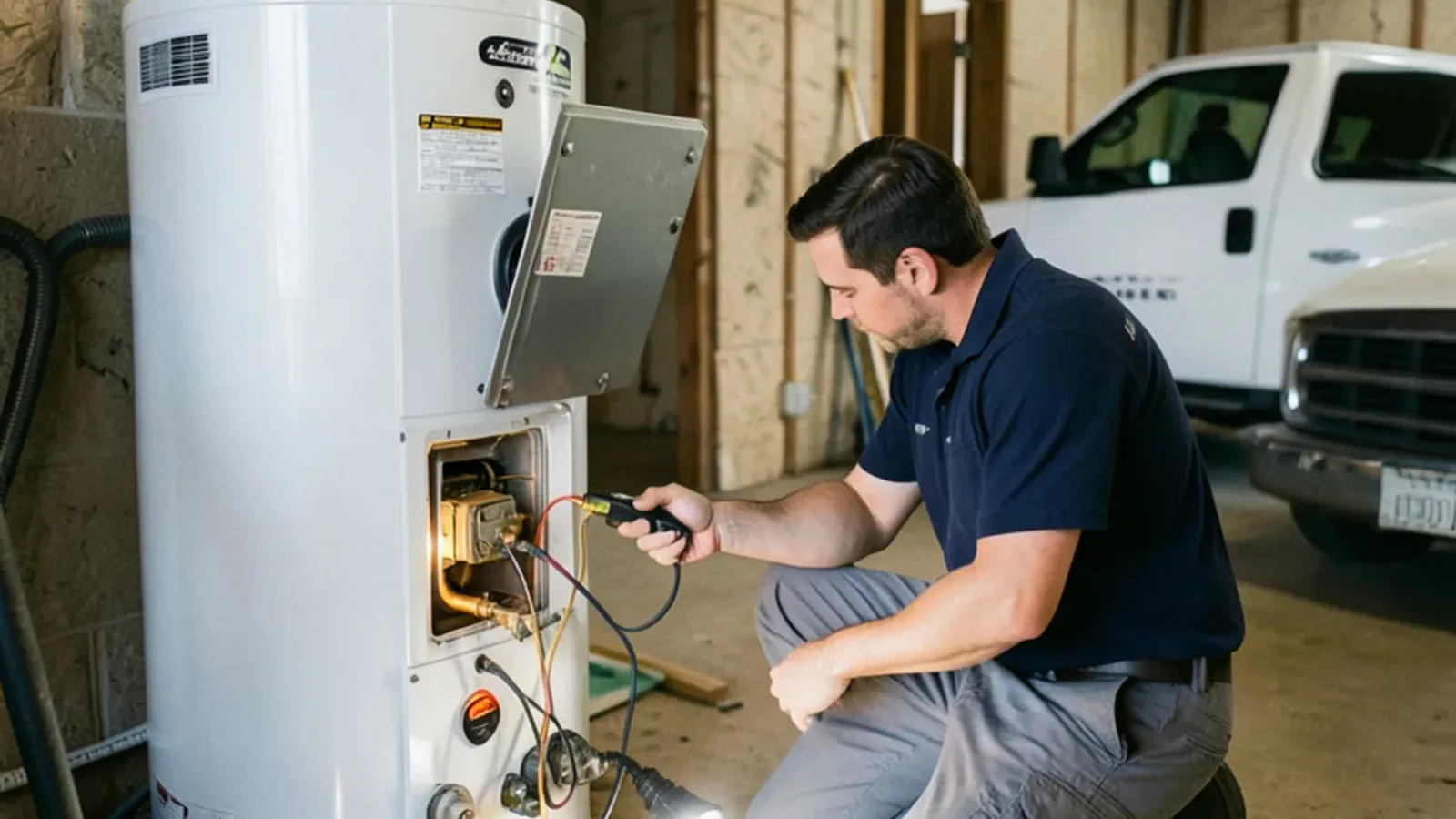
Water heater repair in Warren usually comes down to a short list of parts. On a gas tank it's the thermocouple or flame sensor, the gas control valve or a power-vent blower. On an electric tank it's a heating element, a thermostat or the high-limit reset.
Most of those can be replaced in one visit. A tank that leaks from its body can't be fixed, and when that's what we find, we'll say so.
This page covers storage-tank water heaters, gas and electric, and the yearly maintenance that keeps them going. Tankless units have different parts and problems, so we handle them separately.
Why is my water heater not making hot water?
| What you notice | Likely cause | Usual fix |
|---|---|---|
| No hot water from a gas tank | Pilot out from a failed thermocouple, or a clogged flame arrestor screen | Replace the thermocouple or clean the screen |
| No hot water from an electric tank | Tripped high-limit, burned-out upper element or thermostat | Test and replace the failed part |
| Hot water runs out fast | Sediment filling the bottom, a broken dip tube or a dead lower element | Flush, replace the dip tube or element |
| Popping or rumbling while heating | Water trapped under a sediment layer flashing to steam | Flush; heavy buildup may mean the tank is near the end |
| Relief valve pipe dripping | Thermal expansion, high house pressure or a worn valve | Check pressure, add expansion control or replace the valve |
| Hot water smells like rotten eggs | The anode rod reacting with bacteria in the water | Swap the anode for a different alloy |
| Water on the floor under the tank | A fitting, drain valve or relief valve, or the tank itself | Repair the part; a leaking tank gets replaced |
Parts that wear out on gas and electric tanks
Repair work covers everything outside the tank lining. A visit can include:
- Thermocouples, flame sensors and pilot assemblies.
- Gas control valves and power-vent blowers.
- Heating elements, thermostats and high-limit switches.
- Anode rods, dip tubes, drain valves and relief valves.
- Flame arrestor cleaning and expansion tank checks.
Gas tanks
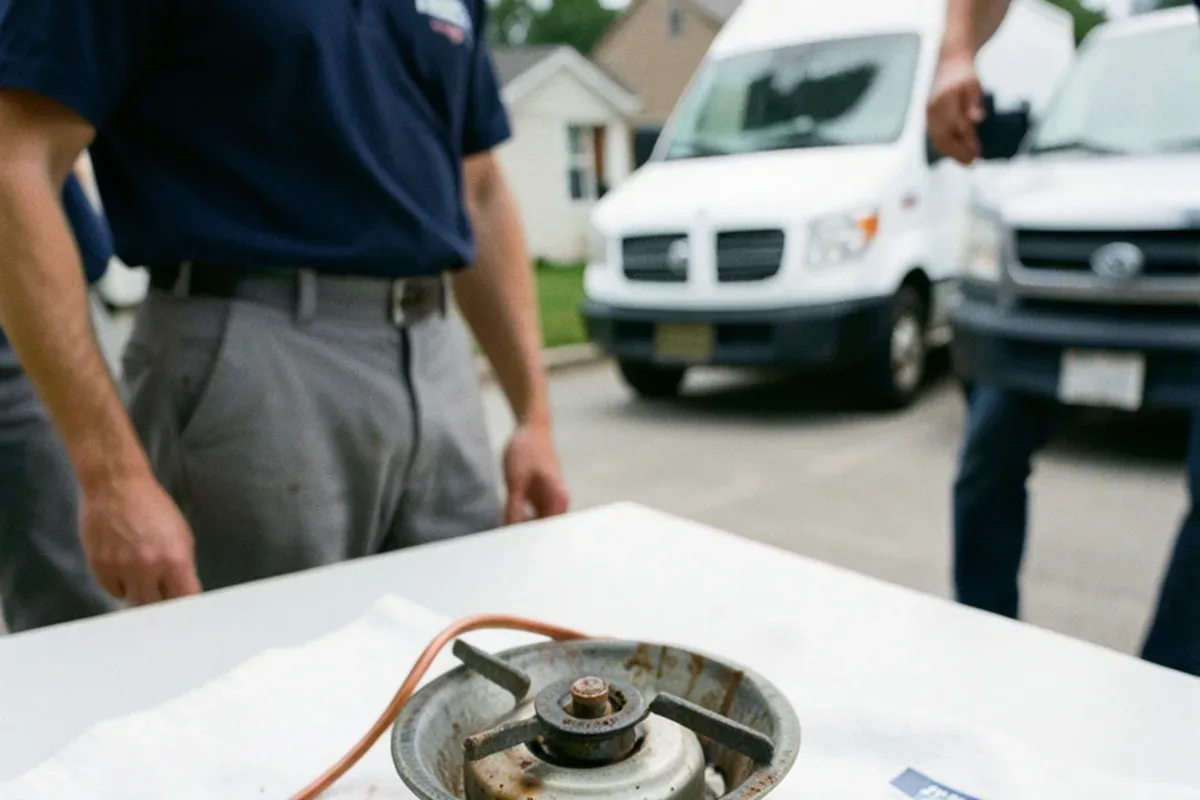
A standing-pilot heater relies on a thermocouple that tells the gas valve the pilot is lit. When it weakens, the pilot goes out and won't stay lit. Newer gas tanks also have a sealed combustion chamber with a flame arrestor screen at the bottom, and in a dusty basement or near a dryer that screen clogs with lint and starves the burner. Power-vent tanks add a blower and pressure switch that can fail on their own.
Electric tanks
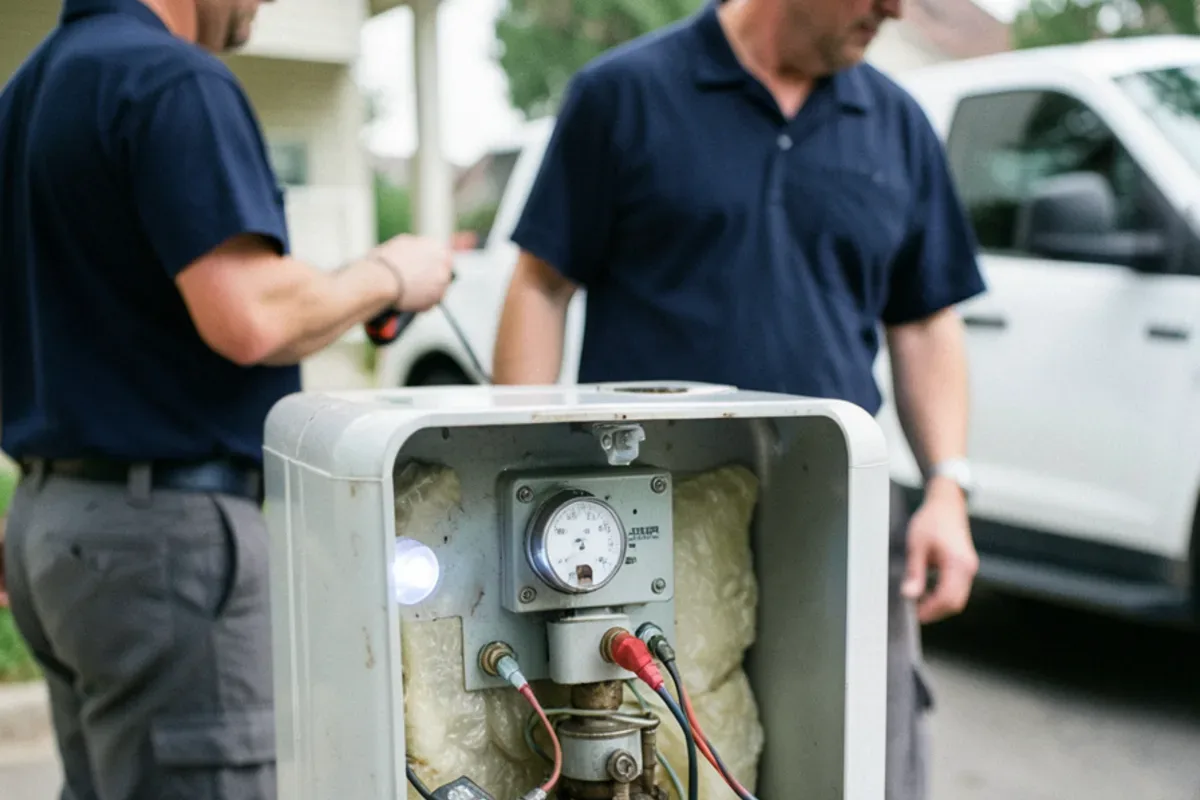
Most electric tanks have two elements, each with its own thermostat, plus a high-limit switch with a red reset button. Elements burn out from scale or from being powered with the tank empty. If the reset keeps tripping, something else is wrong, usually a stuck thermostat or a shorted element.
Parts on every tank
The anode rod corrodes on purpose so the tank lining doesn't, and once it's gone the tank starts to rust. Rusty water from the hot side alone points at the tank. Rust in both hot and cold points at old steel pipe, which our galvanized pipe replacement page covers. Plastic drain valves get brittle. Dip tubes crack and dump cold water into the top of the tank. Warren's water is moderately hard, about 105 milligrams per liter on average, so minerals drop out as sediment every time the tank heats.
How we test a water heater before replacing any part
Guessing at parts gets expensive. On a gas unit we confirm gas reaches the valve, watch the pilot and main burner light, read the thermocouple output with a meter and look at the flame. On an electric unit we cut the power, check each element for resistance, then test the thermostats and the voltage reaching them. On every tank we read the serial number for its age, look at the base and fittings for rust, check the house water pressure and work the relief valve.
Repair the part or replace the tank?
A failed part on a sound tank is worth repairing at almost any age. A leak from the tank body is not; the lining has failed and replacement is the only fix. The gray area is an older tank with an expensive failure, like a gas control valve on a heater past ten or twelve years. There, a new heater is often the better spend, and our water heater installation page covers what that involves. We show you the failed part and the condition of the tank so the call is yours.
Hot water heater repair visit, start to finish
Start with questions
When did it start, what changed, and does it happen at certain times? A heater that runs out only in winter points somewhere different from one that died overnight.
Safety check
We check for gas odor, look at the vent and draft, and note any scorching around the burner door.
Diagnose
The tests above narrow the problem to a part, the tank or something outside the heater, such as house pressure.
Repair
Gas or power goes off, the tank is drained down if the part sits below the water line, and the part is replaced.
Run a full cycle
We watch the heater reach temperature, confirm the draft on gas units and check the water at a faucet before leaving.
Common parts are often on hand. Brand-specific gas valves and power-vent blowers sometimes have to be ordered, which means a return trip.
What water heater maintenance covers and how often
- Flushing sediment out through the drain valve until the water runs clear.
- Pulling and inspecting the anode rod, and replacing it when it is mostly gone.
- Testing the relief valve and checking the discharge pipe.
- Cleaning the flame arrestor screen and checking the burner flame on gas units.
- Checking the vent connector, the draft and the expansion tank charge.
- Confirming the thermostat setting and looking for corrosion at fittings.
Once a year suits most households. A tank that has never been flushed and already rumbles is a judgment call, since an old drain valve may clog or leak once it's opened, and we'll tell you if flushing is likely to help. Our post on how often to flush a water heater goes into the timing.
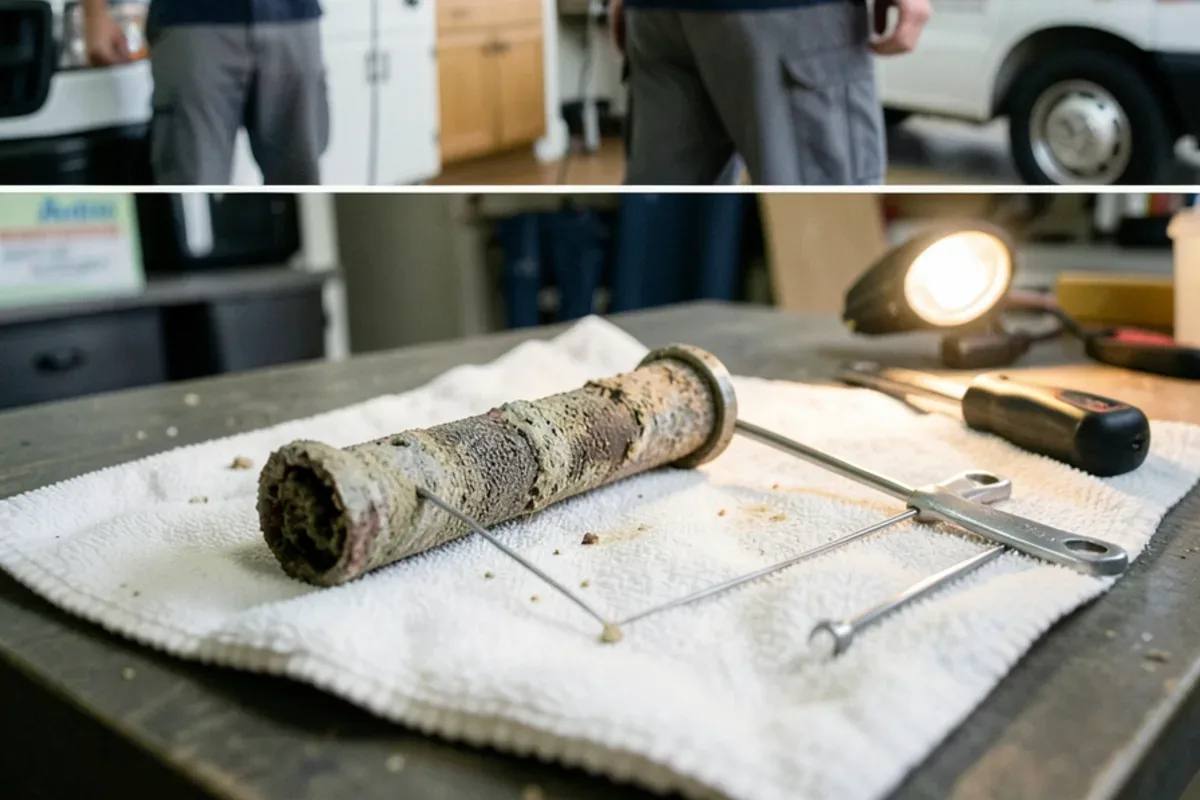 Before
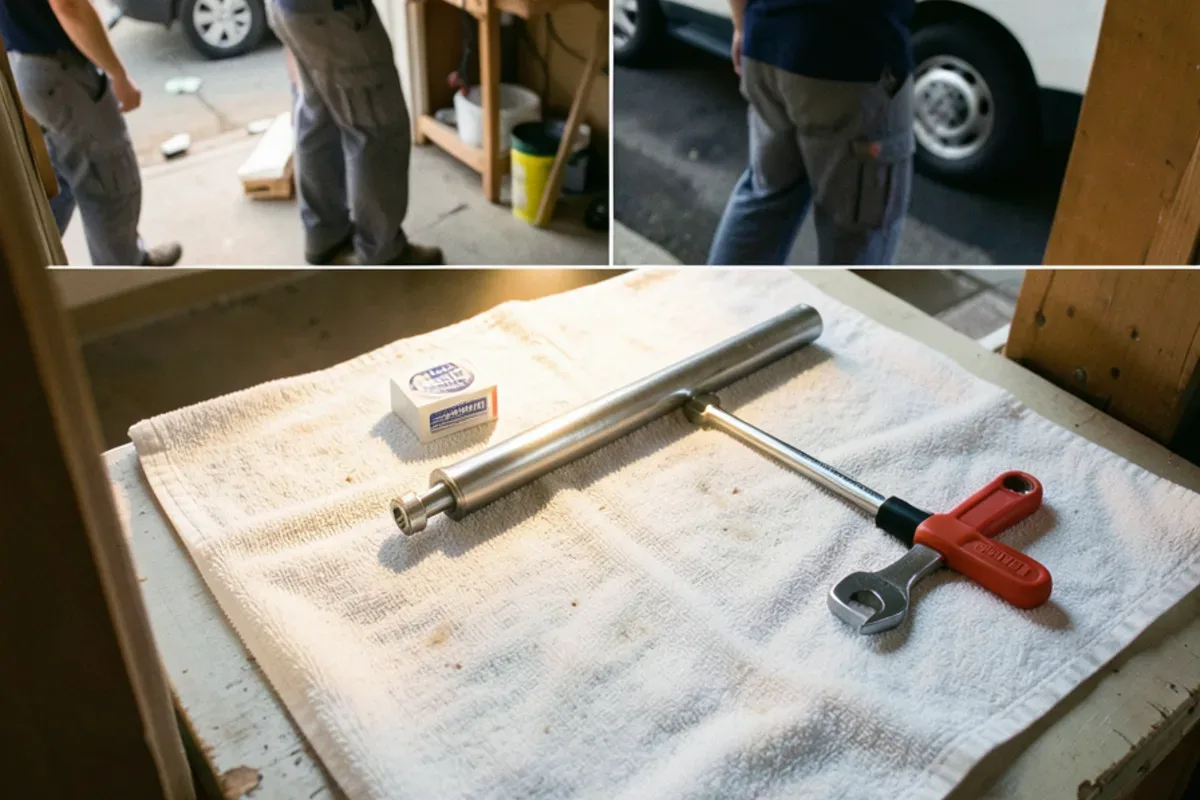 After
What a maintenance visit will not fix
Maintenance can't undo rust that has already eaten through a tank, make an undersized heater deliver more hot water, or correct a vent that was installed wrong. It also doesn't cover tankless descaling, which is its own service.
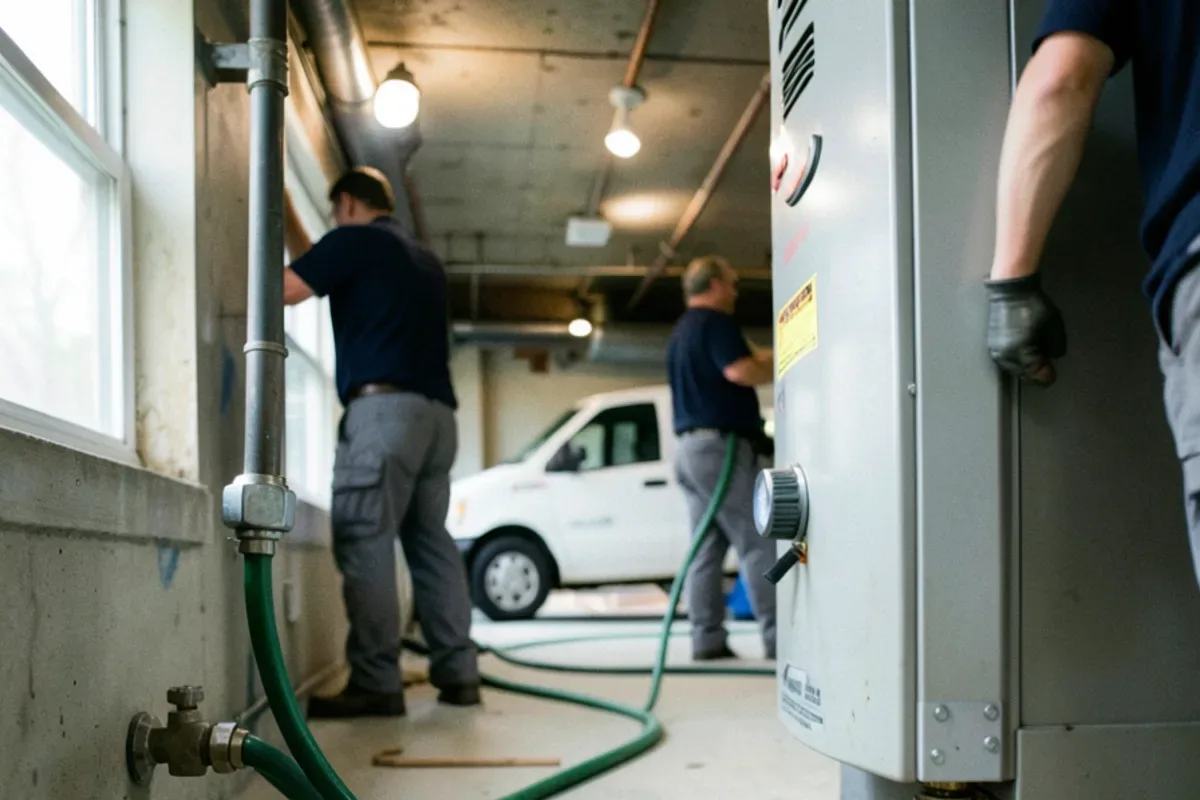
What affects the cost of a water heater repair
Most repairs are priced by the part and the time it takes to reach it. A thermocouple on a gas tank is a short job. An element near the bottom of an electric tank means draining first, and a drain valve packed with sediment can add a step. What moves the number:
- Gas or electric, and which part has failed.
- Whether the part is common or brand-specific and has to be ordered.
- Draining the tank to reach an element or a dip tube.
- A drain valve clogged with sediment that needs replacing first.
- Access in a tight closet, crawl space or finished room.
- Venting or pressure problems found during the diagnosis.
Does a water heater repair need a Warren permit?
Usually not for a part. Warren's permits-required sheet lists hot water tanks, plumbing alterations and gas piping, not the swap of a thermocouple, element or anode on a working tank. Replacing the heater is different: the Division of Buildings and Safety Engineering treats it as a permit item, and a water heater line appears on both its plumbing and mechanical forms. Any change to the gas line falls under a mechanical fuel gas license and permit. When a repair turns into a replacement, we tell you before work starts that the permit and inspection now apply. You can check any plumber's state license on Michigan LARA's lookup page.
Why call a Stephens Rd plumber about a failing tank
We work out of 11355 Stephens Rd, in the oldest corner of Warren, where water heaters in rentals and owner-occupied houses alike tend to run until something quits. We test before swapping anything, so you don't pay for a thermocouple when the real problem is a lint-choked flame arrestor. If the tank itself is failing, you see the evidence and get the cost factors for repair and replacement in writing before work begins. A tenant's cold shower, an owner's dripping relief valve and a shop's dead tank all come in on one phone line.
Water heater repair and maintenance around Warren and nearby cities
- Plumber in Harper Woods
The city's water report carries the same GLWA Northeast plant mineral analysis as Warren's, so tanks there collect sediment the same way.
- Plumber in Grosse Pointe Woods
Most homes went up between 1940 and 1959, and their basement floor drains are where a yearly tank flush empties.
- Plumber in Oak Park
With 37% of households renting and many apartment buildings, a no-hot-water call often starts with a tenant.
- Plumber in Roseville
A third of households rent, and a duplex basement with two tanks means two sets of parts to keep up.
- Plumber in Royal Oak
61% of homes predate 1960, and older gas tanks may still vent into masonry chimneys, so each repair includes a draft check.
- Plumber in Berkley
Mostly owner-occupied 1940s homes, many with finished basements near laundry areas, where dryer lint can clog a flame arrestor.
- Plumber in Hazel Park
Tanks squeezed into tight corners of 1920s to 1950s basements make access part of nearly every repair.
- Plumber in Detroit
Along 8 Mile, close to half the households in 48205 and 48234 rent, so a pilot that will not stay lit is often a landlord call.
Water heater repair and maintenance questions from Warren customers
Is water heater repair worth it on an old tank?
Yes, when the tank itself is sound, though it depends on what failed. A thermocouple, element or relief valve is worth replacing on almost any tank that isn't leaking. A gas control valve or a power-vent blower on a heater past ten or twelve years is a closer call, and a leak from the tank itself means replacement. We show you the part and the tank condition first.
Why does my water heater pilot light keep going out?
The usual causes are a worn thermocouple that no longer holds the gas valve open, a flame arrestor screen clogged with lint or dust, or a draft problem pulling the flame away. A failing gas control valve is less common. Relighting it over and over without finding the cause is not a fix.
Why does my hot water smell like rotten eggs?
When only the hot water smells, the anode rod is usually reacting with sulfate-reducing bacteria in the tank. Swapping the anode for a different alloy and flushing the tank typically clears it. If the smell is in the air near the heater rather than in the water, treat it as a possible gas leak and get outside.
How often should a water heater get maintenance in Warren?
Once a year is a good rhythm for a tank water heater in Warren. The water here is moderately hard, so sediment builds steadily. A yearly visit covers flushing, an anode check every few years, the relief valve, the burner or elements, and the vent. Homes with a water softener may need the anode checked more often.
Still not sure what you're dealing with? Describe it on the phone and we'll tell you what we'd check first.
(207) 419-2600Last updated October 25, 2026