
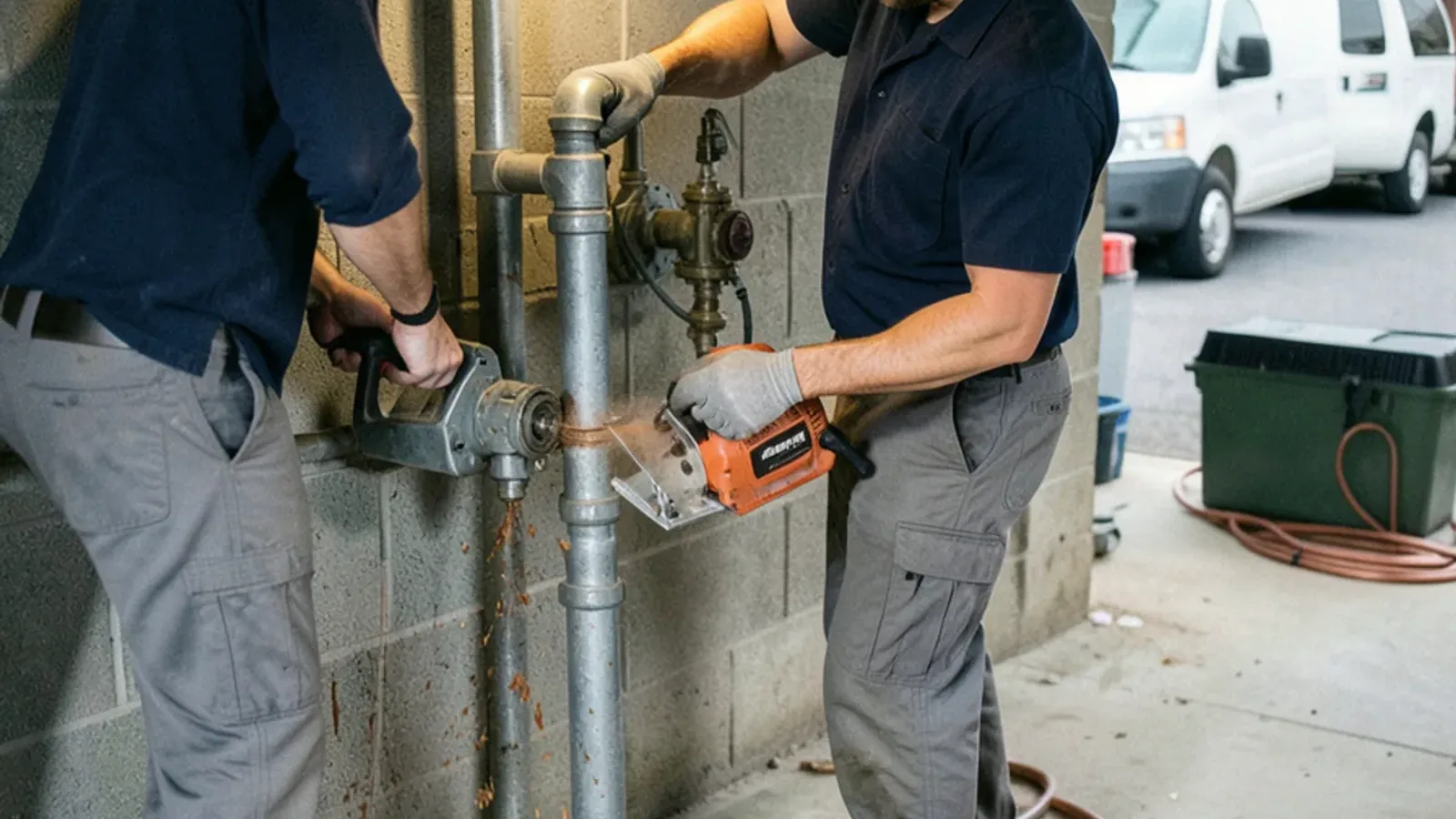
Galvanized pipe replacement in Warren usually starts with a complaint about the water rather than the pipe. The first glass in the morning comes out tea-colored. A toilet takes ages to refill. The kitchen faucet runs strong for a second, then fades.
Galvanized steel was a common supply pipe before copper took over, and Warren has plenty of houses from that era.
About a third of Warren homes were built before 1960. In southeast Warren, between 8 Mile and I-696 east of Van Dyke, it's closer to half. Many still have some steel left, even after earlier repairs swapped part of it for copper. If the whole system has to go, our whole house repiping page walks through that larger project.
Does your Warren house still have galvanized pipe?
Start where the water line comes through the basement wall or floor and follow it past the meter. Galvanized steel is dull gray, every joint is a threaded fitting screwed onto the pipe, and a fridge magnet grabs it firmly. Copper is penny-colored with smooth soldered joints, and a magnet slides off. The scratch test helps with the service line itself. Warren's Water Division asks owners to scratch the pipe gently with a key or coin and try a magnet.
| Material | After a light scratch | Magnet | Joints |
|---|---|---|---|
| Galvanized steel | Stays dull gray | Sticks | Threaded fittings |
| Copper | Bright penny color | Does not stick | Soldered or pressed |
| Lead (service lines) | Soft, shiny silver | Does not stick | Often a rounded bulge where it joins |
| PEX or CPVC | Plastic | Does not stick | Crimp rings, glued or push fittings |
Mixed systems are the norm. Copper near the water heater, from a past tank swap, and steel everywhere else is a common mix. Branches that climb inside walls to a second-floor bath are often the original steel even when the basement looks updated. Our guide on how to tell if you have galvanized pipes has photos of what to look for.
Why galvanized supply pipe clogs and leaks with age
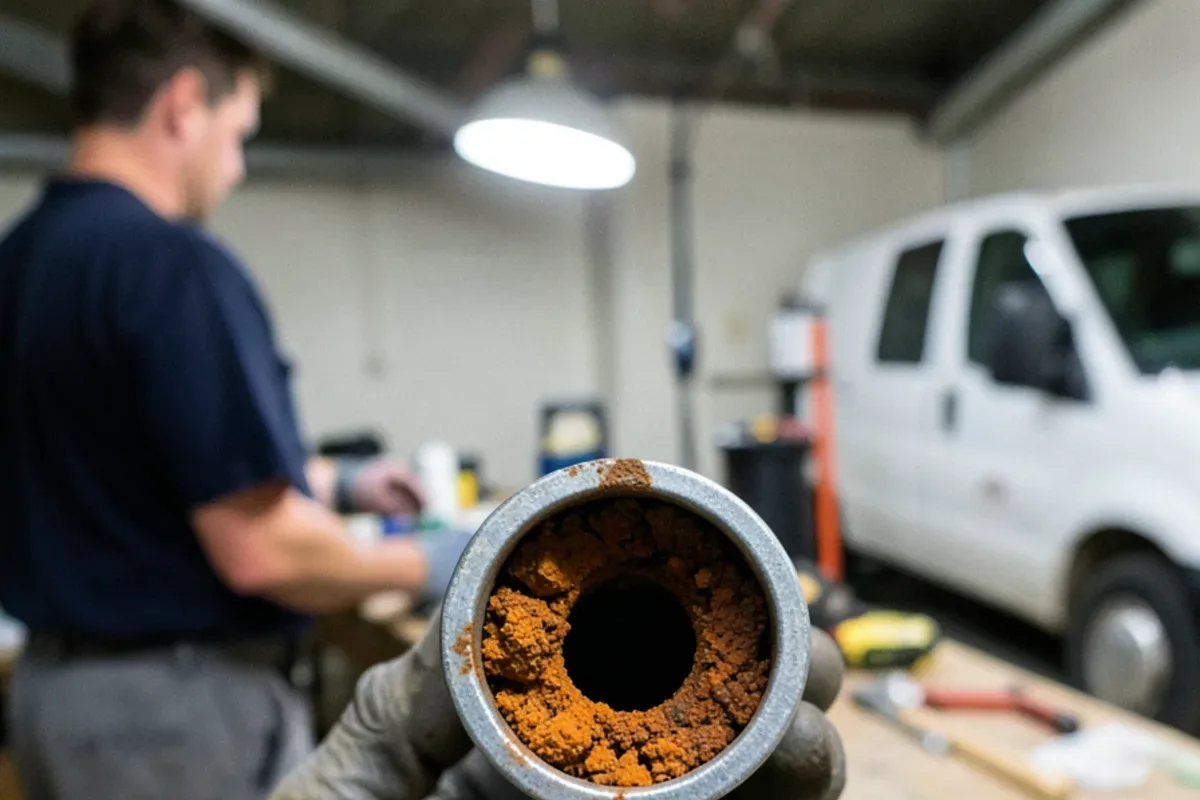
The zinc coating on galvanized pipe protects the steel for a few decades. Once it wears through on the inside, the steel rusts, and the rust grows in lumps that narrow the bore. A half-inch line can close down to a channel the width of a pencil. That's why a pressure gauge at the hose bib can read normal while the shower barely runs: pressure is there, but the volume can't get through.
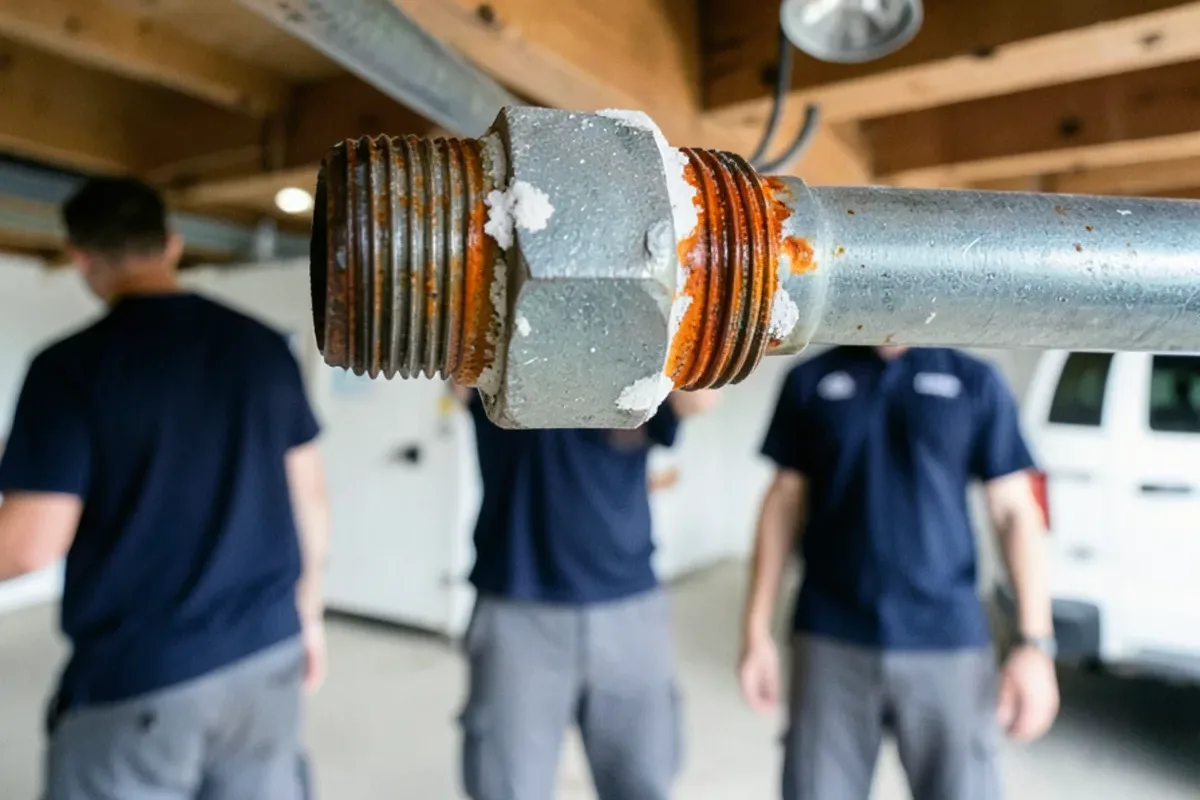
Threads are the weak point. Cutting threads strips the coating and thins the pipe wall, so leaks and breaks tend to start at fittings. The hot side often goes first because warm water speeds up corrosion. Typical signs:
- Brown or orange water after the pipes sit overnight or after a trip away.
- Weak flow at several fixtures, worse when two run at once.
- Aerators and toilet fill valves clogging with gritty flakes.
- Damp spots or rust streaks below threaded joints.
- Hot water weaker than cold at the same faucet.
Is galvanized pipe a lead risk?
Galvanized steel isn't lead. The concern is galvanized pipe that sat downstream of a lead service line for years, because it can hold lead in its rust layer and release it later. Warren's service line program lists "galvanized previously connected to lead" among the lines it replaces alongside lead. The city also says a home built before 1960 may have a lead service line, and as of March 2026 it still had 17,500 service lines of unknown material.
Replacing one run or every galvanized line
The job covers the steel from the meter to the end of the agreed scope, and it usually includes:
- Flow and pressure readings that show which section is restricting the water.
- Cutting the steel out back to the meter or to a sound fitting.
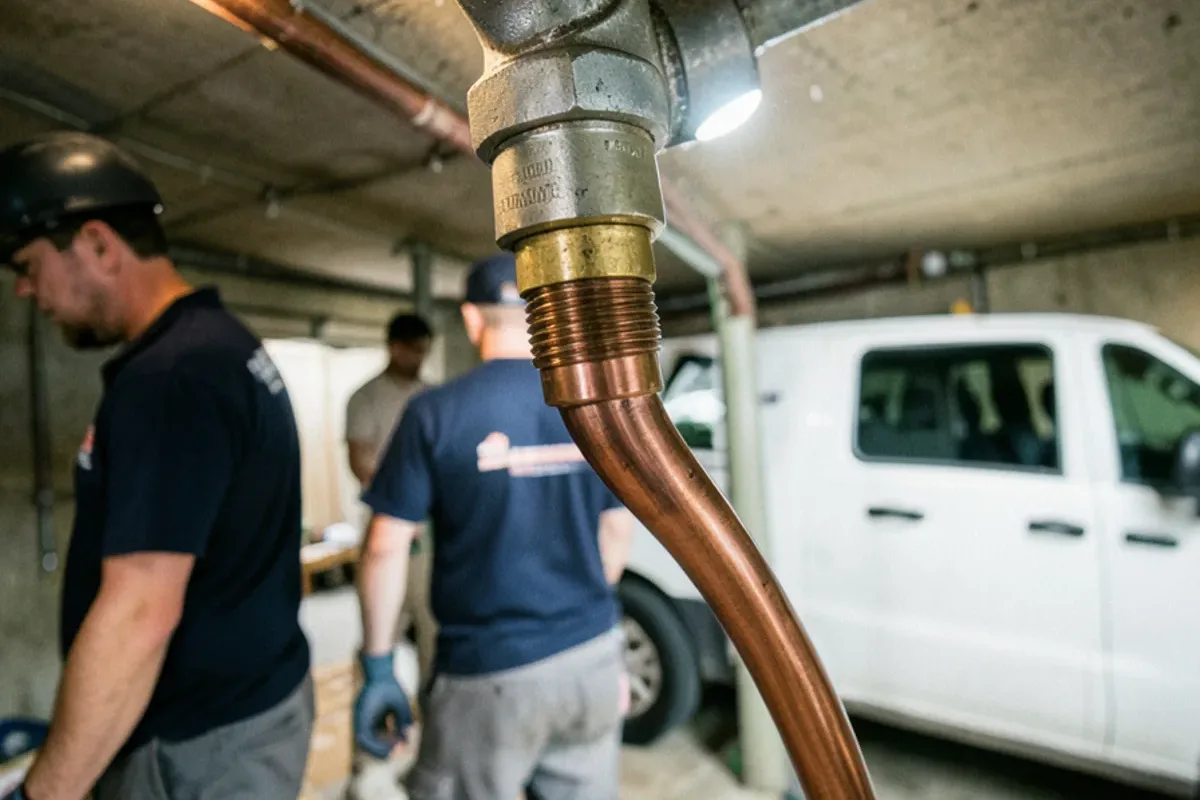
- New copper or PEX, strapped and supported along the joists.
- Dielectric fittings and new shutoff valves wherever new pipe meets old.
- Flushing fixtures, cleaning aerators and a pressure test before the city inspection.
| Scope | When it fits | The trade-off |
|---|---|---|
| One failing run, such as the kitchen line | A single leak or one weak fixture, and the rest tests fine | Steel upstream keeps shedding rust into the new pipe |
| The basement trunk and water heater connections | Low flow everywhere, upstairs branches already copper | Walls stay closed, but hidden steel branches remain |
| Every galvanized line in the house | Rust at several taps, leaks at more than one fitting | Most wall openings; at this point it is a repipe |
A partial job disappoints when it replaces the wrong section. Flow is limited by the narrowest pipe in the path, so new copper upstairs fed by a choked steel trunk still runs weak. We find which section is doing the choking before suggesting a scope.
Joining new pipe to the steel that stays
Copper screwed straight onto steel sets up galvanic corrosion, and the steel side rots quickly at that joint. A dielectric union or nipple keeps the metals apart. Old threads also fight back: a wrench on a seized fitting can crack the pipe a few feet away. That's why we often cut back to a sound section rather than unscrewing at the leak. If the steel being removed holds the ground clamp from your electrical panel, have an electrician move it or confirm the ground.
What a galvanized pipe replacement visit looks like
Measure pressure and flow
We read static pressure at a hose bib, then time how fast a bucket fills at key fixtures. The gap between the two tells us how restricted the pipe is.
Map the steel
Each run is traced from the meter and marked as steel, copper or plastic on a sketch of the house.
Look at the service line
If the line entering the house is galvanized or unknown, we point you to the Water Division's program before going further.
Replace from the meter outward
New pipe starts at the upstream end so it is never fed by old steel.
Flush, test and inspect
Fixtures are flushed to clear loosened scale, aerators cleaned and the new lines pressure tested. Warren's plumbing permit requires the work to stay exposed until the city accepts it.
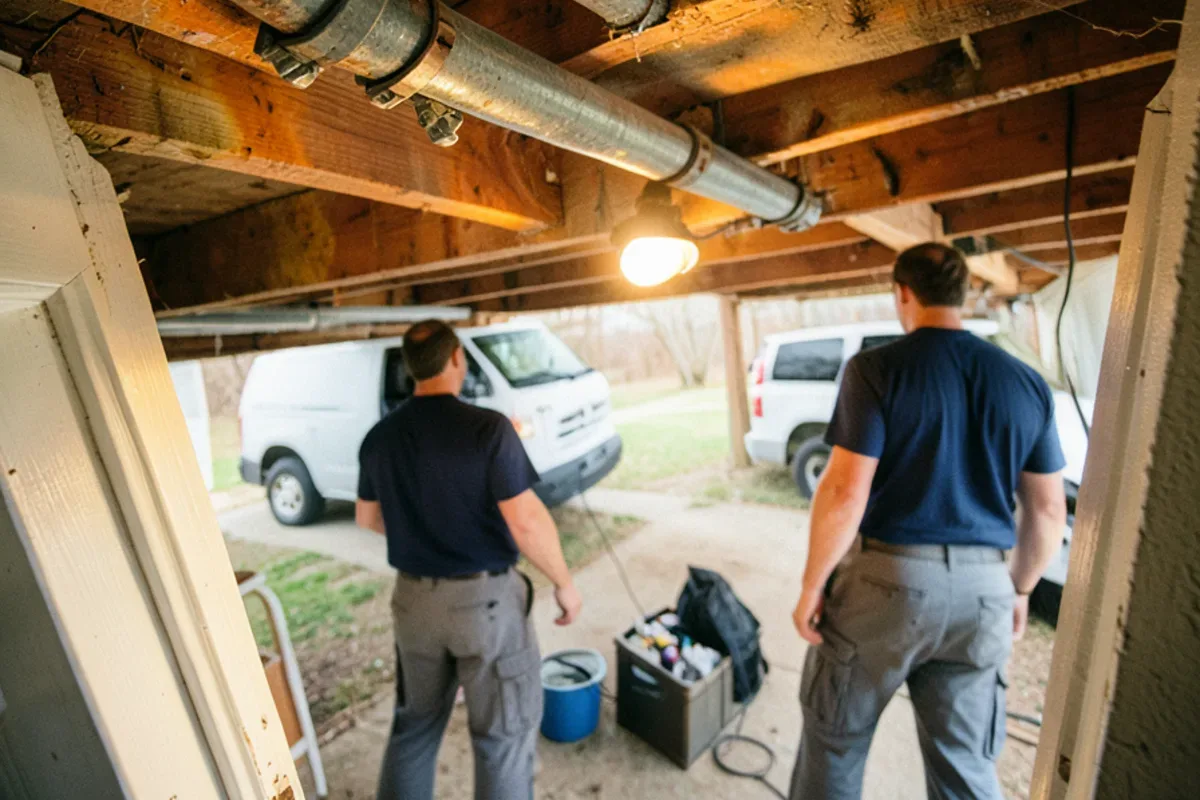 Before
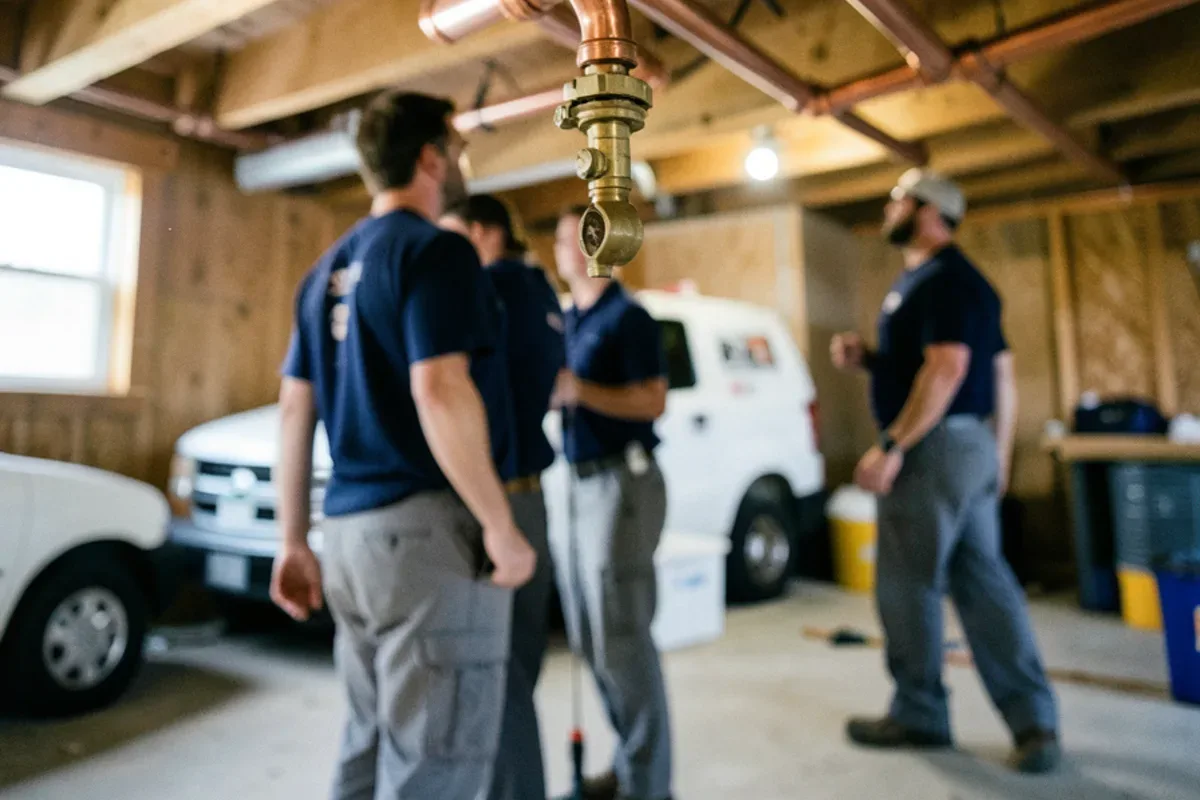 After
Cost factors for galvanized pipe replacement
Two Warren houses built the same year rarely have the same amount of steel left, because owners patched different runs over the decades. The cost follows the map we draw on the first visit, not the square footage, and we go through these variables with you before work starts:
- How much steel is left, and whether it runs inside finished walls to upper floors.
- Access along the basement ceiling, open joists or a finished ceiling.
- Copper or PEX for the new lines.
- Seized fittings that force extra cuts back to sound pipe.
- Whether the service line also needs attention, and through which program.
- The plumbing permit, inspection and wall patching.
Expect some discolored water for a few days after the work while loosened rust clears. For hidden leaks in walls or under floors, our leak detection and repair team can find them without opening every wall.
Who signs off on new water piping in Warren
Swapping supply pipe is a plumbing alteration, which Warren's Division of Buildings and Safety Engineering lists among jobs needing their own permit; its 2025 application has a line for water distribution piping. Under Michigan's Skilled Trades Regulation Act, a state-licensed journey or master plumber does the work after the responsible contractor pulls the permit, and Michigan LARA lets you look up any license. An owner-occupant may pull a homeowner permit, but a rental needs a contractor. The inspector checks the work against the 2021 Michigan Plumbing Code, in force since March 2024. The service line before the meter goes through the Water Division.
Why Warren owners call us about old steel pipe
Our office is on Stephens Rd in 48089, the ZIP with Warren's oldest houses: a median build year of 1962, and nearly half built before 1960. Rusted galvanized trunks are ordinary work a few blocks from the door. We measure flow before naming a scope, so you replace the run that's choking the water, not the one easiest to reach. You get the cost factors and a written scope before any pipe is cut, and we tell you whether the city permit applies. Homeowners, landlords and owners of older storefronts with steel pipe all reach us on the same line.
Galvanized pipe replacement around Warren and nearby cities
- Plumber in Hamtramck
Median build year 1938; prewar houses and flats often keep galvanized supply patched with copper.
- Plumber in Highland Park
Nearly half the homes predate 1940, and the city is replacing century-old mains and lead lines in phases.
- Plumber in Ferndale
42% of homes predate 1940, and 1920s bungalows often still run galvanized branches between copper repairs.
- Plumber in Berkley
Four in ten homes went up in the 1940s, and 88% are owner-occupied, so trunk swaps get planned.
- Plumber in Eastpointe
One home in three predates 1950, and the city has documented lead lines, so we check what feeds the steel.
- Plumber in Center Line
A quarter of homes date from the 1940s or earlier; with 48% renting, turnovers are the window to swap a run.
- Plumber in Royal Oak
61% of homes predate 1960, and about 6% of connections had lead or lead-containing material in 2019.
- Plumber in Grosse Pointe Woods
The city's 2023 report listed 30 service lines as galvanized previously connected to lead.
Galvanized pipe replacement questions from Warren customers
How long do galvanized pipes last?
Many last somewhere around 40 to 60 years, depending on the water and how well they were threaded. In a Warren house from the 1940s or 1950s, original steel is past that range. Age alone isn't the deciding factor, though. Flow, rust in the water and leaks at the threads tell you more than the date on the house.
Can I replace just part of my galvanized plumbing?
Yes, as long as the part you replace is the part causing the problem. Replacing the basement trunk often restores flow to the whole house. Replacing a single upstairs branch while a corroded trunk stays in place usually does not. A pressure and flow test at several fixtures shows which section is restricting the water.
Why is only my hot water rusty?
If the cold water runs clear and only the hot is rusty, the water heater is a likely source, especially an older tank with a spent anode rod. Galvanized hot lines can also rust faster than cold ones. Run each tap separately to compare. Our water heater repair and maintenance page explains how we check the tank.
Do home inspectors flag galvanized pipe when you sell?
Yes, most note it, because buyers and their inspectors know the material narrows and leaks with age. Replacing the trunk and the worst runs before listing, or having a plumber document what's left, gives buyers a clear picture instead of a line item they have to guess about.
Does homeowners insurance pay to replace galvanized pipe?
No, not usually for the pipe itself. Policies tend to treat worn-out supply pipe as maintenance, while water damage from a sudden break falls under the policy's own terms. Some insurers also ask about galvanized plumbing on older Warren houses. Ask your agent before the work, and keep the written diagnosis and the city permit with your records.
Still not sure what you're dealing with? Describe it on the phone and we'll tell you what we'd check first.
(207) 419-2600Last updated October 25, 2026